CONTRARY to some projections, the world dodged a major recession in 2023. Still, the global economy is facing issues – external shocks like extreme weather and geopolitical upheaval are combining to make a full recovery slow, uneven, and uncertain.
The ongoing Ukraine-Russia war has put a strain on supply chains around the world, especially on food security. Now, another violent conflict has broken out in Gaza.
Prolonged conflicts polarise societies as economic and political grievances grow. This can create unintended ripple effects, which reinforce anxieties over economic downturn.
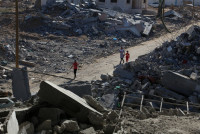
War is destructive: people die, communities are displaced, infrastructure is destroyed, and food insecurity takes hold. And the costs of war are felt well beyond the frontlines.
In the case of a new energy price crisis, there is a risk that commodity prices will rise again, particularly grain and vegetable oils. Memories of the food price crisis prompted by the Ukraine war are still fresh. This has fuelled tensions over rising costs of living around the world.
This time around, supply-chain disruptions should be less pronounced. Unlike Ukraine and Russia, neither Israel nor Palestine is a major exporter of food staples or oil. Israel doesn’t control a significant part of any global commodity supply chain.
But all governments should be wary of the indirect fallout.
Risk of speculation in markets
Exactly 50 years ago, a similar conflict in the Middle East sent oil prices skyrocketing and created major shocks to the world economy.
The Opec oil embargo in October 1973 targeted Western nations that lent support to Israel during the Yom Kippur War, leading to a major global recession.
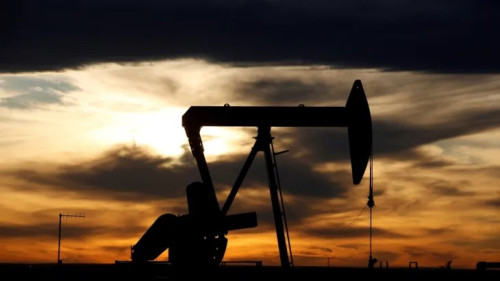
The legacy of the 1973 event lives on: Middle Eastern countries have been left with an uncertain future and the spectre of war, while countries beyond the region remain vulnerable. Crude oil prices did rise after Hamas’s October 7 attack on Israel, though the extent has been muted and temporary.
Any new war or conflict is bad news. Geopolitical uncertainty can prompt excessive speculation in the world crude oil market, increasing prices well beyond the forces of supply.
Speculation over a sustained conflict in the Middle East may reinforce such behaviour in the commodity markets. Concerns persist over market manipulation by big food-trading companies. The British NGO Oxfam estimated that 18 food and beverage corporations alone made on average of about US$14 billion a year in windfall profits in 2021 and 2022.
Another media report claimed the top 10 hedge funds profited to the tune of nearly US$2 billion from Ukraine war food-price spikes through early trade in grains and soya beans. In Europe, profiteering allegedly accounted for up to 20% of food inflation. In other words, the food-trading industry and financial institutions engaged in financial speculation and profiteering to exploit recent commodity market volatilities.
Impact on non-oil producing economies
Despite such anxieties and pessimism, the Gaza conflict is yet to have a sustained impact on global commodity price trends. While gold prices soared within weeks of the start of the conflict, fears of a sustained triple-digit dollar price of crude oil per barrel have been short-lived.
Globally, wholesale food and energy prices are also falling. The recent downward trend in oil prices suggests that the extent of systematic market speculation may have been overestimated.
The conflict may also have ramifications for non-oil producing economies in the Asia-Pacific, which rely significantly on the global market for both food grains and energy supplies. Millions of young people in cities across the region – Dhaka, Lahore, Jakarta, Kuala Lumpur – are closely following the conflict, and there’s a risk of rising anti-Western sentiments and boycott campaigns against Western brands.
A lot depends on how the conflict unfolds and whether it leads to Western economic sanctions affecting non-Western trade partners of Asian countries.
The situation may change quickly if other natural resources-rich Middle Eastern countries – such as Iran – become involved. Any restrictions on air and sea transport routes can drastically lift prices because of higher shipment costs. For instance, the Suez Canal blockage alone can reduce global trade by approximately 12%.
Safety net provisions needed
The war in Gaza has already lasted months. There are few signs of de-escalation.
The Ukraine war has run for nearly two years. It reminds us of the precarious nature of geopolitical conflicts. Tens of thousands of civilians have died in this conflict. But many more have been killed in Gaza and Israel in less than two months.
Israel has also launched attacks on targets in Syria and Lebanon. There are genuine concerns over a wider conflict in the region as citizen protests intensify and social unrest grows, including renewed calls for mass boycotts of Israeli and Western products.
According to the most pessimistic estimates, the outbreak of direct war involving other countries in the region could increase global inflation by 1.2 percentage points and decrease world GDP by 1 percentage point.
For trade-dependent economies in Asia, and countries not directly affected by wars in Ukraine and Gaza, governments must develop economic resilience by beefing up safety-net provisions. This means that social strife over rising prices and cost of living is better managed. Other priorities include trade diversification and increased investment in green alternatives to petroleum oil.
What happens in Gaza will shape everything ahead, and supply chains are not immune. Even if the immediate impact has not mirrored that of Russia's invasion of Ukraine, such an all-encompassing, violent and polarising conflict will shift the global economy in 2024. – The Vibes, December 15, 2023.
M Niaz Asadullah is a professor of development economics at Monash University Malaysia and Global Labour Organisation Southeast Asia lead.
Published under Creative Commons and in partnership with 360info.org.