THE U.S. Federal Reserve kept its benchmark interest rate unchanged Wednesday and signaled that it still expects to cut rates twice this year even as it sees inflation staying stubbornly elevated.
The Associated Press reported today that the Fed also now expects the economy to grow more slowly this year and next than it did three months ago, according to a set of quarterly economic projections also released Wednesday. It forecasts growth falling to just 1.7% in 2025, down from 2.8% last year, and 1.8% in 2026. Policymakers also expect inflation will pick up slightly, to 2.7% by the end of this year from its current level of 2.5%. Both are above the central bank’s 2% target.
Even though the Fed maintained its forecast for two cuts, economists noted that under the surface there were signs that the central bank could stay on hold for some time. That is likely to keep borrowing costs for mortgages, auto loans, and credit cards unchanged in the coming months.
Eight of the 19 Fed officials said they see only one or zero rate reductions this year, up from just four in December.
“It will be harder for them to cut rates this year with inflation moving sideways,” said Michael Gapen, an economist at Morgan Stanley.
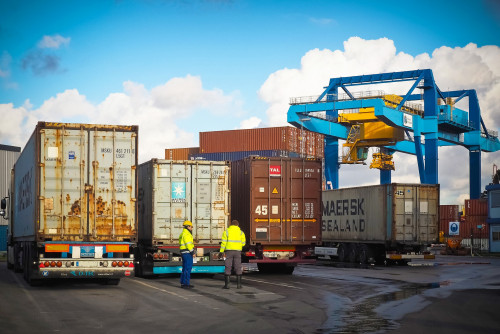
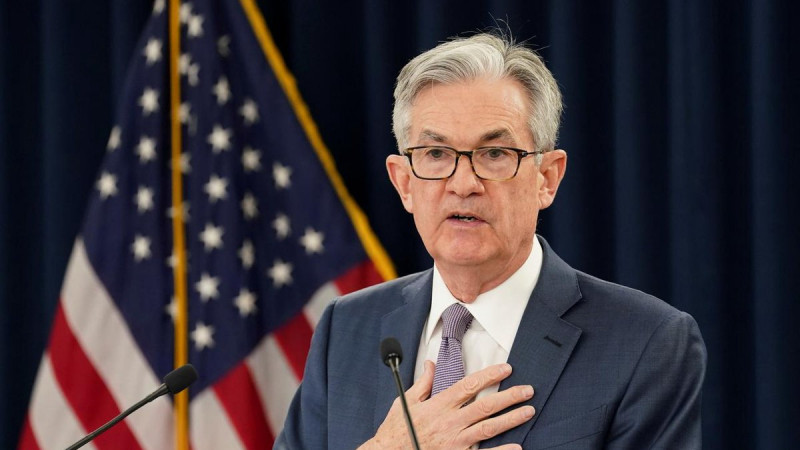
Fed Chair Jerome Powell, at a news conference, said that President Donald Trump’s tariffs have started to push up inflation and would likely stall the progress the central bank has seen in reducing inflation since its peak in 2022.
“I think we were getting closer and closer” to price stability, Powell said. “I wouldn’t say we were at that. ... I do think with the arrival of the tariff inflation, further progress may be delayed.”
But he added that the Fed still expects inflation to get back to nearly 2% by the end of next year. Tariffs could just create a one-time increase in prices, he said, rather than an ongoing boost to inflation. And in some cases, the Fed can simply “look through” a temporary price rise, rather than respond by raising rates, Powell added.
Those comments appeared to please investors, and the S&P 500 stock index rose 1% Wednesday afternoon.
Luke Tilley, chief economist at Wilmington Trust, said Powell appeared less alarmed about the impact of tariffs compared to the Fed’s previous meeting in January.
“They’re talking about tariffs in a totally different way,” he said.
Powell acknowledged that the Fed initially thought inflation coming out of the pandemic would be temporary, which led it to delay raising rates to combat higher prices. But he added that in this case, it could be a “different situation.”
“But...we really can’t know that,” he added, noting that uncertainty is enveloping the economy. “We’re going to have to see how things actually work out.”
Fed policymakers also expect the unemployment rate to tick higher, to 4.4%, by the end of this year, from 4.1% now.
The economic projections underscore the tight spot the Fed may find itself in this year: Higher inflation typically would lead the Fed to keep its key rate elevated, or even raise rates. On the other hand, slower growth and higher unemployment would often cause the Fed to cut rates to spur more borrowing and spending and lift the economy.
It is the second meeting in a row that the Fed has kept its interest rate at about 4.3% as the central bank has moved to the sidelines as it evaluates the impact of the Trump administration’s policies on the economy. Economists forecast that tariffs will likely push up inflation, at least temporarily. But other policies, such as deregulation, could lower costs and cool inflation.
Powell acknowledged that many surveys of businesses and consumers have shown rising concern about the economic outlook. Yet he noted that the unemployment rate remains low and the economy is still expanding.
“We do understand that sentiment has fallen off pretty sharply but economic activity has not yet,” Powell said. “The economy seems to be healthy.”
Powell underscored that uncertainty around the economy’s outlook is “unusually elevated” and said that the Fed is prepared to be patient and see how the economy evolves before making further moves.
“We’re not going to be in any hurry to move,” he said. “We’re well positioned to wait for further clarity and not in any hurry.” – March 20, 2025