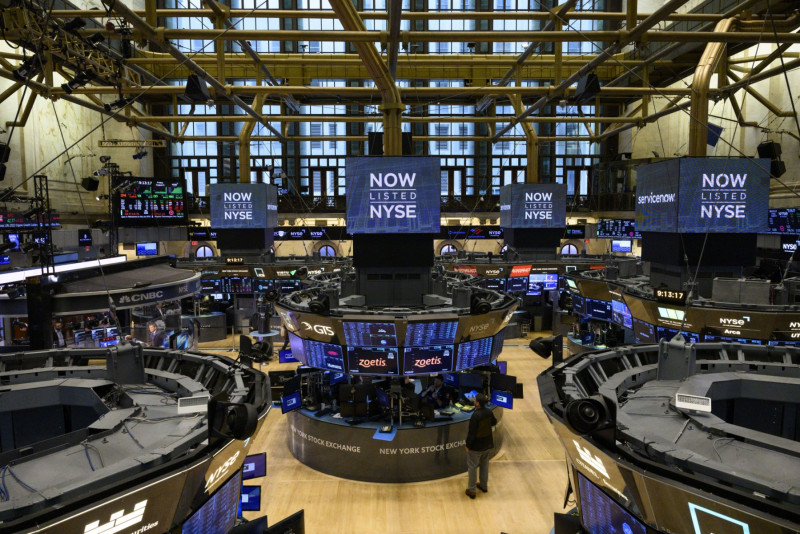
MAJOR U.S. stock indexes registered their biggest daily percentage drops since 2020 on Thursday and the dollar weakened as U.S. President Donald Trump's drastic trade tariffs stoked fears of a global recession and led investors to seek safe-haven assets like bonds and the yen.
Reuters cited that the S&P 500 companies lost a combined US$2.4 trillion in stock market value, their biggest one-day loss since the coronavirus pandemic hit global markets on March 16, 2020.
The Nasdaq Composite Index led declines on Wall Street, ending the day down 5.97% in its biggest daily fall since March 2020, while the S&P 500 and Dow Jones Industrial Average posted their biggest daily percentage declines since June 2020.
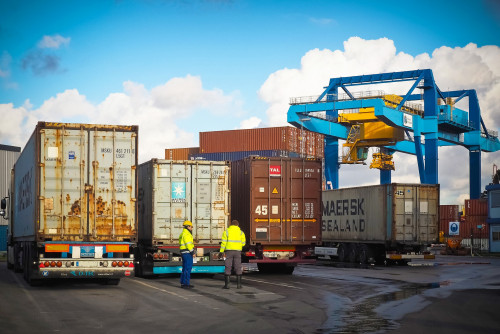
Traders were rattled by the severity of a new baseline 10% tariff on imported goods and some eye-watering reciprocal tariffs on dozens of countries that Trump said had unfair trade barriers.
Investors fear a full-blown trade dispute could trigger a sharp global economic slowdown and drive-up inflation, with the latest round of U.S. trade tariffs hitting a world economy barely recovered from the post-pandemic inflation surge and dealing with geopolitical strife.
"Markets plummeted today, and I kind of view it as a near-complete reset of what investors are thinking going forward," said Peter Tuz, president of Chase Investment Counsel in Charlottesville, Virginia.
"Any expectation for revenues and earnings for most companies in the U.S. - and globally for that matter - are going to be lowered. The market is reflecting reduced growth, reduced earnings, reduced revenue."
Shares of Apple fell 9.2%, hit by the tariffs on China, the base for much of its manufacturing. Amazon.com dropped 9%, Microsoft fell 2.4%, and Nvidia declined 7.8%.
The S&P 500 technology index fell 6.9%. The S&P 500 energy sector sank 7.5%, with oil prices falling more than 6% on the day.
The CBOE Volatility index, known as Wall Street's fear gauge, rose to 30.02, its highest closing level since August 5, 2024.
The Dow fell 1,679.39 points, or 3.98%, to 40,545.93, the S&P 500 dropped 274.45 points, or 4.84%, to 5,396.52 and the Nasdaq Composite 1,050.44 points, or 5.97%, to 16,550.61.
MSCI's gauge of stocks across the globe fell 28.47 points, or 3.41%, to 807.64, set for its biggest daily percentage fall since June 2022.
The U.S. dollar also weakened sharply. The euro hit a six-month high against the dollar and was last up 1.74% at US$1.1037, while the dollar fell 1.95% against the Japanese yen to 146.445 yen , and sank 2.35% on the Swiss franc to 0.8608 franc .
Reciprocal Levy
In Europe, the 27-country EU bloc now faces a 20% reciprocal levy. The pan-European STOXX 600 index fell 2.57%.
Trump's levies impacted Asia particularly hard. China was hit with a 34% reciprocal tariff, Japan 24%, South Korea 25% and Vietnam 46%.
"This is how you sabotage the world's economic engine while claiming to supercharge it," said Nigel Green, CEO of global financial advisory deVere Group.
Economists warn steep tariffs will trigger global recession
The scramble for ultra-safe government bonds that provide a guaranteed income drove down U.S. Treasury yields.
The benchmark U.S. 10-year Treasury note yield tumbled 14.6 basis points to 4.049% after falling to a 4.004%, its lowest since November 25. The yield on the note was on track for its biggest daily drop since August 2.
Euro area government bond yields dropped, with Germany's 10-year yield, the euro area's benchmark, hitting its lowest since March 4.
If the tariffs trigger recessions, central banks around the world are likely to slash interest rates, which benefit bonds.
Credit rating agency Fitch warned they were a "game-changer" for the U.S. and global economy, while Deutsche Bank called them a "once in a lifetime" moment that could knock 1%-1.5% off U.S. growth this year. - April 4, 2025