U.S. PRESIDENT Donald Trump's trade war rattled global markets anew on Thursday as stocks and oil prices sank amid fears China may once again respond in kind with higher tariffs to match the latest levies imposed by the United States.
Battered global markets and anxious global leaders welcomed Wednesday's reprieve when Trump suddenly decided to freeze most of his hefty new duties for 90 days.
Reuters reported U.S. Treasury Secretary Scott Bessent trying to further assuage skeptics by telling a meeting of Trump's cabinet that more than 75 countries wanted to put in place a process for trade negotiations, and Trump himself expressed hope of a trade deal with China.
But the uncertainty in the meantime extended some of the most volatile trading since the early days of the COVID-19 pandemic.
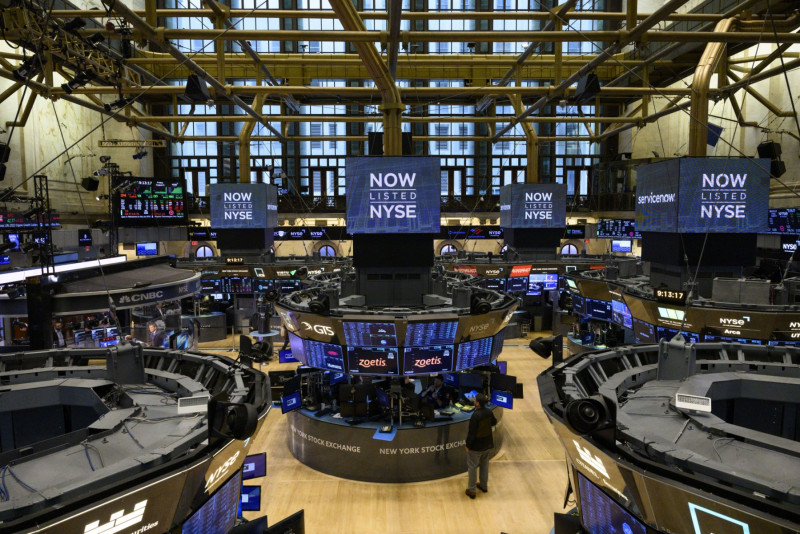
The S&P 500 index (.SPX), opens new tab ended 3.5% lower on Thursday, while the Nasdaq (.IXIC), opens new tab dropped 4.3% and the Dow Jones Industrial Average (.DJI), opens new tab was down 2.5%. Oil prices fell more than 3%.
The S&P 500 is down about 15% from its peak, and analysts believe stocks are in danger of falling into a bear market due to the uncertainty surrounding tariff policy.
"This has gone from a disorderly selloff to hopefully back to more of an orderly selloff because recession risk is much, much higher now than it was a couple weeks ago," said Adam Hetts, global head of multi-asset at Janus Henderson in Denver.
Bessent predicted that striking deals with other countries would bring more certainty to trade policy over the next 90 days, once "we go through the queue and settle with these countries" which he said would present more favorable terms.
"I don't see anything unusual," he said of the day's market activity.
The U.S. and Vietnam agreed to begin formal trade talks after Bessent spoke with Vietnamese Deputy Prime Minister Ho Duc Phoc, the White House said.
Trump told reporters at the White House he thought the United States could make a deal with China, but he reiterated his argument that Beijing had "really taken advantage" of the U.S. for a long time.
"I'm sure that we'll be able to get along very well," Trump said, adding that he respected Chinese President Xi Jinping. "In a true sense he's been a friend of mine for a long period of time, and I think that we'll end up working out something that's very good for both countries."
Wall Street volatility continued on Thursday with the Dow dropping 2.5%, the S&P 500 shedding nearly 3.5% and the Nasdaq losing 4.3%.
While announcing a 90-day tariff pause on dozens of countries, Trump ratcheted up tariffs on Chinese imports, raising them effectively to 145% when levies imposed earlier this year are taken into account.
China has been raising its tariffs on the U.S. with each Trump increase, raising fears that Beijing may jack up tariffs above the current 84%.
China rejected what it called threats and blackmail from Washington and pledged to follow through to the end if the U.S. persists, Commerce Ministry spokesperson He Yongqian told a regular press briefing. China's door was open to dialogue, but this must be based on mutual respect, the ministry said.
With trade hostilities persisting among the top three U.S. trade partners, Goldman Sachs estimates the probability of a recession at 45%.
The U.S. tariff pause does not apply to duties paid by Canada and Mexico, whose goods are still subject to 25% fentanyl-related tariffs unless they comply with the U.S.-Mexico-Canada trade agreement's rules of origin.
The rollback on the other tariffs did little to lower the overall average import duty rate, according to Yale University researchers. The average effective tariff rate is the highest in more than a century, the Yale Budget Lab wrote on Thursday.
One reprieve in the global trade wars came when the European Union said it would pause its first counter-tariffs, and more than a dozen countries have made offers to reach a trade deal, according to White House economic adviser Kevin Hassett.
"We want to give negotiations a chance," European Commission President Ursula von der Leyen said on X, while also warning that counter-tariffs could be reinstated if negotiations "are not satisfactory."
The EU had been due to launch counter-tariffs on about 21 billion euros (US$23.25 billion) of U.S. imports next Tuesday in response to Trump's 25% tariffs on steel and aluminium. It is still assessing how to respond to U.S. car tariffs and the broader 10% levies that remain in place.
Some central bankers also remained cautious.
European Central Bank policymaker Francois Villeroy de Galhau told France Inter radio it was "less
Trump has claimed the U.S. was now collecting US$2 billion a day from his tariffs.
But that appeared to be an overstatement given that the Treasury on Thursday reported that gross customs duties in March totaled US$8.75 billion, up by about US$2 billion from a year earlier and the highest since September 2022. The increase is partly due to Trump's tariff increases since February, a Treasury official said. - April 11, 2025