THE recent rollout of Fleximart and Kesum, two social enterprise initiatives introduced last week, has drawn significant attention for their broader mission beyond simply creating jobs and offering affordable goods.
Founded on the concept of social enterprise capital by former Economy Minister Datuk Seri Rafizi Ramli, the projects seek to establish a sustainable business model capable of operating independently from government assistance while challenging the dominance of major industry players in Malaysia’s retail supply chain.
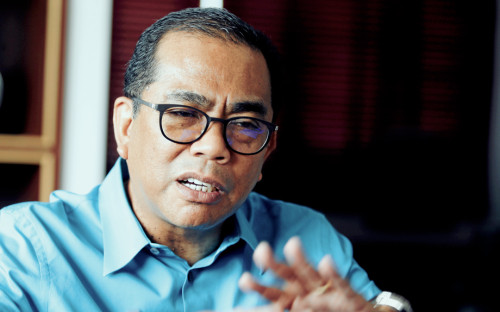
Unlike the government’s Rahmah Sales initiative, Rafizi said the social enterprise model carries a more fundamental value proposition.
“The aim is to create a business ecosystem that can stand on its own and, at the same time, challenge the status quo of price determination controlled by a handful of powerful producers and distributors,” he explained.
The strategy is twofold: first, to provide employment opportunities and access to essential goods at lower prices; and second, to foster competition that could compel large manufacturers and distributors to reassess their pricing structures, long regarded as difficult to reform.
Rafizi’s approach goes beyond opening affordable grocery and food outlets. It serves as a live social experiment to test whether a people-driven enterprise model can truly influence Malaysia’s retail market.
Fleximart and Kesum are currently in their pilot phase, with two outlets operating in Shah Alam’s Section 7 and Pandan Indah. These early ventures are expected to serve as benchmarks for the feasibility and sustainability of the social enterprise concept.
If the network expands successfully and achieves self-sufficiency, it could help rebalance market dynamics — ensuring that prices reflect consumer needs rather than being dictated by monopolistic forces.
However, analysts note that the success of such a model cannot be measured hastily. It requires time, transparent data, supportive policies, and steadfast commitment to maintain its founding principles.
The true test will be whether the initiative can extend its reach beyond urban centres into suburban and rural areas, addressing long-standing inequalities in consumer access and affordability.
Malaysians have long yearned for fairer prices and a more balanced market. Should Fleximart and Kesum succeed in restoring that balance, the initiative could mark the beginning of a more equitable and humane retail landscape. - November 10, 2025