Business

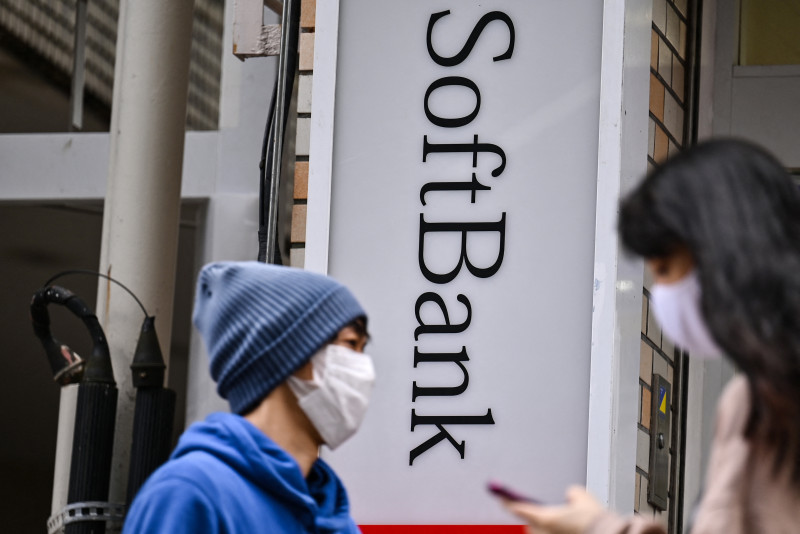
SoftBank Group Q1 net profit down 39% on-year

3 months to June see investment giant gaining ¥761.5 bil

Updated 5 years ago · Published on 10 Aug 2021 7:00PM

SoftBank Group Q1 net profit down 39% on-year
SoftBank Group has poured money into some of Silicon Valley’s biggest names and hottest new ventures from AI to biotech through its US$100 billion Vision Fund. – AFP pic, August 10, 2021

TOKYO – Investment giant SoftBank Group said today net profit plunged 39% in the first quarter, following gains in the same period last year related to the US merger of T-Mobile and Sprint.

Net profit in the three months to June was ¥761.5 billion (RM29.1 billion), the Japanese conglomerate said, compared with ¥1.26 trillion in the same period in the previous financial year.

The merger of US telecoms operators T-Mobile and Sprint – formerly controlled by SoftBank Group – was completed in April last year, releasing ¥734.5 billion in net income, SoftBank said in a statement.

SoftBank Group has poured money into some of Silicon Valley’s biggest names and hottest new ventures from AI to biotech through its US$100 billion Vision Fund.

Last financial year, the telecoms firm turned investment behemoth reported Japan’s biggest ever net profit thanks to tech shares rallies as people moved their lives online during the coronavirus pandemic.

But SoftBank’s investment approach means large transactions can cause unpredictable fluctuations in its results, said Mariko Semetko, senior credit officer at Moody’s Japan.

“Last year’s record high follows the previous year’s record loss, and signifies the highly volatile nature of the company’s business,” she told AFP.

“The company has a very fluid and complex capital structure, and unlisted investments and private financings that have limited transparency and are frequently collateralised.

“Its investment approach results in high governance risks,” Semetko added.

In 2019-20, SoftBank reported a net loss of ¥961.6 billion – its worst ever – as the start of the pandemic compounded woes caused by its investment in troubled office-sharing start-up WeWork.

But it quickly returned to profit as the impact of Covid-19 lockdowns worked largely in its favour. – AFP, August 10, 2021


Related News

Business / 2w

SoftBank, Grab propose US$1.85b investment in Malaysia’s AI infrastructure

World / 2w

24 injured as two earthquakes strike Japan

1mth

Cocaine in shoes: Invited on vacation to Japan, only to end up as drug mules

Business / 2mth

Robo.ai reports US$180m revenue following QC Capital acquisition

Malaysia / 2mth

Body found at KLIA2 in tyre storage compartment of aircraft from Japan

Malaysia / 3mth

Woman, believed to be foreigner, allegedly causes disturbance at KLIA (video)

Spotlight

Malaysia

Disputed Sungei Ujong Undang to face sedition charge tomorrow

Malaysia

Cabinet to weigh US tariff threat as Malaysia defends 19% trade ceiling

Malaysia

Announcement on Negeri MB will come from Istana – Ahmad Zahid

Malaysia

Inspector Sheila challenges police dismissal over alleged denial of fair hearing

Malaysia

Drug syndicate moved 3 tonnes of syabu worth RM156m through RMAF bases in Sabah

Malaysia

Fire destroys 90 per cent of Putrajaya apartment unit

Malaysia

Govt studying age restrictions, verification measures for online gaming platforms

Malaysia

40,214 cyberbullying-related posts removed as MCMC steps up child safety enforcement

You may be interested

Business

Oil prices holds above US$80 as Hormuz attacks heighten supply concerns

Business

SMEs face higher costs as LHDN stamp duty interpretation covers purchase orders, quotations

Business

Matrix Concepts founder honoured as FIABCI Malaysia Property Man of the Year 2026

Business

Oil prices rebound on Middle East supply fears

Business

South Korean robotic parking company explores opportunities in Malaysia

By Ian McIntyre

Business

MAG to add 10 Boeing Dreamliners in long-term fleet expansion drive