Business

Economists urge govt to review tax structure to grow revenue

Experts opine GST alone insufficient to sustain country’s coffers

Updated 3 years ago · Published on 07 Dec 2022 5:14PM

Economists urge govt to review tax structure to grow revenue
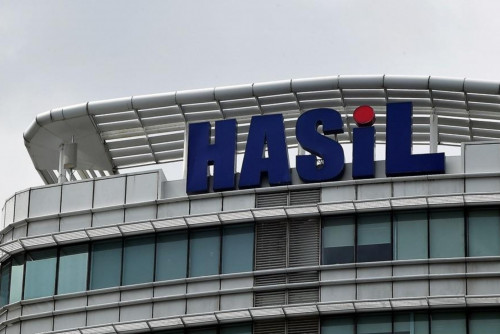
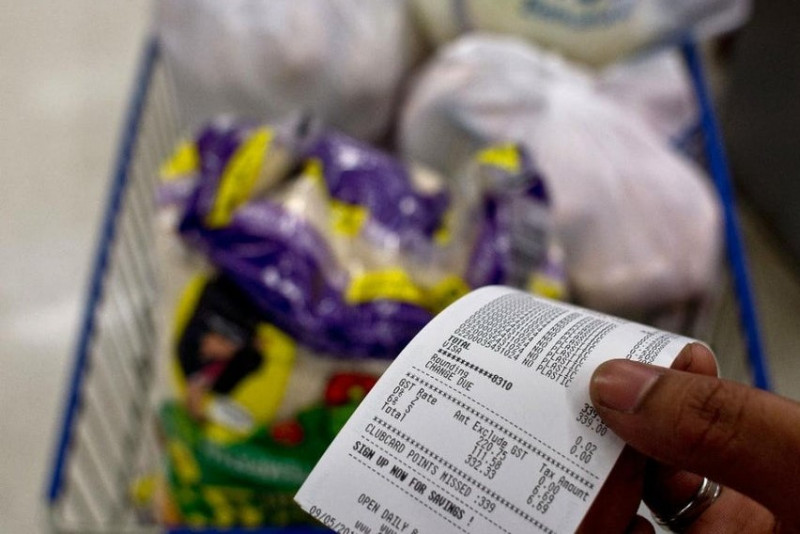
Economists have suggested for the new unity government to review the nation’s overall tax structure and look into additional measures to increase its revenue stream. – AFP pic, December 7, 2022

KUALA LUMPUR – Economists have called on the government to review the overall tax structure and look into additional measures to increase its revenue stream.

Khazanah Research Institute senior adviser Jomo Kwame Sundaram said while it would be relatively easy to reimplement and tweak the goods and services tax (GST) as it was used before, this by itself might be insufficient to generate the needed revenue increase.

“I think we have an inequitable tax structure on both the taxation side as well as on the spending side but also, we do not collect very much in terms of taxation as much as we spend.

“Hence, the overall tax structure needs a review and the government should design a more progressive value-added tax,” he said at a virtual discussion organised by the Malaysian Rating Corporation Bhd here today.

Jomo said although it is understandable that the new government could not change everything overnight, it should start making efforts towards making more adjustments.

Yayasan Rahimah Bt Yusof board of trustee member and economist Nungsari Ahmad Radhi said the government needed to be more creative when looking at the range of ways to increase the country’s revenue.

“GST is a good tax tool but you have to measure it against other tools. Look at the whole taxation policy.

“As for me, I am totally against the GST’s reintroduction just for the sake of adding to the country’s revenue,” he said.

On the Comprehensive and Progressive Agreement for Trans-Pacific Partnership (CPTPP), Jomo said the government should review the free trade agreement (FTA) as it mainly benefitted a few big companies and businesses and would worsen inequality in the local economy.

The CPTPP is an FTA signed by Malaysia, Australia, Brunei, Canada, Chile, Japan, Mexico, Peru, New Zealand, Singapore and Vietnam.

The agreement came into force for Australia, Canada, Japan, Mexico, New Zealand and Singapore in December 2018, Vietnam in January 2019, Peru in September 2021 and Malaysia on November 29. – Bernama, December 7, 2022

Related News

Malaysia / 2d

Zahid’s GST proposal revives scrutiny of PAS’ ‘haram’ ruling

Business / 2d

Pengerang needs to create wider economic value, not just store more oil, says expert

Business / 3w

Energy disruptions - a timely reminder that energy, economic security are interconnected - Minister

Malaysia / 1mth

Malaysia’s K-shaped economy: Growth without shared prosperity?

World / 1mth

Bangkok floods: The real pain starts when waters recede

Malaysia / 2mth

Anutin’s first year: Restoring Thailand’s political status quo

Spotlight

Malaysia

Disputed Sungei Ujong Undang to face sedition charge tomorrow

Malaysia

Cabinet to weigh US tariff threat as Malaysia defends 19% trade ceiling

Malaysia

Announcement on Negeri MB will come from Istana – Ahmad Zahid

Malaysia

Inspector Sheila challenges police dismissal over alleged denial of fair hearing

Malaysia

Drug syndicate moved 3 tonnes of syabu worth RM156m through RMAF bases in Sabah

Malaysia

Fire destroys 90 per cent of Putrajaya apartment unit

Malaysia

Govt studying age restrictions, verification measures for online gaming platforms

Malaysia

40,214 cyberbullying-related posts removed as MCMC steps up child safety enforcement

You may be interested

Business

MAG to add 10 Boeing Dreamliners in long-term fleet expansion drive

Business

Oil prices rebound on Middle East supply fears

Business

Matrix Concepts founder honoured as FIABCI Malaysia Property Man of the Year 2026

Business

South Korean robotic parking company explores opportunities in Malaysia

By Ian McIntyre

Business

Oil prices holds above US$80 as Hormuz attacks heighten supply concerns

Business

SMEs face higher costs as LHDN stamp duty interpretation covers purchase orders, quotations