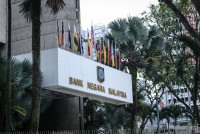
KUALA LUMPUR – Bank Negara Malaysia (BNM) governor Tan Sri Nor Shamsiah Mohd Yunus has denied that the increase in the overnight policy rate (OPR) has led to a rise in bankruptcies.
She said there are no figures to support such an allegation, adding that as a matter of fact, on aggregate, households have continued to hold financial assets in excess of debt which have enabled them to manage higher borrowing costs.
“I wish to stress that it is not true that the OPR increase caused a rise in bankruptcies.
“We acknowledge there are pockets of segments and sectors that need help due to their circumstances, and help remains available for those in need.
“With all these conditions, it is timely, necessary, and warranted that monetary policy is recalibrated to make sure that we continue to be on a sustainable growth path,” she said when announcing Malaysia’s economic performance for the first quarter of this year at Sasana Kijang here today.
BNM at its monetary policy committee (MPC) meeting on May 3 increased the OPR by 25 basis points to 3.00%. Accordingly, the OPR corridor’s ceiling and floor rates were increased to 3.25% and 2.75%, respectively.
Meanwhile, at the announcement, Nor Shamsiah made it clear that the decision to hike the OPR was made because the country’s economy has continued to strengthen, the gross domestic product has exceeded pre-pandemic levels, unemployment has fallen, and households remain resilient.
She said amid resilient domestic growth prospects, MPC judged that it was the right time to further normalise the degree of monetary accommodation.
With this decision, MPC has withdrawn the monetary stimulus intended to address the Covid-19 crisis in promoting economic recovery.
“At the current OPR level of 3.00%, the monetary policy stance is slightly accommodative and remains supportive of the economy,” she said.
She also emphasised that while inflation has been moderating, the greater expansion in Malaysia’s economy and firm domestic demand continue to contribute to price pressures, keeping inflation elevated, which has also been a trend in many countries.
“In some cases, monetary policy was slow to react, resulting in the need for policy interest rates to be raised more quickly and aggressively.
“We certainly do not want to be in that situation. We must be prudent.
“We also want to avoid a situation of keeping interests too low for too long, especially when the economic growth is firm because this could lead to higher inflation in the future and also (there is the) risk of financial imbalances,” said Nor Shamsiah.
Ultimately, she said, the goal of monetary policy is to achieve sustainable economic growth over a longer term.
The governor also corrected the misconception of wanting economic growth to be slower.
Stressing that this is not true, she said the decision to raise interest rates would help to ensure that the country continues to grow sustainably.
Meanwhile, Nor Shamsiah said the domestic financial market remains orderly despite concerns that the global economy output could moderate.
In particular, the banking sector stress in major advanced economies has contributed to global bond yields declining further towards the end of the quarter amid monetary policy easing expectations in the United States.
She said despite external uncertainties, investors’ outlook for emerging markets, including Malaysia, has remained broadly intact.
Malaysia’s domestic government bond yields declined during the quarter in line with global bond yield. Following lingering uncertainties, most regional equities markets including the FBM KLCI also declined in the same period. – Bernama, May 12, 2023