THE Ministry of Education (MOE) is set to expand its preschool education network with 300 new classrooms by 2027, bringing the total number of additional preschool classes created between 2023 and 2027 to 1,040 as the government moves to widen access to early childhood education.
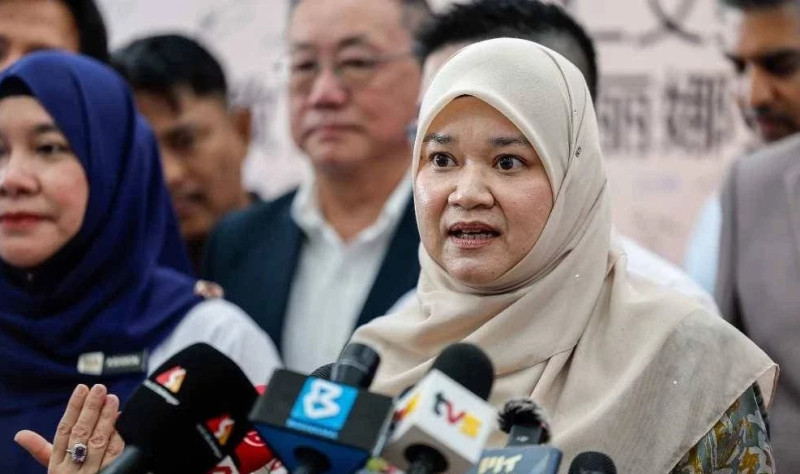
Education Minister Fadhlina Sidek said the expansion represented a key step in strengthening the country’s early education ecosystem while ensuring more children receive quality preparation before entering primary school.
"These measures are clear evidence of the MADANI Government’s priority in ensuring wider and more equitable access to quality and free early childhood education for children nationwide.
"This is also an important step in preparing our children to enter Year One as part of the Six-Year-Old Cohort," she said in a written parliamentary reply published on the Parliament website.
Fadhlina said the preschool expansion programme reflected the MADANI Government’s commitment to ensuring equitable access to free, high-quality early education regardless of location or background.
The initiative is being strengthened through cooperation between the Education Ministry and two other government agencies — the Department of Community Development (KEMAS) and the National Unity and Integration Department (JPNIN).
She said KEMAS currently operates 10,536 kindergartens with an enrolment of 204,412 children, while JPNIN manages 1,781 Tabika Perpaduan centres serving 34,008 children.
"Overall, as of 31 May 2026, the three agencies are operating a total of 22,808 preschool classrooms nationwide, providing education access to 455,446 children aged between four and six years old.
"This integrated effort demonstrates the holistic approach of the MADANI administration across ministries and agencies to ensure every Malaysian child receives equitable access to early education," she said.
Fadhlina was responding to a question from Zahir Hassan (PH-Wangsa Maju) regarding the latest number of preschool pupils and classrooms under the Education Ministry, KEMAS and Tabika Perpaduan, as well as proposals to place preschool management under a single ministry.
She said the Education Ministry was expanding preschool capacity through two main approaches — constructing new classrooms under Malaysia’s Five-Year Development Plans and expanding facilities at existing schools.
The selection of locations for new and expanded preschool facilities, she said, would be based on several factors, including the number of eligible children, local demand, existing infrastructure capacity, distance from nearby early education institutions, suitability of facilities, projected enrolment and future development plans.
The government has also established a special committee involving the Education Ministry, the Ministry of Rural and Regional Development (KKDW), the Ministry of National Unity and other relevant stakeholders to study the possibility of streamlining preschool education management under a single ministry.
Fadhlina said the committee would conduct a comprehensive assessment covering policy and legal frameworks, staffing requirements, financial implications, assets, infrastructure, curriculum and operational arrangements before any final decision is made.
"This review is also aligned with the aspirations of the Malaysia Education Plan 2026-2035 and the 13th Malaysia Plan (RMK13), which emphasise access, equity and quality in education.
"Among the key priorities currently being focused on is the implementation of the 2026 Preschool Curriculum to narrow learning gaps and ensure children have a strong foundation before entering primary education," she said.
As of 31 May 2026, preschools under the Education Ministry operated 10,491 classrooms nationwide, benefiting 217,026 pupils.
Fadhlina said the continued expansion of preschool facilities reflected the government’s commitment to ensuring every Malaysian child has access to quality early education and is prepared with a strong foundation before beginning formal schooling. - July 7, 2026