


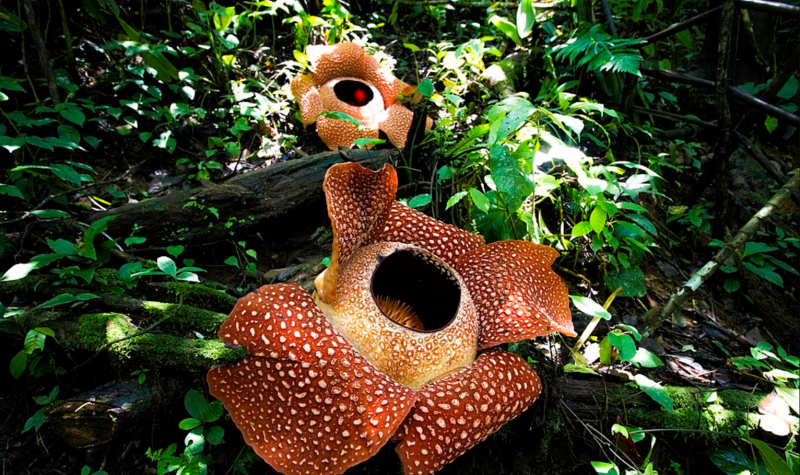
KELANTAN, renowned for its rich diversity of Rafflesia species, faces growing challenges in safeguarding the world’s largest flower due to unchecked agricultural development and widespread public ignorance about conservation.
Associate Professor Dr Zulhazman Hamzah, Dean of the Faculty of Earth Sciences at Universiti Malaysia Kelantan (UMK), warned that uncontrolled development in Rafflesia’s natural habitat could jeopardise the survival of the world’s largest flower species.
“Areas like Lojing, which were once home to thriving Rafflesia populations, are now under serious threat due to large-scale agricultural development,” he told Bernama in a recent interview.
He highlighted that 26 Rafflesia populations have been identified in Lojing, making it crucial to protect the area’s delicate ecosystem.
“If this trend continues without strict regulatory control, we may lose one of the country’s most precious natural treasures,” he cautioned.
Dr Zulhazman explained that there are around 40 species of Rafflesia globally, with all of them native to just five Southeast Asian countries: Malaysia, Indonesia, the Philippines, Thailand, and Brunei.
“Malaysia alone is home to 14 species, with eight found in the peninsula and six in Sabah and Sarawak,” he added.
However, he noted that inadequate monitoring and the lack of commitment from certain sectors regarding conservation have exacerbated the threats to the species.
“Public awareness remains low, which often leads to conservation efforts being overlooked or undervalued,” he remarked.
Conservation efforts for Rafflesia in Kelantan began in 2008 with the Lojing Scientific Expedition, which brought together over 100 participants from various universities and government agencies.
In 2010, a 404.6-hectare area in Lojing was gazetted as a Rafflesia Conservation Area, and since then, numerous studies on the flower’s growth, pollination, and seed dispersal have been conducted.
Despite these efforts, Dr Zulhazman noted that conservation is becoming increasingly difficult due to the expansion of agricultural activities near the flower’s natural habitat.
“There is a pressing need for tighter control over activities that may impact the Rafflesia ecosystem,” he said, suggesting measures such as limiting development near conservation zones and enforcing stricter regulations on agricultural and tourism-related activities.
He also recommended involving the Orang Asli community in conservation efforts and launching ongoing awareness campaigns targeting local communities and tourists.
“If these measures are not implemented immediately, the Rafflesia habitat will continue to be threatened, and we may lose this species in the next few decades,” he warned.
Kelantan is one of the states with the greatest diversity of Rafflesia species, with three primary types found in the region: Rafflesia kerrii, Rafflesia cantleyi, and Rafflesia sumii.
According to Dr Zulhazman, the unique presence of these species’ positions Kelantan as a promising hub for Rafflesia conservation and scientific research in Malaysia.
“With stronger collaboration between the state government and relevant stakeholders in implementing conservation strategies, Kelantan has the potential to become an internationally recognised centre for ecological research and nature-based tourism,” he said.
However, Dr Zulhazman cautioned that without more effective control measures, current conservation efforts may fall short of ensuring the long-term survival of the iconic giant flower. - April 8, 2025
.jpg)




_director_Datuk_M._Kumar.jpg)
