MALAYSIA’S move towards the next generation of data centres—coined Data Centre 2.0—is a vital step in laying the groundwork for a resilient and sustainable digital economy, according to the Malaysian Investment Development Authority (MIDA).
Chief executive officer Datuk Sikh Shamsul Ibrahim Sikh Abdul Majid, delivering his keynote at the Bursa Malaysia–Hong Leong Investment Bank (HLIB) Stratum Focus Series, said that as data infrastructure evolves rapidly to accommodate generative AI, quantum computing and automated systems, Malaysia must act decisively to stay competitive.
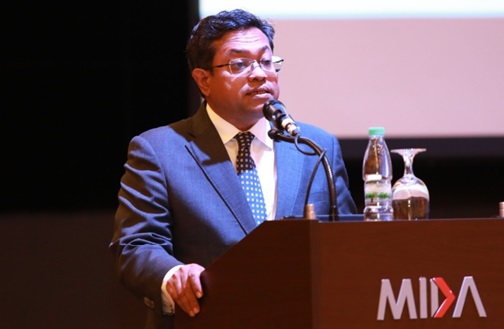
“Recent global developments—such as the recalibration of artificial intelligence export controls by the US Department of Commerce—reflect a deeper realisation that digital leadership must be strategic, collaborative and bold, rather than reactive or isolated,” Bernama cited him saying today.
“For Malaysia, this is a call to action. We must continue to lead with agility, vision, and robust policies that support data centre development.”
He revealed that Malaysia’s digital sector recorded RM89.8 billion in approved investments in the first quarter of 2025—an annual increase of 3.7 per cent. Of this, RM35.1 billion was channelled into the information and communications sub-sector.
Since 2021, the Digital Investment Office—a collaborative initiative between MIDA and the Malaysia Digital Economy Corporation (MDEC)—has facilitated RM310.7 billion in total digital investments, far surpassing the national target of RM130 billion and creating over 92,000 jobs.
“These roles are not limited to traditional IT but increasingly include positions in cloud engineering, AI operations and cybersecurity—fields central to our digital transformation,” Sikh Shamsul noted.
HLIB group managing director and chief executive officer Lee Jim Leng also addressed the forum, stressing that data infrastructure is the cornerstone of a rapidly expanding AI-led global economy.
She acknowledged, however, that the transformation comes amid heightened geopolitical uncertainties, including the US-imposed restrictions on the export of advanced AI chips—a move that has reverberated throughout the global tech supply chain.
“Although Malaysia is not directly affected by these restrictions, we remain a critical node in a deeply interconnected global ecosystem,” she said.
“This is Malaysia’s moment. The transition to Data Centre 2.0 is both a challenge and a remarkable opportunity. By harnessing our strategic positioning, fostering home-grown innovation and strengthening regional and international collaboration, we can assert ourselves as ASEAN’s leading data centre hub.” - June 25, 2025