LABELS such as “strange”, “rude”, “noisy”, “disabled” and “crazy” are among the hurtful insults frequently endured by people living with Tourette syndrome (TS), a neurological condition that causes involuntary movements and sounds which sufferers cannot control.
These repeated movements or vocalisations, known as tics, often attract unwanted attention, particularly in public spaces, where unusual gestures, sudden noises or the uttering of socially inappropriate words can shock or disturb onlookers.
As a result, behaviour linked to Tourette syndrome is commonly misjudged as “odd” or “bad”, reinforcing negative perceptions and social stigma that patients must confront almost daily.
Symptoms of Tourette syndrome usually emerge in childhood or adolescence, yet many cases go unrecognised. This lack of understanding can have profound social and psychological consequences, especially when society fails to appreciate the nature of the condition.
Children and teenagers with Tourette syndrome may be isolated by peers or struggle academically, while adults can face discrimination at work, along with added risks when driving or operating dangerous machinery.
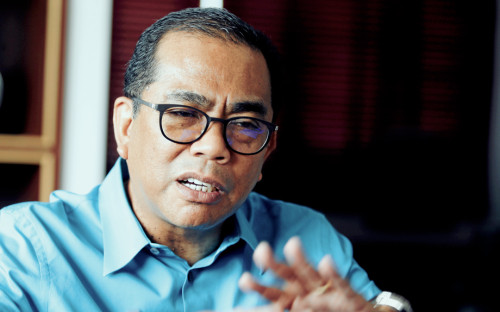
Professor Datin Dr Norlinah Mohamed Ibrahim, a senior consultant neurologist at the Faculty of Medicine, Universiti Kebangsaan Malaysia (UKM), Hospital Canselor Tuanku Muhriz and UKM Specialist Centre, said Tourette syndrome is a disorder involving both neurodevelopmental and psychiatric elements.
She explained that the condition causes repetitive movements and sounds, or tics, which may be motor or vocal in nature and range from simple to complex.
“There are two main types of tics, namely motor tics and vocal tics,” she said, adding that simple motor tics include blinking, shrugging the shoulders, nodding, touching, jerking the head or neck, and moving the lips.
Simple vocal tics, she said, include throat-clearing, coughing, hissing, sniffing, spitting or yawning.
Dr Norlinah explained that complex tics are more coordinated and involve several muscle groups, such as turning the head while lifting the shoulders at the same time, or repeatedly touching objects.
“Tics vokal kompleks boleh membabitkan pengulangan perkataan atau frasa tertentu, termasuk perkataan kasar (coprolalia) atau mengulang kata orang lain (echolalia).
“Pesakit sebenarnya sedar tingkah laku itu, tetapi mereka tidak mampu mengawalnya,” she said.
Dr Norlinah added that Tourette syndrome affects males more frequently than females, with a ratio of about three to one, and an estimated 0.3 to one per cent of the global population diagnosed with the condition.
She noted that Tourette syndrome is relatively unique because its management may involve neurologists, psychiatrists or paediatricians, depending on the patient’s age and symptoms.
According to her, a diagnosis of Tourette syndrome is only made when both motor and vocal tics persist for more than a year.
“For example, if only one type of tic appears over a short period, it may not be Tourette syndrome but could be related to other developmental or health issues,” she said.
She also explained that unlike ordinary habits, people with Tourette syndrome often experience discomfort in specific muscles before a tic occurs.
“Almost 90 per cent of patients report feeling soreness or pain if they try to suppress the movement.
“They may also feel restless and anxious when attempting to hold back tics, especially in critical situations such as during examinations,” she said.
Dr Norlinah said tics can be detected as early as the age of five, with symptoms typically peaking during adolescence.
Although the severity of symptoms often lessens as patients grow older, she noted that Tourette syndrome rarely disappears completely in adulthood. - December 14, 2025