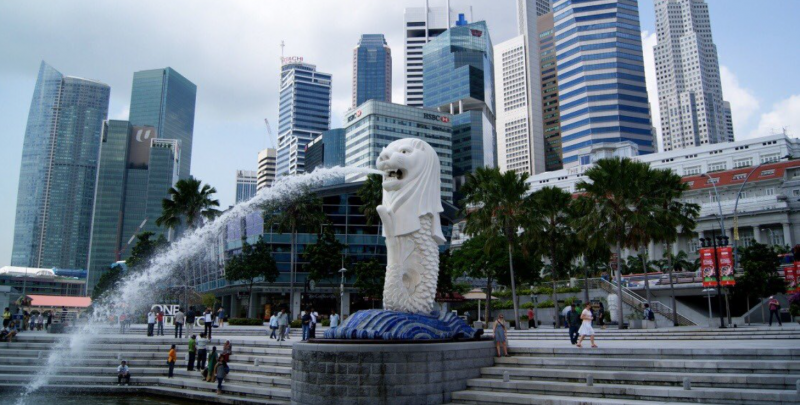
SINGAPORE has remained the world’s most expensive city for affluent individuals for the fourth consecutive year, highlighting the premium wealthy investors place on stability, security and a strong currency.
According to the Julius Baer Group Global Wealth and Lifestyle Report 2026, released on July 7, wealthy individuals are increasingly looking beyond cost alone and prioritising cities that offer a combination of financial security, quality of life and long-term value.
Julius Baer Singapore branch manager Yee Kim Tan said Singapore continued to be a “natural choice” for wealthy individuals deciding where to hold and allocate their assets.
He said the city-state was valued for its stability, strong rule of law and sense of security, particularly among families planning their financial futures.
“Many families see it as part of a broader, deliberate allocation across regions, alongside Europe and the Americas,” The Straits Times cited him saying.
Singapore’s top ranking in the bank’s Lifestyle Index was driven largely by the high cost of residential property and cars — two categories carrying the highest weightings — as well as the strength of the Singapore dollar against the US dollar.
The index measures the cost of a basket of 20 luxury goods and services, including private education, healthcare, property, cars, business-class travel and luxury items, across 25 global cities. Data for the 2026 report was collected between November 2025 and March 2026.
The Republic remained the most expensive place in the world to purchase a car and ranked third globally for residential property costs.
Singapore, together with cities including Hong Kong, Shanghai, Sydney, Bangkok, Taipei, Tokyo, Jakarta, Mumbai and Manila, also shared the top position globally for the costliest locations to pursue a Master of Business Administration (MBA), making Asia-Pacific the most expensive region for MBA education.
However, Singapore’s ranking for healthcare costs fell sharply, moving from third place in 2025 to 23rd in 2026. São Paulo, Zurich and London occupied the top three positions for healthcare expenses.
Globally, Zurich climbed to second place in the Lifestyle Index, overtaking London, after the Swiss franc strengthened against the US dollar.
The report said the currency’s appreciation was supported by Switzerland’s political and financial stability, reinforcing the franc’s role as a store of value during periods of uncertainty.
Monaco entered the global top three for the first time, while Hong Kong dropped to fourth place, partly due to currency movements and higher property costs.
The report also noted that rising commodity prices, particularly gold, had contributed to higher luxury prices. Gold prices have more than doubled since 2024, pushing up the cost of jewellery and watches.
Despite higher prices, demand among wealthy consumers remained resilient, allowing luxury brands to continue raising prices while maintaining exclusivity and adjusting to currency fluctuations, logistics costs and tariffs.
The report highlighted that wealth mobility — both physical and financial — had become an increasingly important feature of affluent lifestyles in 2026.
Wealthy individuals are not only choosing where to live and spend but are also diversifying assets across different markets to manage currency trends, investment opportunities and geopolitical risks.
In the Asia-Pacific region, more than 70 per cent of wealthy investors surveyed said they had increased portfolio diversification over the past year amid geopolitical and economic uncertainty.
Many investors turned to precious metals as a hedge, with gold remaining dominant while platinum gained popularity in China and silver saw renewed demand in India through both physical markets and exchange-traded products.
Julius Baer equities research Asia analyst Jen-Ai Chua said artificial intelligence, semiconductor growth, wealth flows and migration were driving economic expansion in cities such as Singapore, Hong Kong, Shanghai and Sydney.
“High-tech artificial intelligence and semiconductor-driven growth, wealth flows and migration are fuelling fresh growth in cities like Singapore, Hong Kong, Shanghai and Sydney,” she said.
She added that Asia remained the fastest-growing region in Julius Baer’s economic projections, with gross domestic product growth expected at 4.5 per cent in 2026, exceeding the global average forecast of 2.9 per cent.
Despite economic uncertainty, wealthy consumers in Asia-Pacific and the Middle East continued to increase luxury spending, particularly on hotel suites, fine dining and business-class travel.
Equities remained the preferred investment choice among wealthy individuals, while cash moved into second place ahead of real estate as investors balanced growth opportunities with risk management. - July 7, 2026