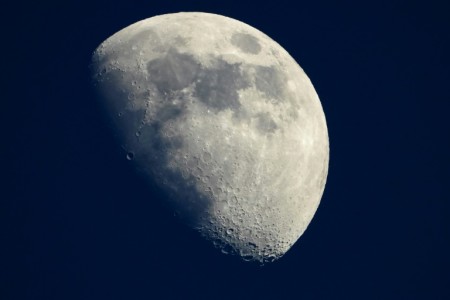
THE moon may have formed in as little as five hours after a colossal collision rocked the early Solar System about 4.5 billion years ago, according to a new study by scientists from the Southwest Research Institute and the University of Arizona.
For decades, scientists have believed the moon formed after a Mars-sized body known as Theia crashed into the young Earth, blasting huge amounts of molten rock into space.
The debris was thought to have gradually clumped together over an extended period before eventually forming Earth’s natural satellite.
However, high-powered computer simulations by the research team suggest the process may have been far more rapid.
In some collision scenarios, the scientists found that a largely intact moon could have emerged within just five hours of the impact.
“It all depends on how hot the Earth and Theia were before the collision. The impact could destroy Theia and produce a large disc of debris that eventually forms the Moon,” said planetary scientist Dr Adeene Denton of the Southwest Research Institute.
“However, when I use the same parameters as in the original impact modelling, including the same temperature structure, a largely intact Moon forms within about five hours,” she added.
The findings, published in the Astrophysical Journal Letters, could help resolve one of the biggest questions in planetary science: how quickly the collision that created the Moon was followed by its formation.
The study could also help explain several enduring mysteries about the Moon, including differences in its composition and the amount of volatile material it contains.
The researchers said the findings demonstrate that the moon’s formation may have occurred much more rapidly than previously assumed, potentially offering a new way to understand the early history of both the Earth and its natural satellite. - September 3, 2026