HUMAN-induced climate change significantly worsened Indonesia's wildfires this year, adding about 1.6 degrees Celsius to temperatures during the fire season, despite a strong El Niño being the main driver of exceptionally dry conditions, scientists said on Friday.
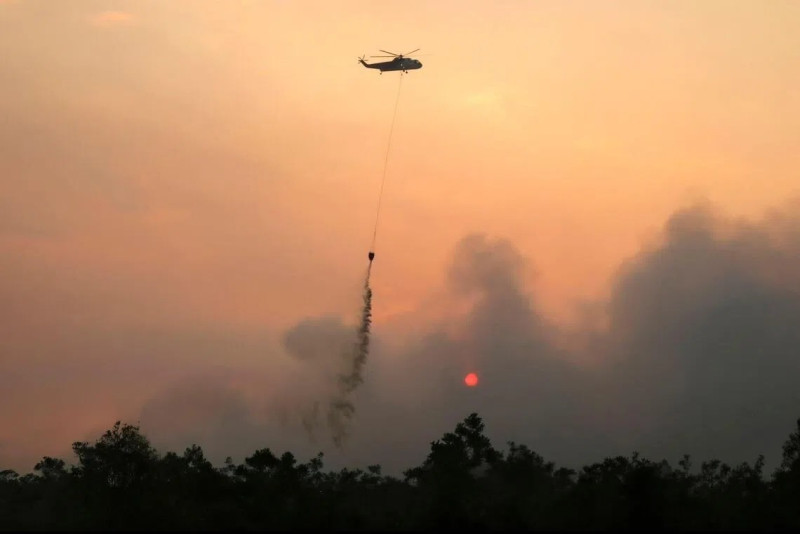
A report by climate research group World Weather Attribution found that record-breaking heat, driven by global warming, intensified fires that swept across large parts of Indonesia between August and October, sending hazardous smoke across much of Southeast Asia.
"The conditions that we saw this year would simply just not have happened in a world without the human contribution to climate change, even with the very strong El Niño that we're seeing," Reuters quoted Theodore Keeping, a wildfire and extreme weather researcher at Imperial College London who contributed to the report, saying.
He said the weather conditions driving the fires were becoming increasingly severe.
"You have multiple different drivers changing in different ways, but what we can say with very high confidence is that the driving weather conditions of these fires are getting more severe," he told a briefing.
Pramudhian Firdaus, a wildfire researcher at the University of Melbourne, said September 2026 was Indonesia's fifth-driest September since 1991, with rainfall below normal levels across 84 per cent of the country.
The impact was compounded by decades of land-use changes, including extensive deforestation and the drainage of flammable peatlands for industrial and agricultural activities.
"Indonesian landscapes have changed dramatically over the last 30 years, with extensive peatland drainage and deforestation creating a landscape that is extremely vulnerable to ignition," Firdaus said.
Data released on Thursday by independent geo-monitoring platform Nusantara Atlas showed that nearly 2.88 million hectares of Indonesian territory were affected by fires between January and October this year, with almost one million hectares affected in October alone.
The area of land damaged by fires in the first three quarters of 2026 was 35 per cent larger than during the corresponding period in 2019, the last year Indonesia experienced strong super El Niño conditions.
The findings highlight the combined impact of climate change, prolonged dry weather and land degradation in worsening Indonesia's fire outbreaks. - November 13, 2026