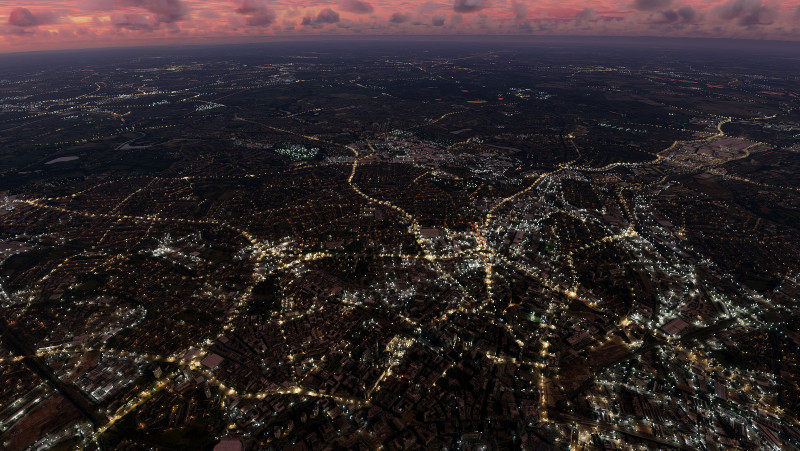
FROM searing "heat islands" to flash floods and rising seas, an increasing torrent of climate change impacts threatens half of the world's population living in urban areas, a major report by UN experts said on Monday.
Cities will have to adapt to protect people, property and crucial infrastructure in an intricately interconnected world economy where shocks can ripple across global supply chains.
Here is a rundown of key points in the report by the Intergovernmental Panel on Climate Change on impacts, vulnerabilities and adaptation.
– The climate risks faced by the 4.2 billion people in urban areas are increasing, as are threats to property and infrastructure
– The main threats are heat stress and flooding, as well as "cascading impacts" of climate change-driven extreme events that can reverberate through supply chains and disrupt food, water and other resource flows.
– By 2050, the world's urban population is expected to grow by 2.5 billion people, mostly in areas "highly exposed" to climate change on the coasts and in Africa, Asia and small islands.
– More than a billion people living near the world's coasts in low-lying cities and settlements are predicted to be at risk of flooding by 2050 as climate change drives sea level rise, bigger tropical storm surges and more frequent and intense rain.
– With 2°C of warming, losses to physical infrastructure are estimated at US$4.2 trillion (about RM17.61 trillion) by 2100.
– Between half and three-quarters of the global population could be exposed to life-threatening conditions from extreme heat and high humidity by 2100, depending on the level of warming. The threat is particularly high in tropical areas of the global south.
– Urban heat stress is projected to reduce labour capacity in hot months 20% by 2050, from 10% now.
– Urban areas exposed to floods and droughts "very likely" to more than double between 2000 and 2030.
– An additional 350 million people are expected to be exposed to water scarcity from severe droughts if temperatures rise 1.5° Celsius above pre-industrial levels, and 410.7 million at 2°C.
– Many cities are exposed to multiple climate hazards. Out of 571 cities analysed in Europe, more than 100 were found to be vulnerable to two or more climate impacts.
– At 2-2.5°C warming, at least 25 megacities will be impacted by rising sea levels.
– Even just a 15-centimetre rise in sea levels would increase the number of people at risk of a once in a 100-year coastal flood by around 20%.
– Ports as well as many airports in low-lying areas are particularly vulnerable to sea-level rise. At 2°C, some 338 airports would be at risk of flooding.
– Urbanisation across Asia means cities in the region are "highly exposed" to future flood risks. In Indonesia, flood risk will rise up to 120% between 2000 and 2030, while future sea-level rise is expected to further increase exposure by up to 37%.
– The increased risks to coastal cities and settlements and small islands in the coming decades will lead to planned relocations.
– Climate change may drive migration patterns, for example away from agricultural areas that have faced repeated drought.
– Climate change is projected to increase the number of additional people experiencing extreme poverty by 122 million by 2030 in a scenario in which inequality deepens.
– There is "unequivocal" evidence that urban communities with the most socially and economically marginalised people are hit hardest by climate impacts. The report said failure to address poverty and inequality is expected to swell the numbers of people living in particularly vulnerable informal coastal settlements.
– Energy-intensive and market-driven development is making cities more vulnerable to climate impacts and highly carbon dependent.
– Adaptation in urban areas will be critical for the health and well-being of the majority of the world's population.
– The report said "climate gentrification" has seen poor, vulnerable communities displaced from urban areas that are less at risk.
– Mandating building efficiency standards and using urban designs such as walkable neighbourhoods can improve the cost-effectiveness of adaptation measures.
- Nature-based adaptation – like shade trees, green roofs, and natural areas that can soak up excess water due to extreme rainfall – are effective and if scaled up offer jobs and health benefits.
– Increasing extremes will go beyond some human systems' ability to adapt, leading to "irreversible" impacts. – AFP, March 1, 2022










.jpeg)