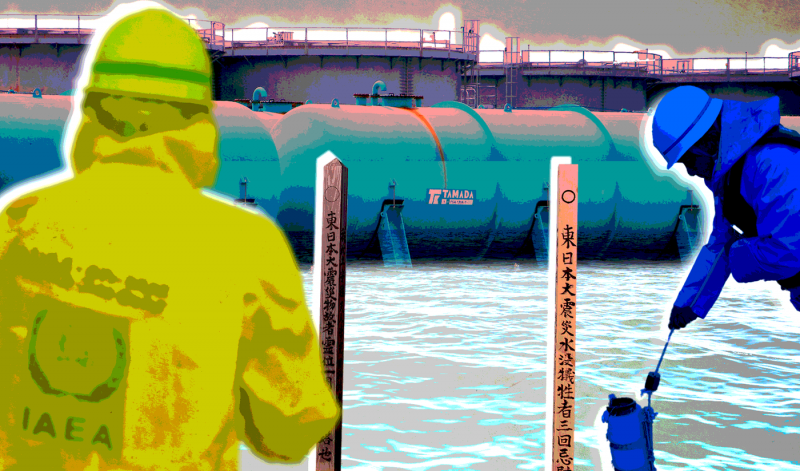
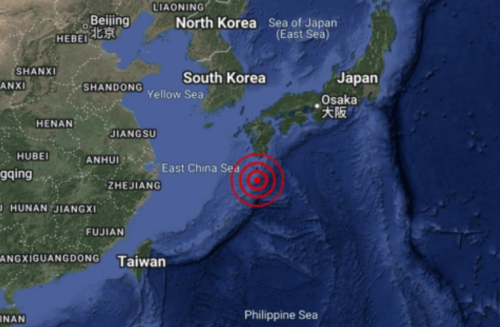
SOMETIME in the next few months, over a million tonnes of treated radioactive water from Japan’s ruined Fukushima nuclear reactor will begin to be pumped into the Pacific Ocean.
"We expect the timing of the release would be sometime during this spring or summer," Japan’s chief cabinet secretary Hirokazu Matsuno said in January 2023.
The Fukushima plant was destroyed in the 2011 earthquake and resulting tsunami. It was the world's worst nuclear disaster since Chernobyl in 1986.
The 1.3 million tonnes of wastewater set to be discharged was needed to keep the exposed core in each of the plant’s three damaged reactors cool and has been stored in tanks onsite. Now, space has run out.
The Tokyo Electric Power Company, which is running the operation, and the Japanese government, which announced plans of the release in 2021, say the water – which has been run through the Advanced Liquid Processing System to take out the most harmful radioactive isotopes – is safe.
The International Atomic Energy Agency has backed these claims, with tests showing the treated water falls well within global safety standards.
Not everyone is convinced.
Some environmentalists think more research is needed. Pacific Island nations – still struggling with the legacy of nuclear weapons tests last century – fear they will be hardest hit. Neighbouring nations are also concerned.
Local fishers – who have spent a decade resurrecting their livelihoods – fear customers will shun their catch for fears of contamination.
What do the experts say?
Bob Richmond, from the University of Hawaii, who visited Fukushima in February 2023 as part of a Pacific Island Forum expert panel, says there’s a potential solution that’s been overlooked.
“[During the visit] it was apparent that large amounts of concrete will need to be used to expand the seawall, stabilise large amounts of contaminated soil and fortify the ice barrier presently in place to reduce groundwater flow into the damaged reactors,’’ he said.
“Using the treated cooling water onsite to mix concrete that can be used to expand the seawall should be given more consideration if the water is truly safe.”
Nigel Marks, from Curtin University in Western Australia, says fears of unsafe water are misplaced, saying the radioactivity is so tiny that, even in the most extreme scenario, the radiation from eating fish caught in the area would amount to that of a dental X-ray.
“A 2021 study shows that eating a lifetime’s worth of Fukushima fish caught entirely within a few kilometres of the wastewater outlet amounts to 0.02 micro-sieverts of tritium radiation. This is less than a banana, which contains the equivalent of 0.1micro-sieverts,” he said.
“The same study shows the lifetime effect of all other isotopes is 5 micro-sieverts, the same as a dental X-ray. In reality, fish will swim all over the place but it is comforting to know that, even in the most extreme case, the amount of radiation over 50 years equals one dental check-up.”
Leslie Mabon from the Open University in the UK has visited Fukushima around a dozen times since the accident. He says one issue that’s not been addressed is the lack of consultation with Fukushima’s fishing community about decisions which affect them.
“Despite fishing within sight of these tanks, fishers in Fukushima feel they are the last to know every time TEPCO or the Japanese Government make a decision about the next step in their management plans for this water,” he said.
“If fishers are to feel valued and respected, any plans for compensation or countermeasures ought to recognise that fishing isn’t just a source of revenue for fishers. It’s a whole way of life, and a key marker of identity and pride for fishers and for coastal communities in Fukushima.”
David Krofcheck, from the University of Auckland says Japan faced three options with disposing of radioactive wastewater. All were problematic. But with the right safeguards in place, there should not be too much to worry about.
“When seeking to understand the choice made by Japan and supported by the IAEA. Nobody wants to add additional radiation to the oceans, if only because of sympathy with local Fukushima fishermen,” he said.
“But with proper ALPS filtering, people who go out to swim in the ocean should still have radiation exposure as the least of their concerns.”
That may not placate consumers of seafood.
Ming Wang, from the School of Maritime Economics and Management at Dalian Maritime University in China, said public fears over contaminated marine life could affect the global seafood market.
“What people think is closely related to the amount of Japanese seafood imported by each country,” he said.
“The higher the amount of Japanese seafood imported by a particular country, the more negative public opinion is likely to be.” – The Vibes, April 16, 2023
Published under Creative Commons and in partnership with 360info.org










.jpeg)