WHILE the government is making efforts to cushion the impact of electricity tariff increases on the general population, the need for careful monitoring and study of the broader economic effects is evident.
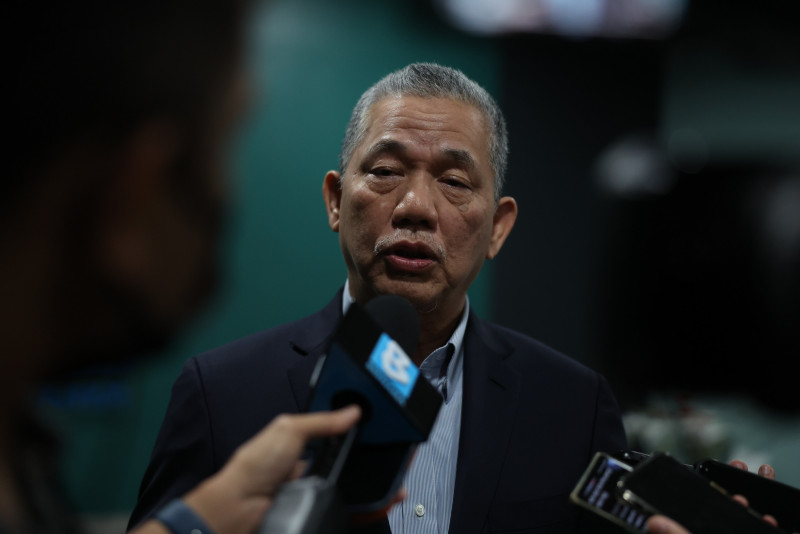
Deputy Prime Minister Datuk Seri Fadillah Yusof told the Dewan Negara today, with the planned subsidy and rebate measures, and a focus on protecting the welfare of lower-income households, the government must continue to strike a balance between ensuring fair pricing for electricity and supporting economic stability.
Fadillah, who is also the Minister of Energy Transition and Water Transformation (PETRA) added, on the impact of electricity tariff increases, the ministry has identified six key areas of focus.
Since 2014, the government has implemented the Incentive Based Regulation (IBR) mechanism for determining the average electricity tariff in Peninsular Malaysia.
“Under this system, the basic tariff is reviewed every three years, taking into account various parameters such as fuel price projections, operational costs (OPEX), capital expenditure (CAPEX), and the regulated profit margin for Tenaga Nasional Berhad (TNB), which is overseen by the Energy Commission (Suruhanjaya Tenaga, ST).,” the minister said.
“On 13 December 2024, the government approved the new electricity tariff for TNB for the Fourth Regulatory Period (RP4), which will be effective from 1 January 2025 to 31 December 2027.”
He noted that the largest component in the calculation of the base tariff is the projection for fuel prices, particularly coal and gas, used for electricity generation. Over the past three years, global fuel prices have risen significantly, necessitating a higher fuel price projection for the RP4 period to reflect the actual cost of fuel today.
He explained, to alleviate the burden on consumers, the government has decided to maintain electricity tariffs at their current rates in Peninsular Malaysia from 1 January to 30 June 2025, subsidising the cost with a RM5.96 billion subsidy.
The Ministry, along with the Energy Commission, is finalising a new tariff schedule that will reflect the true cost of electricity supply while remaining competitive, with the new rates expected to come into effect on 1 July 2025.
Fadillah added that since July 2023, the government has expanded its targeted electricity subsidy to domestic users consuming between 600 kWh and 1,500 kWh per month.
This decision ensures that 85 per cent of domestic consumers, approximately 7.1 million households in Peninsular Malaysia, whose monthly consumption is below 1,500 kWh, remain unaffected by the tariff hike and continue to be protected.
“The Ministry has guaranteed that the setting of electricity tariffs, including the new schedule under RP4, will take into consideration the welfare and well-being of the people,” he said.
He added, in addition to these measures, the Ministry, in collaboration with the Ministry of Economy, will be closely examining the impact of electricity tariff changes on the prices of goods and services.
The goal is to balance social welfare concerns with the economic development of the country, ensuring that the needs of the population are met without stifling growth.
“The government is also continuing the RM40 electricity bill rebate programme in 2025, which provides a monthly rebate of up to RM40 to eligible households, particularly those classified as hardcore poor and registered in the e-Kasih system.
“In 2024, 65,515 heads of households benefitted from this initiative. The continuation of this programme is expected to help alleviate the cost of living for these vulnerable groups, particularly in light of the upcoming tariff changes,” he said,
Fadilah explained in response to questions raised by Senator Hussin Ismail, who called on the Minister to provide a detailed study regarding the long-term impact on industries following the recent announcement of electricity tariff increases.
He also urged assurances that the price of goods and services produced would not burden 85 per cent of households in Malaysia. – March 24, 2025
.jpg)



_director_Datuk_M._Kumar.jpg)