THE shock imposition of tariffs by the United States on Malaysian exports has been regarded as a move Prime Minister Datuk Seri Anwar Ibrahim described as a direct threat to the integrity of the global trading system.
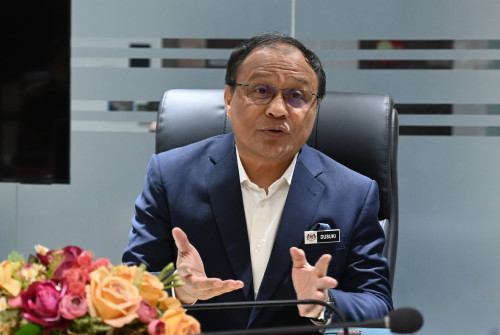
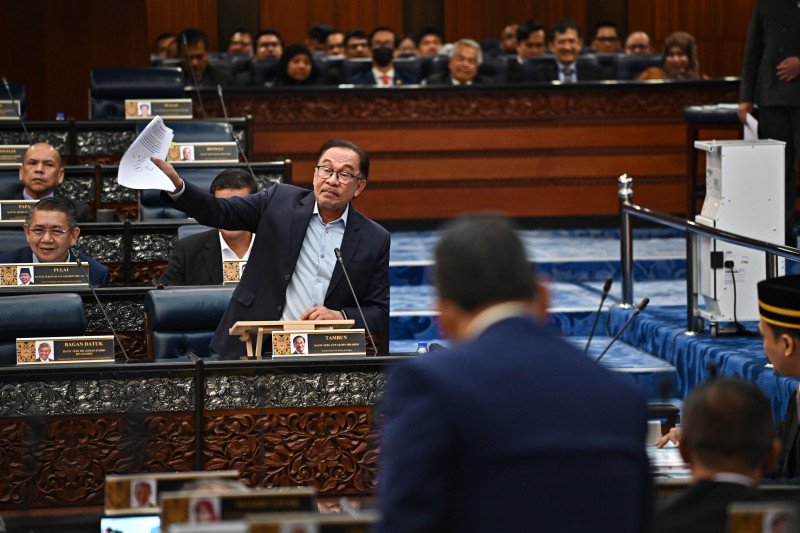
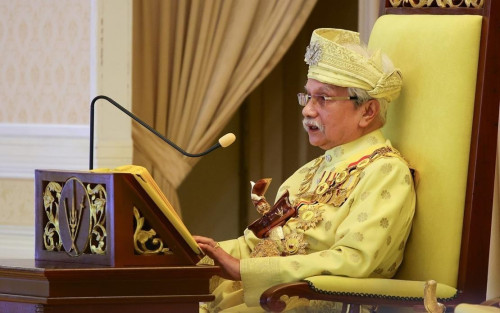
At a special sitting of the Parliament convened to address the issues surroung the tariffs imposition today attended by all Members of Parliament and members of the Senate and Speakers from the State Legislative Assemblies, Anwar said: “The US administration’s abrupt imposition of tariffs has indeed undermined the global trading system,” Anwar said.
“These import tariffs place a heavy burden on exporting countries, creating unnecessary pressure and obstacles.”
U.S. President Donald J. Trump had announced a broad set of retaliatory tariffs targeting nearly all major trading partners, including Malaysia. As of 9 April 2025, Malaysian exports face a 24% tariff when entering the US, though the rate has been temporarily reduced to 10% for a 90-day period.
The government has condemned the move as a rejection of the core principles of the World Trade Organization, particularly the commitment to non-discriminatory free trade.
“This action appears to sideline the notion of fair trade, which was long championed to avoid systemic imbalances that disproportionately impact developing nations and the Global South,” Anwar said.
Citing Thucydides’ ‘History of the Peloponnesian War’, Anwar reflected on the power dynamics at play: “The strong do what they can and the weak suffer what they must.”
Anwar said the session was convened to foster national unity in facing the challenge and to explain the government’s response.
“It requires the strength of the entire nation to act confidently and wisely,” he said. He also invited all Members of Parliament to contribute their views, both in and out of the chamber.
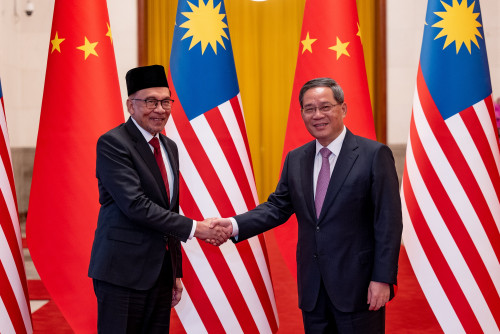
In response, Malaysia has stepped up diplomatic engagement with regional allies. Talks have intensified with ASEAN, China, and Japan, and Anwar confirmed that the upcoming ASEAN–Gulf Cooperation Council–China summit would place the tariff dispute high on its agenda. Negotiations to strengthen the ASEAN–China Free Trade Agreement are also nearing completion.
“Thanks to our economic resilience and confidence, we are not easily shaken by external pressures. We have the figures and data to manage and leverage wisely,” he said.
Quoting from the Quran, Surah Ash-Shura 42:12, Anwar added that faith and strategic discipline would guide Malaysia’s path through economic uncertainty.
Malaysia’s economy on solid footing
Anwar emphasised that Malaysia is confronting the global economic headwinds from a position of strength, aided by structural reforms under the MADANI economic framework.
Malaysia’s 2024 performance included a GDP growth rate of 5.1%, up from 3.6% the previous year and exceeding the government’s own projections. The fiscal deficit was reduced from 5.5% in 2022 to 5% in 2023, further improving to 4.1% in 2024, with 2025 projected at 3.8%.
Inflation was held at 1.8% in 2024, easing further to 1.5% in the first quarter of 2025. Unemployment remained low at 3.3%, dropping to 3.1% between December 2024 and February 2025—the lowest in a decade. Investment levels also hit a historic high, with RM378.5 billion in approved projects in 2024, up 14.9% from the previous year, he said.
Trade and investment ties with the US remain strong
Anwar, who is also the Minister of Finance, explained that Malaysia also recorded robust trade growth in 2024, with total trade reaching RM2.9 trillion, an increase of 9.2% on the previous year. Exports rose 5.7% to RM1.5 trillion, continuing a four-year trend above the RM1 trillion mark. Imports grew 13.2% to nearly RM1.4 trillion, generating a trade surplus of RM137 billion—Malaysia’s 27th consecutive year in surplus.
The US remains one of Malaysia’s largest economic partners. Bilateral trade stood at RM325 billion in 2024, accounting for 11% of Malaysia’s global trade. Exports to the US were valued at RM199 billion, or 13% of total exports, while imports from the US reached RM126 billion, or 9% of total imports. Malaysia’s trade surplus with the US was RM72 billion.
The United States is also Malaysia’s top source of foreign direct investment. Since 1980, US companies have launched 974 projects worth RM166 billion in Malaysia, creating more than 200,000 jobs. Malaysia, in turn, is a significant investor in the US, with RM34.4 billion (USD8.2 billion) committed to sectors such as energy, chemicals, food, logistics, and advanced technology, Anwa added during his address.
In addition, government-linked investments in US public and private markets have reached RM182.7 billion (USD43.5 billion). “These investments reflect a balanced and mutually beneficial bilateral relationship, proving Malaysia is not only a trading partner but also an active contributor to US economic growth,” said Anwar.
Malaysia rebuts US tariff claims
Looking at the current situation of Malaysia’s economy, the Prime Minister strongly rejected Washington’s claim that Malaysia imposed a 47% tariff on US goods—a figure used by the US administration to justify its 24% retaliatory tariff.
Anwar called the methodology behind the claim “flawed and not grounded in sound economics,” as it was based merely on Malaysia’s trade surplus with the US.
In reality, Malaysia’s average tariff on US imports stands at just 5.6%, a figure confirmed in the Office of the US Trade Representative’s own 2025 *National Trade Estimate Report on Foreign Trade Barriers*, released on 31 March 2025.
“Nevertheless,” Anwar added, “as one of our largest trading partners, the US decision will inevitably affect our export performance and, consequently, Malaysia’s GDP growth.” - May 5, 2025

.JPG)