SARAWAK Day, observed annually on 22 July, has once again been marked as a celebration not only of the state’s history but of its enduring unity, progressive vision and commitment to shared prosperity.
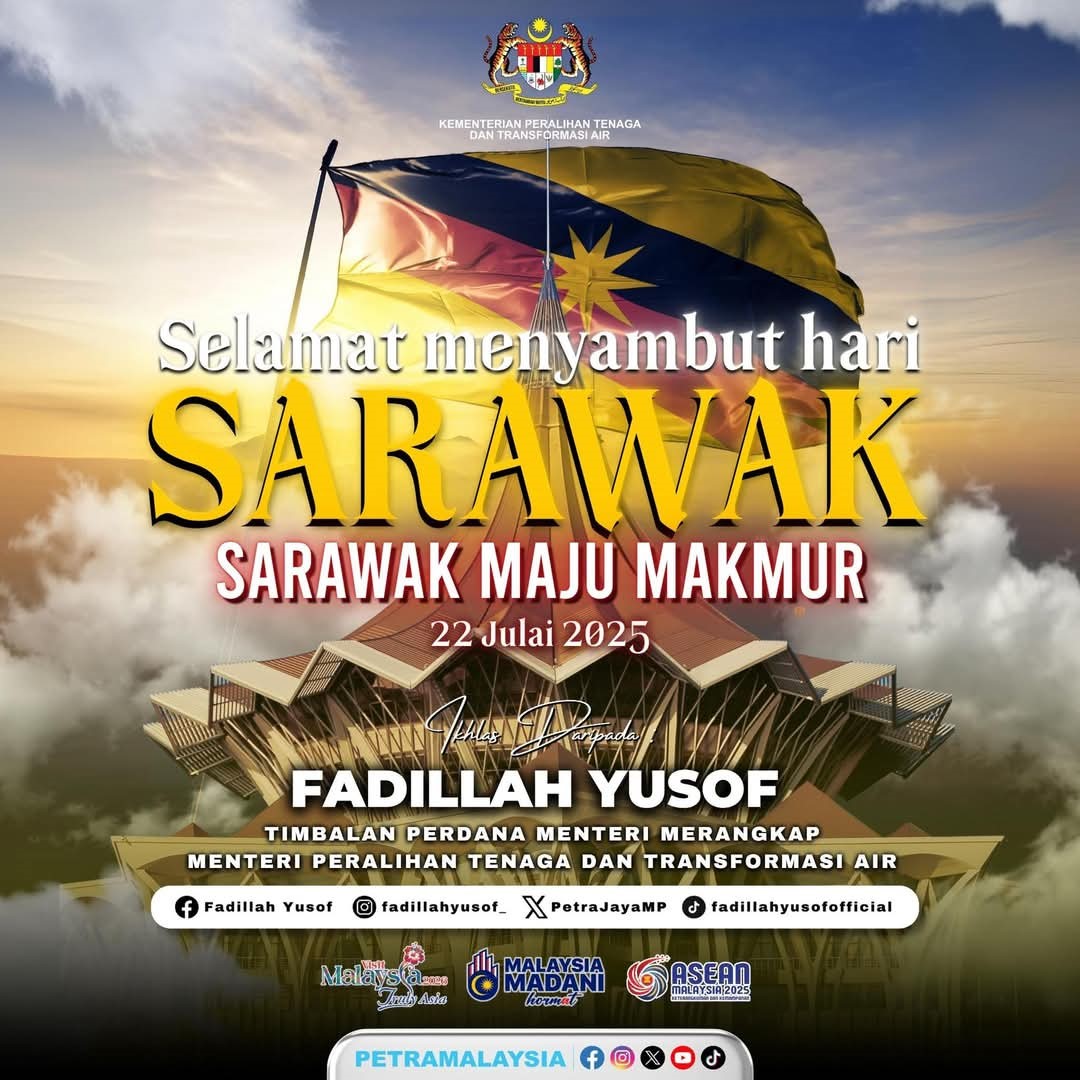
“Today, 22 July, we celebrate not only history, but the spirit of unity, excellence in leadership, and the great aspirations of the people of Sarawak,” read an official message released in conjunction with the occasion.
Held under the theme Sarawak Maju Makmur (Progressive and Prosperous Sarawak), this year’s celebration reflects Sarawak’s aspiration to balance physical development with values such as integrity, efficient governance and sustainability.
“‘Maju’ represents not only physical growth but also progress in thought, integrity, governance, and sustainability,” the message noted. “‘Makmur’ reflects prosperity and wellbeing for all layers of society.”
The message further underlined that Sarawak’s achievements would be meaningless without unity. Celebrated as a model of harmony in diversity, Sarawak has long embraced its multicultural fabric as a source of strength rather than division.
“Unity is the foundation of stability, the key to progress, and the basis of prosperity. It is our collective responsibility to preserve, defend and cultivate this unity.”
Under the leadership of Premier Datuk Patinggi Tan Sri Abang Johari Tun Openg, the state continues to pursue forward-looking policies centred on inclusivity and sustainability. Among the strategic initiatives highlighted are the development of a hydrogen economy, strengthening of regional autonomy, investment in technical and vocational education, and environmental stewardship.
“Let us come together ‘Segulai Sejalai’ to mark this Sarawak Day with gratitude and renewed determination. We honour our history, cherish our progress, and strengthen our resolve to drive Sarawak towards a more advanced, prosperous and united future.”
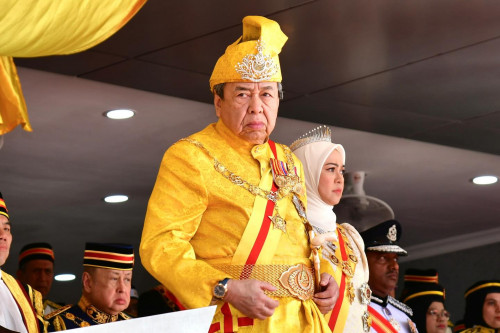
Fadilah ended the statement with ‘Selamat Menyambut Hari Sarawak 2025’.
What Is Sarawak Independence Day and Why Is It Celebrated on 22 July?
Sarawak Independence Day, observed annually on 22 July, marks a key moment in the state’s political history — its attainment of de facto self-government from British colonial rule in 1963, just weeks before the formation of Malaysia.
The Sarawak government gazetted the date as an official public holiday in 2016, naming it *Sarawak Independence Day* (*Hari Kemerdekaan Sarawak* in Malay). The aim was to raise public awareness of Sarawak’s unique constitutional past and to honour the contributions of its early leaders.
On this date, Britain transferred administrative powers to local Sarawakian leaders, granting the state self-government — though it remained, technically, a British Crown Colony until 16 September 1963. That was the day Sarawak joined Malaya, North Borneo (now Sabah), and Singapore to form the Federation of Malaysia.
Although *Sarawak Independence Day* is the legal name, many people still refer to the date informally as *Sarawak Day*, often due to lack of awareness or uncertainty over the historical facts. Some historians and political commentators argue that because Britain did not formally grant full legislative independence, the term “independence” may be misleading. However, the date is widely regarded as marking a significant shift in Sarawak’s governance and autonomy.
Calls for official recognition of the date began around 2012, driven by public sentiment that the national *Hari Merdeka* (31 August) felt too focused on Peninsular Malaysia’s experience. Many Sarawakians wanted greater acknowledgment of their state’s distinct journey to joining the Malaysian federation.
Not entirely part of Malaysia’s official independence narrative, Sarawak Independence Day instead highlights the state’s separate and earlier transition to self-rule. It reflects the state’s broader efforts to reclaim its historical identity and promote greater regional understanding.
In summary, Sarawak Independence Day serves as a reminder of the state’s journey to self-governance and its place in the formation of Malaysia — even as debates about its name and meaning continue. - July 22, 2025