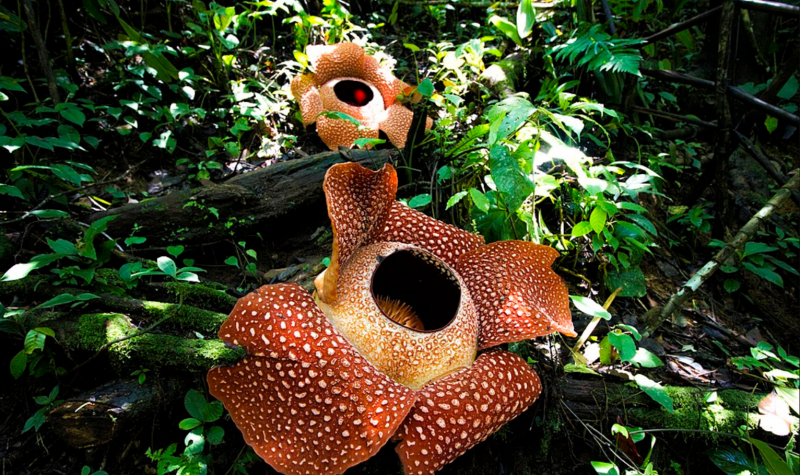
THE scientific name of Rafflesia bears no connection to colonialism, but rather follows standard botanical naming practices derived from Latin, a Malaysian academic has clarified.
Associate Professor Dr Zulhazman Hamzah, Dean of the Faculty of Earth Sciences at Universiti Malaysia Kelantan (UMK), explained that while the giant flower was indeed named after Stamford Raffles and Dr Joseph Arnold—who discovered it in Bengkulu, western Sumatra, in 1818—its formal classification by botanist Robert Brown in 1821 was purely scientific in nature.
“There is no link to colonialism,” Dr Zulhazman told Sinar Harian. “The naming of species follows international standards, and scientific names are necessary so that a species is recognised by the same name anywhere in the world, such as Rafflesia. Local names, however, may differ.”
He noted that Rafflesia is known by a variety of names across different communities: in Kelantan it is called pokma, the Temiar people in Lojing refer to it as bunga malang, the Kadazan-Dusun as bunga patma, the Malay-Thai communities as bunga kekmo, and in Thailand it is known as bua put.
“The specimen discovered by Raffles during his expedition in Bengkulu was later sent to Kew Gardens in London. This has no connection with colonialism whatsoever,” he said.
“If I or anyone else were to discover a new species that has yet to be officially classified, it might be named after a person, the place it was found, or a unique morphological feature of the plant,” he added.
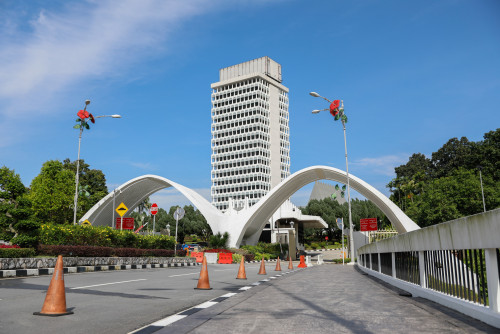
His comments come in response to recent remarks by Machang MP Wan Ahmad Fayhsal Wan Ahmad Kamal, who proposed changing the flower’s name as a symbolic act of shedding colonial legacies in conjunction with Malaysia’s 68th National Day.
Wan Ahmad Fayhsal argued that it was no longer appropriate for Malaysia to retain a name associated with a British colonial figure more than six decades after independence.
He made the suggestion during a parliamentary intervention in a winding-up session by Acting Minister of Natural Resources and Environmental Sustainability, Datuk Seri Johari Abdul Ghani. - August 26, 2025