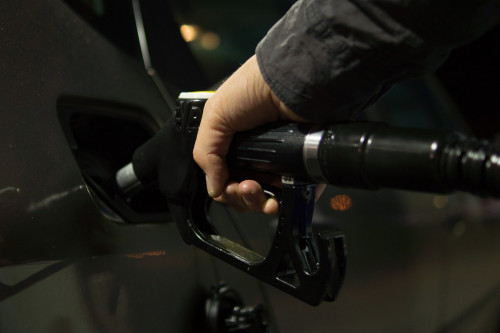
THE government has justified its decision to expand the use of MyKad as the central mechanism for fuel subsidy eligibility verification, stating that the move is part of broader efforts to strengthen targeted subsidies, reduce leakages and safeguard national fuel supply amid global energy market pressures.
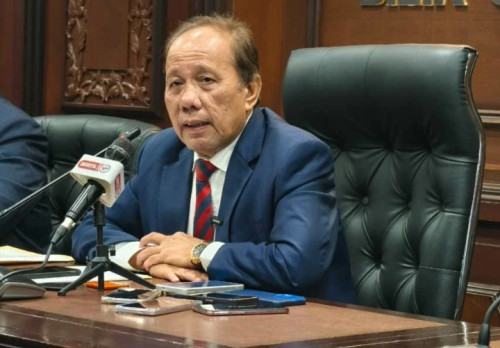
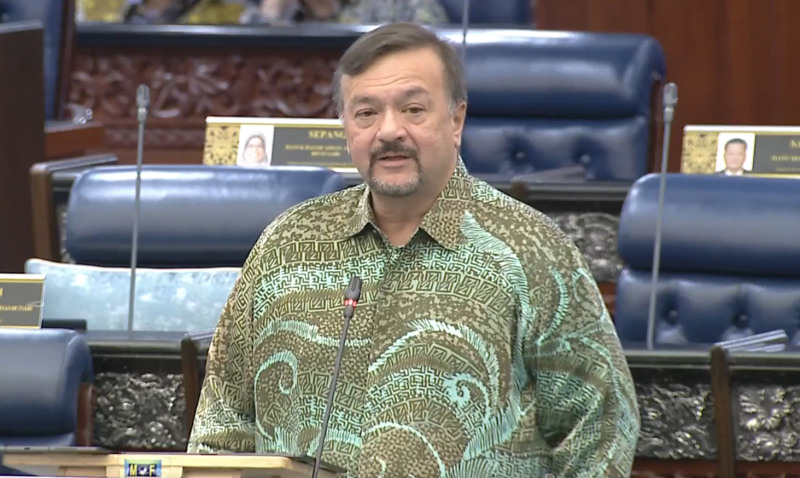
Responding to questions in the Dewan Rakyat from Datuk Seri Utama Ir. Hasni Mohammad (Simpang Renggam), the Finance Minister II Datuk Seri Amir Hamzah Azizan told the Dewan Rakyat on Thursday that the restructuring of fuel subsidies, including diesel, was driven by a combination of fiscal, security of supply and enforcement considerations.
It said the reform under the BUDI MADANI framework rests on three main rationales: rising global fuel prices driven by geopolitical tensions, widening price differentials that encourage smuggling, and evidence of significant leakage of subsidised fuel to non-citizens and unintended users.
“Overall, the MADANI Government is implementing reforms to targeted diesel subsidies based on three main reasons,” the ministry said.
It cited conflicts in West Asia as having pushed global crude oil prices above US$120 per barrel, significantly increasing the government’s subsidy burden and threatening energy supply stability.
The ministry said Malaysia’s monthly fuel subsidy expenditure had surged from around RM800 million in January and February to nearly RM5 billion in March and April, reflecting heightened global price pressures.
While acknowledging signs of easing geopolitical tensions, the government warned that oil prices were expected to remain elevated compared with pre-crisis levels.
Beyond fiscal concerns, the ministry highlighted what it described as serious fuel leakage issues, particularly in Sabah and Sarawak, where price differentials with neighbouring countries had created incentives for cross-border smuggling.
“This is more evident in Sabah and Sarawak, where non-citizens are also benefiting from subsidised diesel priced at RM2.15 per litre,” it said, adding that enforcement alone had not been sufficient to contain the problem.
It pointed to consumption data indicating abnormal fuel sales patterns. Diesel sales in Sabah and Sarawak reportedly reached 200 million litres per month in March and April 2026, about twice the expected level based on registered diesel vehicle numbers.
The ministry said removing subsidies at the pump nationwide would help close loopholes and stabilise supply.
The government also defended the use of MyKad as the verification tool for subsidy eligibility, stating that the system had already been successfully implemented under the BUDI95 programme and was now being extended to diesel subsidies due to its efficiency and effectiveness.
Under the revised structure announced by Prime Minister Datuk Seri Anwar Ibrahim on 21 June, the fuel subsidy system now comprises three key elements: a uniform market-based diesel pump price nationwide, targeted subsidy access through MyKad verification, and a subsidised diesel price of RM2.10 per litre for eligible Malaysians.
The ministry said the restructuring was expected to generate savings of up to RM2 billion annually, enabling the government to reduce the subsidised diesel price while maintaining fiscal sustainability.
On the issue of eligibility limits, the government addressed concerns regarding the 200-litre monthly allocation under BUDI MADANI.
It said data from the BUDI95 implementation between October 2025 and May 2026 showed that fewer than 1 per cent of users consistently exceeded 200 litres of RON95 consumption.
According to the Department of Statistics Malaysia (DOSM), more than 80 per cent of diesel users consume less than 200 litres per month, with an average usage of around 140 litres.
However, recognising the needs of small businesses and rural users who rely on diesel-powered vehicles such as pickups and utility vehicles, the government allows an additional 100-litre allocation upon application, bringing the total possible entitlement to 300 litres per month.
The ministry said 95 per cent of diesel users fall below the 300-litre threshold, indicating that the allocation is sufficient for the majority of Malaysians.
“This reform allows Malaysians to enjoy the privilege of citizenship by benefiting from lower-priced diesel,” it said.
The government stressed that the reforms are intended not only to protect fiscal resources but also to ensure fuel security during periods of global instability, while reinforcing the principle that subsidies are reserved exclusively for Malaysian citizens.
“The reform can plug leakages, guarantee supply during crises, and ensure that only Malaysians enjoy the benefit of subsidies,” the ministry added. - June 25, 2026