
MALAYSIA and Thailand have reinforced their commitment to deepening bilateral cooperation with the official opening of the new Sadao-Bukit Kayu Hitam border crossing, a landmark infrastructure project expected to transform one of Southeast Asia's busiest land gateways into a catalyst for trade, tourism and economic growth.
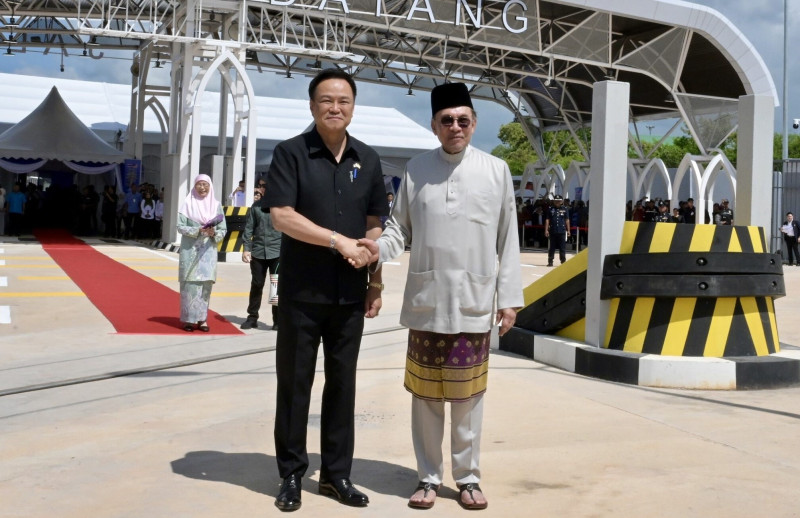
Prime Minister Datuk Seri Anwar Ibrahim and Thai Premier Anutin Charnvirakul jointly inaugurated the new road linking Malaysia's Immigration, Customs, Quarantine and Security (ICQS) Complex at Bukit Kayu Hitam, Kedah, with Thailand's Customs, Immigration and Quarantine (CIQ) Complex in Sadao, Songkhla on Friday.
The project is expected to ease decades of congestion at the border by streamlining the movement of commercial vehicles, tourists and cargo while enhancing logistics efficiency and cross-border connectivity.
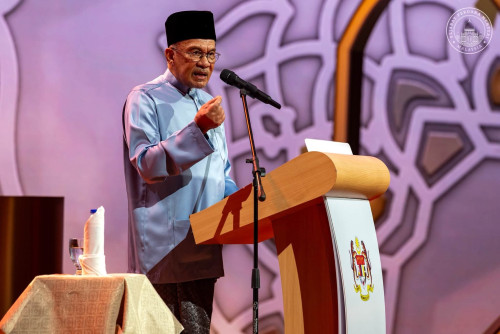
Speaking at the ceremony, Anwar said stronger border infrastructure, expanded trade and tourism, and the development of special economic zones would create employment opportunities and generate sustainable economic growth for communities on both sides of the frontier.
Malaysia and Thailand have reaffirmed their shared ambition of raising bilateral trade to US$30 billion (approximately RM127.5 billion) by 2027.
Reflecting on the longstanding relationship between the neighbouring countries, Anwar noted that the territories of present-day Malaysia and Thailand had been historically connected for more than 2,000 years, underscoring the importance of continuing to strengthen bilateral ties.
He commended the close cooperation between Kuala Lumpur and Bangkok in completing the expanded border facilities, describing the project as a major milestone in regional integration.
Anwar also expressed appreciation to Anutin for his commitment to accelerating the expansion of the border crossing.
"We are friends and we have each other's phone numbers, so we can contact each other to alleviate whatever issues arise from our joint border efforts," he said.
Anwar added that both governments would continue enhancing connectivity at other strategic border locations, including the proposed second Rantau Panjang-Sungai Golok bridge linking Kelantan and Narathiwat.
The newly opened Sadao CIQ complex has been purpose-built to process heavy commercial traffic, including container lorries, trailers, tour coaches and vans, while the existing Sadao checkpoint will continue serving pedestrians and private vehicles.
The separation of freight and passenger traffic is expected to significantly reduce waiting times and improve the efficiency of cross-border trade.
Approximately 5,000 travellers use the Bukit Kayu Hitam crossing each day, making it Malaysia's busiest northern land gateway.
The Tourism Authority of Thailand (TAT) estimates that the Sadao crossing accounts for about 50.7 per cent of all Malaysian visitors entering Thailand, highlighting its strategic importance to the country's tourism industry.
Anutin said Thailand remained committed to expanding cross-border trade, logistics and services, with the upgraded facilities strengthening supply chain connectivity across mainland Southeast Asia.
He said Thailand envisioned the border becoming a key logistics hub, allowing goods from China to move more efficiently through Malaysia towards Singapore while facilitating wider regional trade flows.
The Thai Prime Minister also highlighted opportunities to strengthen cooperation in energy connectivity, electricity grid integration and food security through greater collaboration in the border regions.
"With better connectivity, we can unlock the full potential of Malaysia and Thailand," he said.
Anutin then departed Kuala Lumpur for Hat Yai aboard a Royal Thai Air Force special aircraft after concluding his official engagements in Putrajaya.
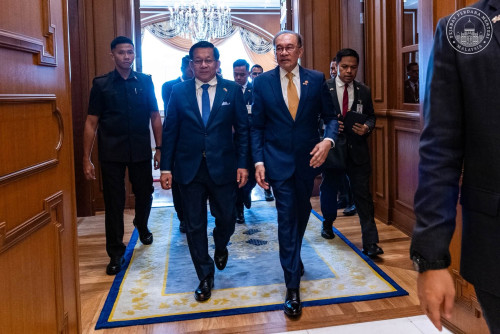
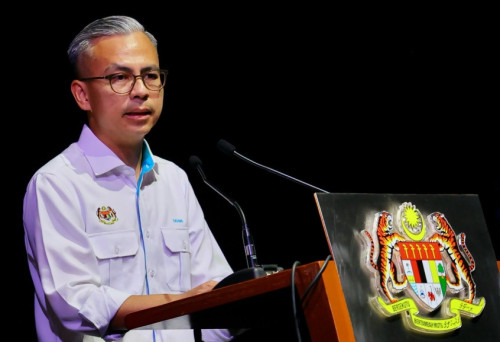
Accompanied by his wife, Thananon Niramit, he was seen off at the Bunga Raya Complex, Kuala Lumpur International Airport, by Communications Minister Datuk Fahmi Fadzil and senior officials from both governments before travelling by road to Bukit Kayu Hitam for the inauguration ceremony.
Prior to the launch, Anwar and Anutin held bilateral talks in Putrajaya covering trade and investment, border security, agriculture, tourism, education and people-to-people exchanges.
The two leaders also witnessed the signing of a Memorandum of Understanding on agricultural cooperation, further strengthening collaboration in a sector regarded as key to both countries' long-term economic partnership. - July 10, 2026