By Murray Hunter
PAS has long been portrayed in parts of the Malaysian media and by political opponents as an extreme religious party whose rise to federal power would threaten the interests of non-Muslims.
Rhetoric from some older leaders has reinforced this image.
Over the years, PAS has often drawn plenty of flak over some of its statements, especially from the non-Muslims in the country.
One such statement was from PAS president Tan Sri Abdul Hadi Awang, who had accused non-Muslims and non-Bumiputeras of being the "roots of corruption" in the country.
In a continuation of his pro-Malay rhetoric, Hadi had also called for non-Muslims to just let the majority ethnic group continue to hold the reins of the country.
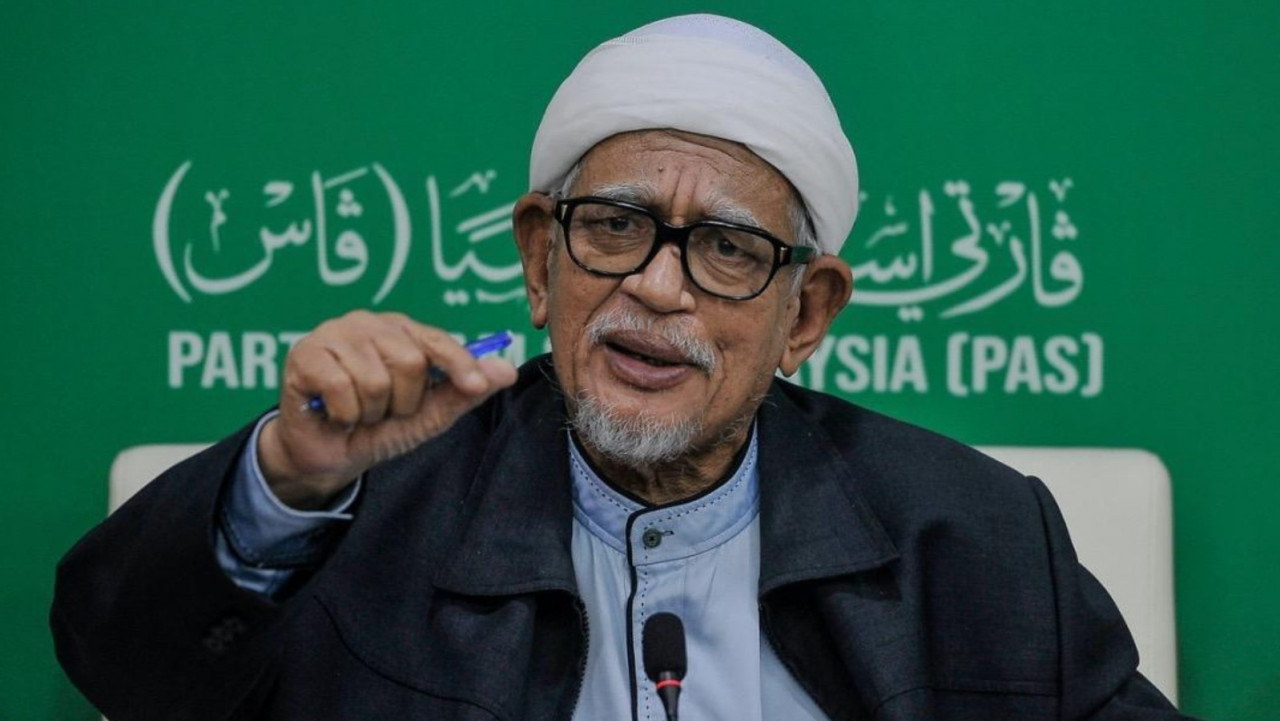
The Marang MP had said that non-Muslims should be grateful that they have been given “a place” in this country through the jus soli citizenship policy that he claimed would not be afforded everywhere else.
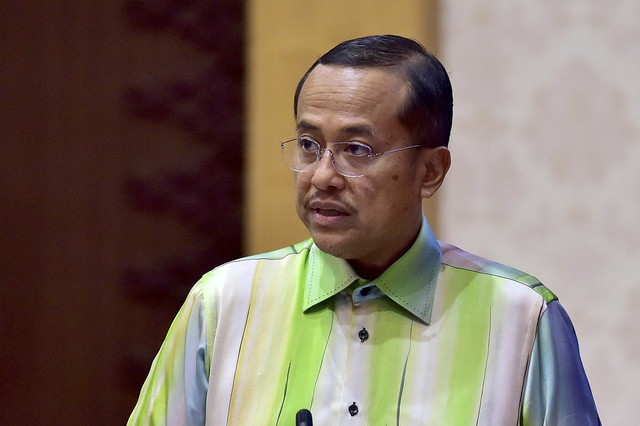
One must also not forget the recent remarks from Kedah Menteri Besar Datuk Seri Muhammad Sanusi Mohd Nor that "the Chinese have China, the Indians have India, the Cambodians have Cambodia, and the Malays only have Malaysia".
The professional class within PAS frames Islamic principles not primarily as restrictive legislation but as an ethical foundation for transparent, accountable and competent governance aimed at returning Malaysia to stronger regional standing.
Fortunately, within the party, a substantial cohort of younger, well-educated professionals, technocrats and administrators advance a different vision.
This perspective is reflected in figures such as Terengganu Menteri Besar Datuk Seri Dr Ahmad Samsuri Mokhtar and a wider team of professionals prepared to administer government on technocratic lines that the civil service could respect.
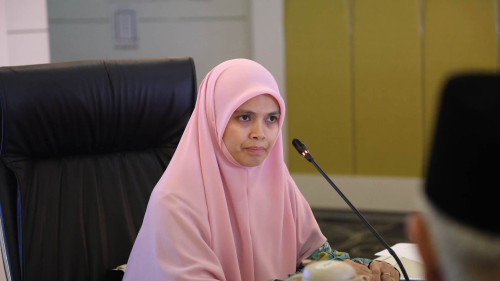
One window into this thinking comes from Kedah State Executive Council member and Jitra ADUN Haim Hilman Abdullah, a former Universiti Utara Malaysia vice-chancellor with experience in poverty alleviation and community development in a direct interview with the writer.
From such voices, PAS policy is presented as rooted in universal values of fairness, justice, transparency and accountability that any citizen can recognise and adopt.
The rest of this article summarises what this new PAS is espousing.
Islam as Ethical Framework, Not Mere Symbolism
PAS grounds its philosophy in Islam.
In a plural society, party thinkers emphasise the Maqasid al-Shariah (the higher objectives of Islamic law), centred on protecting life, intellect, family, property, faith and the broader public interest.
These translate into practical commitment for an honest government, accountable institutions, protection of public funds, zero tolerance for corruption, policies that avoid enriching elites at the expense of ordinary families, education that builds both knowledge and character, and the treatment of political power as an Amanah (trust) rather than a privilege.
An Islamic administration, in this view, should be judged by results in achieving true justice, prosperity, security and dignity delivered to all citizens equally, rather than by slogans or symbolic measures alone.
Stronger Islamic values, PAS argues, should produce stronger commitments to integrity, competence and compassion.
Syariah compliance is described as a code of ethics comparable to, yet philosophically deeper than, modern ESG standards.
Malaysia for All Citizens
PAS positions Malaysia’s diversity as a permanent national characteristic rather than a problem to be managed.
Malays, Chinese, Indians, Sabahans, Sarawakians, Orang Asli and other communities have all contributed to the country.
The party states that it would govern on the basis that Malaysia belongs to all Malaysians.
Islam retains its constitutional position as the religion of the Federation, while the constitutional rights, religious freedoms, cultural practices and legitimate interests of non-Muslims would continue to be respected and protected.
Party representatives assert that PAS would not forbid non-Muslim communities from pursuing their cultures, religions or forms of entertainment, including concerts.
The focus is presented as developing an economic model that benefits the people according to regional and local conditions, not cultural restriction.
Advancing one community is not framed as requiring the diminution of another.
The political vocabulary is to shift from suspicion toward shared prosperity, shared responsibility and shared nationhood.
From Identity Politics to Governance Competition
Malaysia, according to this outlook, cannot develop solely through political rhetoric. Future political competition should centre on measurable performance by attracting investment, creating better-paying jobs, improving schools, reducing corruption and leakages, delivering infrastructure efficiently, easing business operations, and protecting vulnerable families while encouraging entrepreneurship.
PAS seeks to present itself as a credible government-in-waiting capable of administering a modern economy and a complex multicultural society. Professionalism, competence and integrity are to become central to its identity. Ministers must understand policy, administrators must respect data, institutions must value expertise, and leaders must accept accountability for outcomes.
Efficient, Transparent and Accountable Administration
The foundation of a developed country is having strong institutions.
PAS advocates a governance model built on justice, equity, efficiency, accountability, transparency, integrity and humanity. Bureaucracy should be simplified and digitalised.
Decisions should rest on evidence. Public procurement must be transparent. Government-linked entities should be professionally managed, transparent, and fully accountable.
Regulatory processes should facilitate productive activity while safeguarding the public interest.
Political connections must not replace competence.
All public expenditure should face a basic test. Does it create meaningful value for the people?
Infrastructure, such as roads, ports, airports, railways, digital systems, water, industrial parks and energy, should serve a coherent national economic strategy rather than political preference.
Public resources belong ultimately to the people and must generate the greatest possible public benefit.
A Dynamic Economy with a Welfare Orientation
PAS’s economic philosophy combines social justice with economic dynamism.
Prosperity must first be created before it can be distributed. The private sector, including entrepreneurs, investors and innovators are essential partners.
Malaysia should aim to become one of Asia’s most attractive locations for investment in advanced manufacturing, Islamic finance, artificial intelligence, semiconductors, biotechnology, renewable energy, digital services and modern agriculture.
Unnecessary regulations should be removed, approvals accelerated and made transparent, and SMEs given greater scope to scale up.
Young Malaysians should be encouraged toward entrepreneurship, science, engineering and research rather than mere job-seeking.
Foreign investment should integrate into the domestic economy so that local firms, universities and workers gain knowledge, technology, higher wages and capability. Success is measured not only by investment totals but by the domestic benefits generated.
Central to the social philosophy is Negara Kebajikan, or the welfare state.
Priority must be given to those in genuine need, particularly the B40 facing economic hardship.
This should be regardless of race or religion.
A modern welfare approach protects the elderly, persons with disabilities, struggling families and disadvantaged communities while providing pathways to independence through education, skills training, employment, entrepreneurship, affordable housing and healthcare.
The goal is dignity and capability, not permanent dependency.
Education as Equaliser and Regional Balance
Education must be treated as the principal instrument of social justice.
A child’s future should not be determined by parental income or geography.
The system must develop knowledge, skills, character, creativity and intellectual confidence with a mastery of science, mathematics, languages, digital technology and emerging fields, alongside ethics, discipline, compassion and civic responsibility.
Universities should remain accessible on ability and potential.
Technical and vocational education must command equal respect. Teachers should regain their high professional standing, and research institutions should support national innovation objectives.
No Malaysian child should be left behind because of poverty, location, ethnicity or background.
Development must also be geographically balanced. Northern Malaysia, the East Coast, Sabah and Sarawak hold significant potential, where infrastructure, investment and connectivity can be developed urgently.
Federal-state relations after elections should rest on national interest rather than partisan sentiment.
The northern SG4 grouping, for example, has highlighted cases where federal decisions on international port and airport status have limited direct trade opportunities.
Infrastructure choices should enhance the economy across regions, not merely reflect Putrajaya’s preferences. Malaysia succeeds when every region succeeds.

Political Maturity and a Humane Approach
PAS strongly values political stability for keeping the nation together. In recent state elections, PAS supported strong governments where this contributes to national stability, which included cooperation with UMNO in certain, but not all, contexts.
Political parties may compete vigorously during elections yet must maturely cooperate afterwards for the national interest and interests of the people.
Federal and state governments of different coalitions should still work together. Institutions must be respected regardless of who holds power.
The purpose of winning office is to govern successfully for the interests of all the Rakyat.
Economic statistics alone do not define success.
Policies must also consider families, communities, mental wellbeing, environmental sustainability, cultural identity and the dignity of all citizens.
Every interaction between citizen and government at hospitals, welfare offices, schools or local councils should reflect respect for human dignity.
A Renewed Social Contract
Historical realities and constitutional provisions will continue to be respected.
At the same time, assistance and opportunity must reach those who genuinely need them, as poverty, educational disadvantage and economic vulnerability exist across communities.
The objective is fairness of opportunity and protection against structural disadvantage, not a forced equality of outcome, which has continued to fail.
Every Malaysian willing to study, work, innovate and contribute should find a place in the country’s future.
The Proposition PAS Offers for GE16
In this frame, PAS offers a national proposition rather than a purely religious or electoral one.
Islam as a moral compass for governance while constitutional rights protect every citizen, progress for Malays and Bumiputera without marginalising others, and an Islamic-oriented government that can administer diversity with fairness, businesses that prosper alongside fair opportunities for workers, welfare that protects the vulnerable, while entrepreneurship creates wealth, education that builds both intellect and character, technological advance matched by compassion, and government that is efficient, transparent and accountable.
Political power is an Amanah, which means any political party only possesses a temporary responsibility to serve the people.
The test for PAS is whether it can demonstrate the intellectual depth, administrative capability, economic vision and moral confidence to lead a diverse, sophisticated Malaysia. Islamic values, the party contends, are compatible with technological advancement, economic competitiveness, professional administration and multicultural coexistence.
Justice is not selective, integrity is not negotiable, compassion transcends ethnicity, and opportunity should reach every community.
Malaysia, according to this vision, need not choose between faith and progress, tradition and modernity, growth and social justice, or Malay-Muslim leadership and a multicultural society.
A confident nation can bring these elements together into a progressive, prosperous, fair, inclusive and technologically advanced country governed with integrity and competence.
A government that protects the vulnerable, rewards enterprise and administers diversity with justice rather than exploiting it for division, which has been occurring throughout the nation’s history. – August 16, 2026