MALAYSIA’S fifth MADANI Budget will seek to shield households from rising living costs and external shocks while raising wages, strengthening local businesses and accelerating the country’s transition towards a higher-value, more resilient economy.
The Budget, which will be the second under the Thirteenth Malaysia Plan, will be built around three overarching priorities — raising the ceiling for national growth, raising the floor for living standards and advancing governance reform.
The fiscal strategy is intended to protect against immediate cost pressures while addressing structural weaknesses exposed by the geopolitical, climate and energy disruptions of 2026.
Prime Minister Datuk Seri Anwar Ibrahim said Budget 2027 must balance short-term household protection with the longer-term transformation of the economy.
“Budget 2027 must balance two pressing imperatives: protecting households from the strain of the energy crisis and rising living costs, while laying the foundations for a higher-value, more sophisticated economy.”
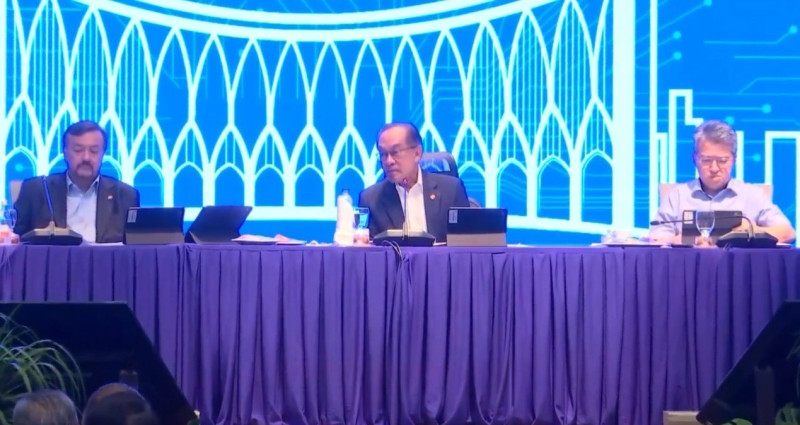
“This is a people's budget,” Anwar said at the 2027 Budget Engagement Session at the Finance Ministry in Putrajaya on Tuesday.
Under the workforce and wage agenda, the Government plans to reduce dependence on low-skilled foreign labour through greater automation and structured workforce planning, to ensure Malaysians capture a larger share of the gains from economic expansion.
Technical and Vocational Education and Training (TVET), apprenticeships and reskilling programmes will be expanded to meet the requirements of strategic industries, with employers expected to play a more direct role in curriculum development, training equipment and job placements.
The agenda will also place greater emphasis on artificial intelligence literacy, digital capabilities and lifelong learning to prepare workers and SMEs for changing workplace requirements.
Women’s participation in the labour force will remain a priority, with the Government retaining its target of a 60% female labour force participation rate.
Proposed measures include expanding access to quality and affordable childcare, encouraging flexible working arrangements, bringing more women back into employment and strengthening women’s skills and entrepreneurship programmes.
“Sustainable wage growth can only be achieved through productivity gains.”
The Government is also seeking views on measures to reduce youth unemployment, improve the relevance of TVET and apprenticeship programmes, encourage employers to invest in workers’ skills and AI adoption, reduce dependence on low-skilled foreign labour without harming economic growth and raise female workforce participation.
A second major pillar will be the “Made by Malaysia” industrial ambition, aimed at building stronger home-grown companies and increasing domestic ownership of products, technologies and intellectual property.
Budget 2027 will continue supporting growth-stage financing for start-ups and mid-sized companies, innovative SMEs and efforts to diversify export markets. Support will extend beyond financing to technology, talent, certification, marketing networks and access to supply chains operated by larger companies and global markets.
Government procurement and government-linked investment companies will be used judiciously to catalyse local innovation, subject to strict governance and demonstrable value for money.
The Government also plans to strengthen the pathway from university research and public research and development to commercial applications, to create more Malaysian-owned intellectual property, products and technologies.
The “Made by Malaysia” ambition is intended to generate high-value jobs, raise incomes and create greater national wealth while allowing local companies to develop into industry leaders without compromising competition, transparency and good governance.
Investment policy will also shift towards outcomes, with greater emphasis on projects that are genuinely realised, build local supply chains, raise productivity and create quality employment.
Outcome-based investment incentives will be strengthened alongside post-approval facilitation, supplier development, local commercialisation, technology transfer and research and development.
Priority sectors will include semiconductors, artificial intelligence, digital services, the energy transition, pharmaceuticals, logistics and aerospace.
The Government will strengthen investment monitoring throughout the investment lifecycle while addressing bottlenecks involving land and utility approvals and talent availability.
Malaysia, which ranked 15th in the IMD World Competitiveness Ranking 2026, will continue working towards a top-12 position under the MADANI Economy framework through the STAR Team initiative.
Investment multiplier effects will also be pursued through MSME digitalisation and financing, including the RM10 billion post-crisis BNM-CGC guarantee scheme, alongside Visit Malaysia Year 2026, the halal economy, Islamic finance and regional economic hubs.
National resilience will form another central pillar of Budget 2027, following an energy crisis in 2026 that highlighted Malaysia’s exposure to geopolitical, climate, technological and commodity shocks.
The Government plans to accelerate implementation of the National Energy Transition Roadmap through greater renewable energy capacity, battery storage, national grid upgrades and ASEAN interconnection.
Energy efficiency measures under the Energy Efficiency and Conservation Act 2024 will also be advanced, alongside carbon capture, utilisation and storage and hydrogen development under the CCUS Act 2025.
“These are steps towards national energy sovereignty.”
Data centre incentives will be tied to energy and water efficiency requirements to ensure rapid digital expansion does not place excessive pressure on national resources or increase costs for the people.
Broader resilience measures will cover national food security, agricultural productivity and technology adoption, flood mitigation, disaster preparedness, climate adaptation, cybersecurity, online fraud prevention, data resilience and the protection of critical infrastructure.
The Government is seeking public feedback on measures to strengthen energy security, food security and price stability, improve preparedness for floods and extreme weather and strengthen protection against cyber threats.
Governance reform will also remain a central component of the Budget, with the Government seeking views on how to strengthen public confidence in the integrity of public institutions and which reforms are needed to protect the interests of the people.
“The year 2026 tested the country's resilience. The energy crisis proved that the reforms implemented since the first MADANI Budget have become a bulwark for the economy and the people.”
Anwar said the 10 focus areas remained open to further refinement through engagement with Malaysians and stakeholders, with feedback to be translated into concrete measures in the Budget.
Budget 2027 will be tabled in Parliament on October 9, 2026, with the Finance Ministry coordinating comprehensive engagement with stakeholders and the public. - August 18, 2026