MALAYSIA and Brunei have set a May 2027 deadline to resolve and demarcate Sector F-G along their land boundary, in a move that could strengthen border security and unlock smoother movement of people, goods and investment across Borneo.
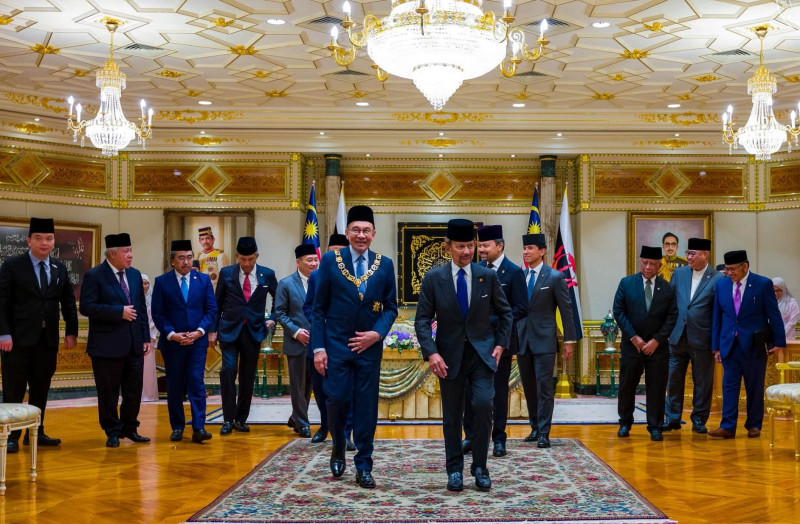
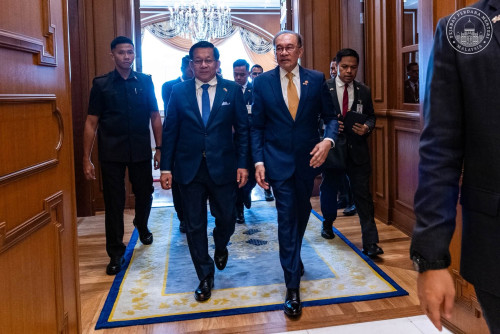
The agreement was reached during the 27th Annual Leaders’ Consultation between Prime Minister Datuk Seri Anwar Ibrahim and Brunei Sultan Hassanal Bolkiah in Bandar Seri Bagawan on Saturday.
The two leaders agreed that the outstanding Sector F-G boundary issue would be resolved solely on the basis of the watershed principle, with both sides committed to jointly determining a single watershed and completing its survey and demarcation by May 31 next year.
The broader target is to complete the joint survey and demarcation of the entire Malaysia-Brunei land boundary by 2034.
Some 264.791 kilometres, or about half of the boundary, has already been jointly surveyed and demarcated.
For Malaysia, the progress carries particular importance for Sabah and Sarawak, where Brunei is a key neighbouring market and an important transit point for cross-border travel, trade and tourism.
The leaders therefore called for stronger cooperation against smuggling and other illegal cross-border activities, while urging their respective agencies to improve information sharing and coordination.
They also agreed to strengthen cooperation in cross-border search and rescue operations and emergency response, potentially improving the ability of authorities to respond to incidents affecting communities and travellers in border areas.
A key development for ordinary travellers and businesses is the agreement to explore the feasibility of a “single checkpoint” to streamline immigration procedures and reduce the need for multiple passport endorsements.
If implemented, the arrangement could reduce administrative delays and make cross-border movement between Brunei, Sabah and Sarawak more efficient.
The leaders also highlighted major infrastructure projects that could strengthen Borneo’s internal connectivity, including the Trans Borneo Highway, Northern Coastal Highway and road links between Miri-Marudi, Marudi-Mulu and Long Panai-Long Lama.
The projects are expected to facilitate the movement of goods and people, support tourism and create wider economic opportunities across Borneo.
Energy cooperation was another key area, with Malaysia and Brunei welcoming continued collaboration involving Sarawak in oil and gas, electricity and energy transition.
Particular emphasis was placed on efforts to realise the Brunei-Sarawak power interconnection project under the ASEAN Power Grid, which could contribute to greater regional energy connectivity.
The leaders also welcomed ongoing discussions on commercial rice cultivation in Sarawak, which could strengthen food security while creating opportunities for agricultural investment and cooperation between Brunei and Malaysia.
They further called for stronger supply chains and improved market access through greater collaboration in logistics, digital services and food products.
Closer economic ties between Brunei and Sabah and Sarawak were also encouraged, with both sides seeking to translate business cooperation into concrete trade and investment opportunities.
The leaders welcomed a memorandum of understanding between the National Chamber of Commerce and Industry of Malaysia and its Brunei counterpart, urging the private sector to turn the agreement into tangible commercial outcomes.
Beyond bilateral cooperation, Malaysia and Brunei reaffirmed the importance of ASEAN unity and centrality amid growing geopolitical and economic uncertainties.
Both leaders stressed the need to maintain freedom of navigation and overflight in the South China Sea and resolve disputes peacefully in accordance with international law, including the 1982 United Nations Convention on the Law of the Sea.
Brunei also backed Malaysia’s role as ASEAN-China Dialogue Relations coordinator in efforts to conclude an effective and substantive Code of Conduct for the South China Sea.
On the Middle East, the leaders called for restraint and a return to dialogue amid renewed hostilities involving the United States, Israel and Iran.
They also raised concerns over disruption to maritime traffic through the Strait of Hormuz, stressing the importance of safe, continuous and unimpeded passage for vessels and aircraft.
The two leaders additionally condemned attacks targeting United Nations Interim Force in Lebanon personnel, including members of the Malaysian Battalion and Royal Brunei Armed Forces, and called for the full protection of UN personnel.
The 27th Annual Leaders’ Consultation ended with both sides reaffirming their commitment to deepen bilateral cooperation, with the 28th consultation scheduled to be held in Malaysia in 2027. - August 22, 2026





.jpg)