By Murray Hunter
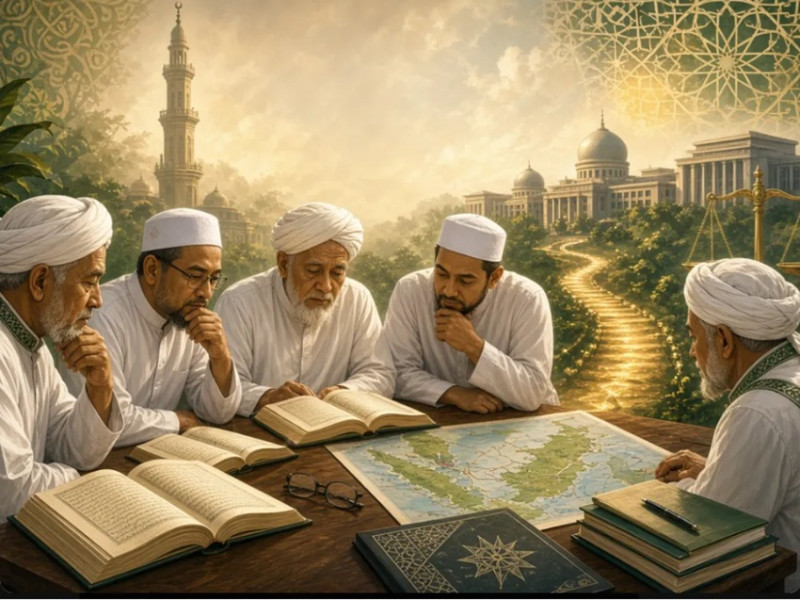
A SIGNIFICANT segment of Malay Muslims believes Malaysia would be better governed if ulama (Islamic religious scholars) held greater authority or even direct leadership.
The core argument is straightforward: ulama, steeped in religious knowledge and personal piety, are better positioned than ordinary politicians to keep government on a moral track, uphold Islamic ethics, and root out corruption.
This view is not a fringe view; it has deep institutional, educational, and historical roots, and it continues to shape political discourse.
PAS and the Model of Kepimpinan Ulama
The most organised expression of this idea is found in PAS. In the early 1980s, influenced by the Iranian Revolution and broader Islamic revivalism, PAS formally adopted kepimpinan ulama (ulama leadership).
It created the Majlis Syura Ulama, a council of religious scholars that interprets policy according to the Quran and Sunnah, vets candidates, and serves as the party’s highest decision-making body under a Murshidul Am (spiritual guide).
Leaders such as Yusof Rawa argued that ulama would be less prone to personal or partisan abuse of power precisely because of their religious training and accountability before God.
In practice, PAS has governed Kelantan continuously since 1990 and has held power periodically in Terengganu and Kedah, frequently placing ulama or those with strong Islamic credentials in key executive roles.
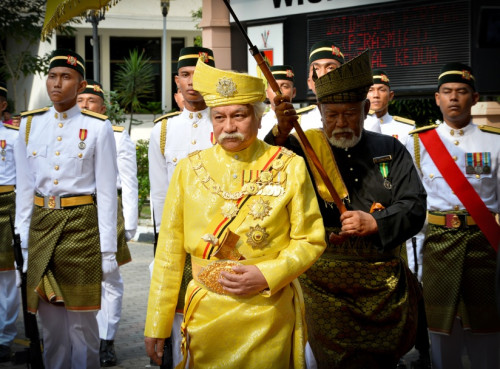
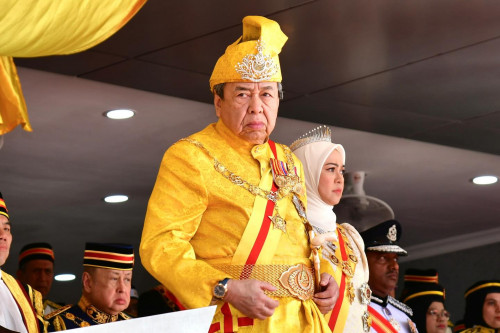
For decades, PAS has also made a pragmatic decision to respect and work with the Malay monarchy.
The sultans are constitutionally the heads of Islam in their respective states, and open confrontation would have been politically costly.
Cooperation with the royal institution has therefore been treated as a practical necessity, allowing the party to advance its agenda within the existing constitutional framework rather than seeking to overturn it outright.
Official Institutions and Expanded Roles for Religious Authorities
Beyond PAS, official ulama structures play a growing role.
JAKIM (Jabatan Kemajuan Islam Malaysia) has long handled preaching, training, and Quran competitions.
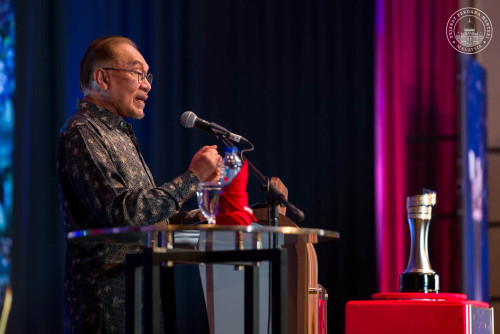
In June 2023, Prime Minister Datuk Seri Anwar Ibrahim publicly instructed JAKIM leaders, muftis, and ulama to play a larger part in national policymaking.
He noted that the agency had previously contributed little to documents such as the 12th Malaysia Plan or the budget, and he directed them to help draft a national development framework aligned with the Malaysia Madani concept.
This move elevated the institutional voice of religious scholars in areas previously dominated by technocrats and politicians.
Educational Foundations and Enduring Ideological Currents
The preference for ulama as natural leaders of an Islamic society did not arise overnight. Generations of Malays have passed through a school system that places heavy emphasis on religious education, both in national schools and in the parallel Islamic stream.
This sustained exposure normalises the idea that those with deep knowledge of sharia and theology are the most qualified moral authorities.
Older ideological currents also persist. In the 1970s and 1980s, the Darul Arqam (Al-Arqam) movement, founded by Ashaari Muhammad, built a large following with its vision of a self-sufficient, highly disciplined Islamic community and messianic undertones. Tun Dr Mahathir Mohamad’s government banned it in 1994 as deviationist and a potential security threat.
Yet the ideas and the network of adherents did not simply disappear.
Successive rebrandings and business networks carried elements of the theology forward, contributing to a residual reservoir of support for more comprehensive Islamic social and political models.
In the past decade, a smaller but noticeable minority of Malays has been exposed to the theology of the Islamic State (ISIL/ISIS).
That ideology explicitly promotes a caliphate governed according to a strict interpretation of sharia under the leadership of religious authorities.
While the number of Malaysians who travelled to Syria or Iraq or who plotted domestic attacks remained limited, the online dissemination of these ideas reinforced the notion among some that true Islamic governance requires ulama at the apex of political power.
The Corruption Paradox
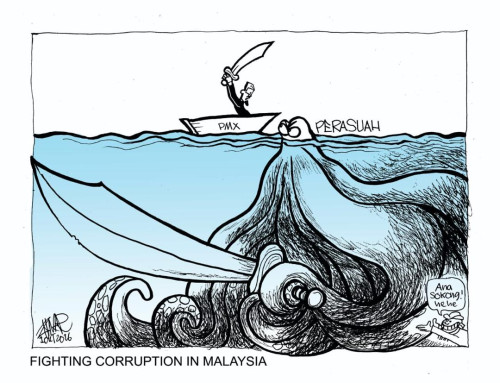
Supporters of greater ulama influence frequently point to Malaysia’s stubborn corruption problem.
Surveys have long shown that large majorities regard graft as a major issue, and many of the most prominent scandals have involved Malay Muslim elites in institutions dominated by the community.
Campaigns that infused Islamic values into administration—Islam Hadhari, Wasatiyyah, Rahmatan lil-Alamin—have not eliminated the problem.
Critics note that religiosity is sometimes used to deflect accountability rather than enforce it.
Proponents of ulama leadership counter that only authentic religious authority can restore the ethical discipline (amanah, justice, fear of divine reckoning) that secular or hybrid systems have failed to instil.
Looking Ahead
Malaysia remains a multi-ethnic constitutional monarchy with a parliamentary system.
Islam is the religion of the Federation, but the overall legal and political order is not an ulama-led theocracy.
Official religious institutions advise and regulate; they do not rule.
PAS continues to operate within democratic and monarchical constraints, while successive governments—including the current Madani administration—cultivate synergy between ulama and rulers rather than subordination of the state to a clerical hierarchy.
Nevertheless, the underlying theology retains appeal.
Should major external shocks occur—such as the toppling of Gulf monarchies, a decisive Iranian victory that alters the regional balance against the United States, or serious internal tussles for power within Malaysia’s own royal institutions—the narrative that the country would be better served as a more fully realised Islamic state under scholarly guidance could gain further traction. Educational patterns, residual movements from the Arqam era, and residual influence from transnational jihadist ideas have already prepared the ground.
For now, the debate continues within the bounds of Malaysia’s existing constitutional order.
The desire for moral, corruption-free governance rooted in Islamic ethics is real and widely shared among many Malay Muslims. Whether that desire is best fulfilled by elevating ulama to positions of political leadership, by strengthening their advisory role, or by other institutional reforms remains one of the central questions in Malaysian political life. – October 3, 2026