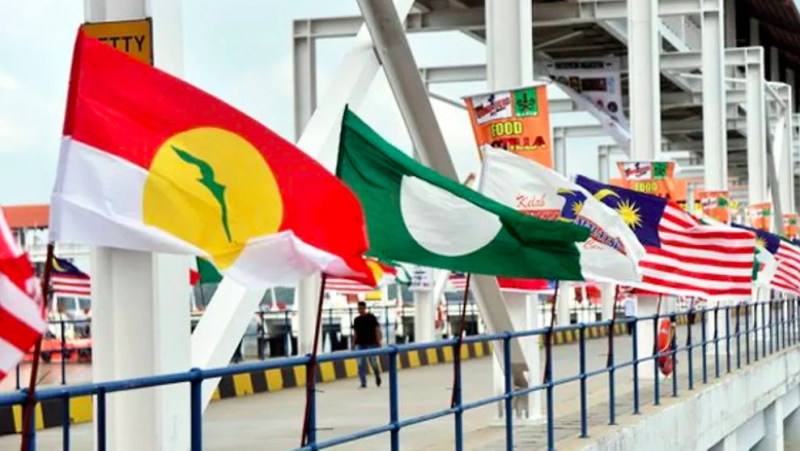
THE emerging cooperation between Barisan Nasional and PAS may be gathering pace, but the closer the two sides get, the harder it could become to settle the question of who gives way to whom.
For now, there is enough common ground.
PAS is prepared to consider using the BN logo in the Melaka state election, while Umno secretary-general Datuk Dr Asyraf Wajdi Dusuki has described discussions between the two sides as progressing positively.
But Melaka is only the immediate test.
The more difficult negotiations will come when BN and PAS have to work out the political map for the 16th general election — particularly in constituencies where both parties have an interest in contesting.
That is where the limits of their cooperation are likely to become clearer.
Umno wants to rebuild its position as the dominant Malay political party. PAS, meanwhile, goes into the negotiations from a position of considerably greater electoral strength than it had in previous elections.
PAS won 43 parliamentary seats in GE15, compared with 26 for Umno. It also emerged as the dominant component of Perikatan Nasional in the 2023 state elections, winning 105 of PN’s 146 seats.
That creates an obvious problem.
For Umno to rebuild, it needs to contest more Malay-majority seats. But many of those seats are now held by PAS or its PN allies.
In Kedah, Kelantan, Terengganu and Perlis, PAS and PN hold the overwhelming majority of the political ground. Umno has no parliamentary or state seats in Terengganu, Kedah and Perlis, and only two state seats in Kelantan.
It is difficult to see how Umno can restore its position without asking for some of that territory back.
It is equally difficult to see why PAS would readily surrender seats it has already won.
Seat swaps may become the real test
PAS election director Datuk Seri Muhammad Sanusi Md Nor has already suggested that negotiations cannot be confined to Melaka.
He has proposed that if Umno wants to contest in PAS-controlled states, PAS should in return be given opportunities to contest seats in Melaka and other areas under Umno’s influence.
Sanusi has even floated the idea of trading seats across states, saying a concession by Umno in Melaka could be matched by PAS giving way in Kedah, Kelantan, Terengganu or Perlis.
That proposal illustrates how complicated the negotiations could become.
The two parties are not merely discussing whether they should cooperate. They are beginning to negotiate the value of their respective political strongholds.
And that is a very different exercise.
A party can agree to avoid a three-cornered fight. It is another matter altogether to ask it to surrender a seat it believes it can win.
For PAS, the four northern states are not simply a collection of constituencies. They form the core of the party’s current political strength.
For Umno, meanwhile, allowing those areas to remain largely closed to the party would make it harder to fulfil its ambition of rebuilding its Malay support base.
That tension is already visible.
Analysts have warned that PAS is unlikely to make it easy for Umno to return to states where the party was largely wiped out, while Umno’s own political objectives require it to contest more Malay-majority seats.
The Melaka arrangement will not settle the bigger question
This is why an agreement in Melaka, even if reached, should not necessarily be read as evidence that BN and PAS have resolved their wider differences.
The two parties have an immediate common interest in avoiding unnecessary clashes.
PAS wants to prevent its votes from being divided among several Malay-based parties, while Umno has an interest in working with a party that commands substantial support in Malay-majority constituencies.
But that common interest has its limits.
The closer they move towards GE16, the more the question will shift from whether they should cooperate to how much each side is prepared to give up to make the cooperation work.
The issue becomes even more sensitive if state elections are held alongside the general election.
PAS has already indicated that it favours the four northern states — Kedah, Kelantan, Terengganu and Perlis — holding their state elections together with GE16.
That would put parliamentary and state seat negotiations on the same table.
A candidate who is asked to give way at parliamentary level may expect compensation at state level. A party that gives ground in one state may demand something in another.
The negotiations could therefore become less about broad political cooperation and more about hard electoral arithmetic.
Then there is the question of leadership
Even if BN and PAS manage to settle their differences over seats, there is a bigger issue that cannot be avoided indefinitely: who leads if they win enough seats to form a government?
That question has already been raised publicly by Amanah vice-president Datuk Mahfuz Omar, who asked whether PAS would accept Umno president Datuk Seri Ahmad Zahid Hamidi as prime minister if BN and PAS eventually form the next government.
It is a political question for PAS to answer, but it also points to the underlying problem with any long-term BN-PAS arrangement.
Both parties have their own leadership ambitions.
Umno remains the core party in BN and wants to recover its position as the leading Malay political party. PAS, meanwhile, is now the largest party in Parliament and has demonstrated that it can build a substantial electoral base without Umno.
That does not make a partnership impossible.
It does, however, mean the partnership cannot be sustained indefinitely on the assumption that one side will simply follow the other.
The experience of PN offers a useful reminder.
The coalition was able to bring PAS and Bersatu together around a common political objective, but tensions over leadership, representation and the role of its component parties have since become increasingly difficult to contain.
BN and PAS will have to contend with the same basic question if their cooperation deepens: who gets what when the numbers start to matter?
The difficult part comes after the agreement
For the moment, both sides have reasons to keep the relationship moving.
PAS can gain from cooperation with BN without having to fight Umno directly in every constituency.
Umno can avoid unnecessary contests while trying to rebuild its electoral base.
But the arrangement will eventually have to deal with competing ambitions that cannot be wished away.
Umno needs seats to rebuild.
PAS needs seats to preserve its current strength.
Both will want influence over the states they consider politically important.
And if their combined numbers eventually give them a realistic path to federal power, the question of who leads will become unavoidable. - October 3, 2026









_-_ABDUL_RAZAK_LATIF_07.JPG)