MALAYSIA will have to wait until after June 2027 to collect its first revenue from the Global Minimum Tax (GMT), as multinational companies are given up to 18 months after their financial reporting periods to file returns and settle their tax liabilities.
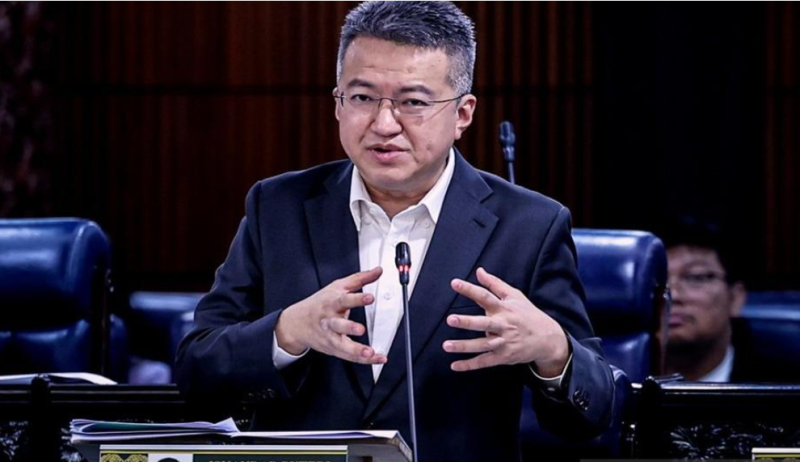
Deputy Finance Minister Liew Chin Tong said the collection schedule was tied to the financial reporting cycles of multinational groups covered by the tax framework, which Malaysia implemented on Jan 1, 2025.
"The implementation of GMT is expected to have a positive impact on the country's financial position," he said in the Dewan Rakyat on Monday.
Liew was responding to Lim Guan Eng (PH-Bagan), who sought details on revenue collected since the tax was introduced and whether the government would reduce the tax rate for micro, small and medium enterprises (MSMEs) to 15 per cent to ensure fair competition with multinational companies.
Under the GMT framework, multinational groups with annual global revenue of at least €750 million must pay a minimum effective tax rate of 15 per cent in each jurisdiction where they operate.
Introduced through an initiative by the Organisation for Economic Co-operation and Development (OECD) and G20 countries, the framework seeks to curb profit shifting to jurisdictions with low or zero tax rates.
Liew said more than 135 countries and jurisdictions had agreed to introduce GMT in October 2021, with about 65 having implemented the rules as of October 2026.
On MSME taxation, he said Budget 2027 had announced a one-percentage-point reduction in income tax rates from the 2027 assessment year.
The rate for the first RM150,000 in chargeable income will be reduced from 15 to 14 per cent, while the rate for income between RM150,001 and RM600,000 will fall from 17 to 16 per cent.
The reductions are expected to generate tax savings of up to RM6,000 per MSME, helping businesses lower operating costs and improve cash flow.
Separately, Lim raised concerns over long-term tax incentives for foreign investors, claiming they had weakened Malaysia's domestic steel industry.
He alleged that local operators' share of the industry had fallen from 85 per cent in 2016 to 15 per cent, with foreign companies now accounting for the remaining 85 per cent.
In response, Liew said the government had introduced the New Incentive Framework on March 1, 2026, requiring investment proposals to be assessed against six scorecards, including economic complexity and the employment of more local workers.
He said incentives would only be granted to investments that met the required assessment scores.
Meanwhile, responding to Datuk Awang Hashim (PN-Pendang), who proposed expanding the chargeable-income band eligible for the 15 per cent tax rate to benefit more growing MSMEs, Liew said the government was open to the suggestion.
He said details on the estimated fiscal cost and the number of potential beneficiaries would be provided in a written reply. - November 23, 2026