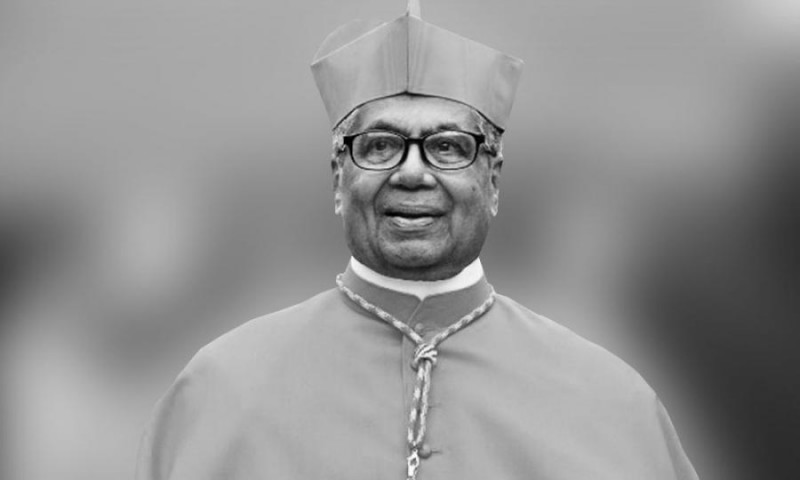
IN which country would a Catholic cardinal bearing Rome’s pompous office stoop so low as to pick up the missing sandals of a Buddhist chief monk?
This cannot happen anywhere else if not Malaysia. And, the sandal-picker cannot be anyone else if not the quiet, soft-spoken Anthony Soter Fernandez.
There they were, the religious leaders of the Malaysian Consultative Council for Buddhism, Christianity, Hinduism, Sikhism and Taoism (MCCBCHST). All gathered for a meeting at the Buddhist Maha Vira in Brickfields.
The evening meeting was over, and the heads of the various religious groups were putting on their footwear. The last two leaders still looking for their sandals were Fernandez and Dr K. Sri Dhammananda Nayaka Maha Thera, the late Buddhist chief monk of Malaysia and Singapore.
After Fernandez found his shoes, Dhammananda was still looking for his sandals in the dark. And then came Fernandez, dangling the chief monk’s sandals and placing them at the abbot’s feet.
More shocked than embarrassed that the archbishop of Kuala Lumpur had actually touched the sandals with his bare hands, the chief monk exclaimed: “What?! You are the archbishop of Kuala Lumpur, and you have touched my sandals. Do you know what that means?”
To this, Fernandez responded: “I am only the archbishop of Kuala Lumpur, but you are the chief monk of both Malaysia and Singapore.”
Both clerics laughed, and they hugged each other like long-lost brothers before parting.
If Dhammananda had trouble sleeping that night, it would be because a Catholic archbishop, by touching his sandals, had expressed a certain gesture that in Asian culture means: “I am your servant.”
When I first heard this narrative from a Hindu member of the interfaith group, I was not surprised. That is remarkably Fernandez – a man who was always ready to step into “the sandals of a servant”.
Today, as I write his eulogy, though I wish it was actually his biography, the epithet “In the Sandals of a Servant” would aptly lend the right tenor for the headline – be it a eulogy or biography.
The tributes spoken of Fernandez and posted on social media by his saddened flock since his passing on Wednesday affirm a resonating appellation to him as a man who always embraced meekness rather than the high office of kingship.
Always wearing the sandals of a servant, Fernandez twice declined to be bestowed the honorific titles of Datuk and Tan Sri offered by the state.
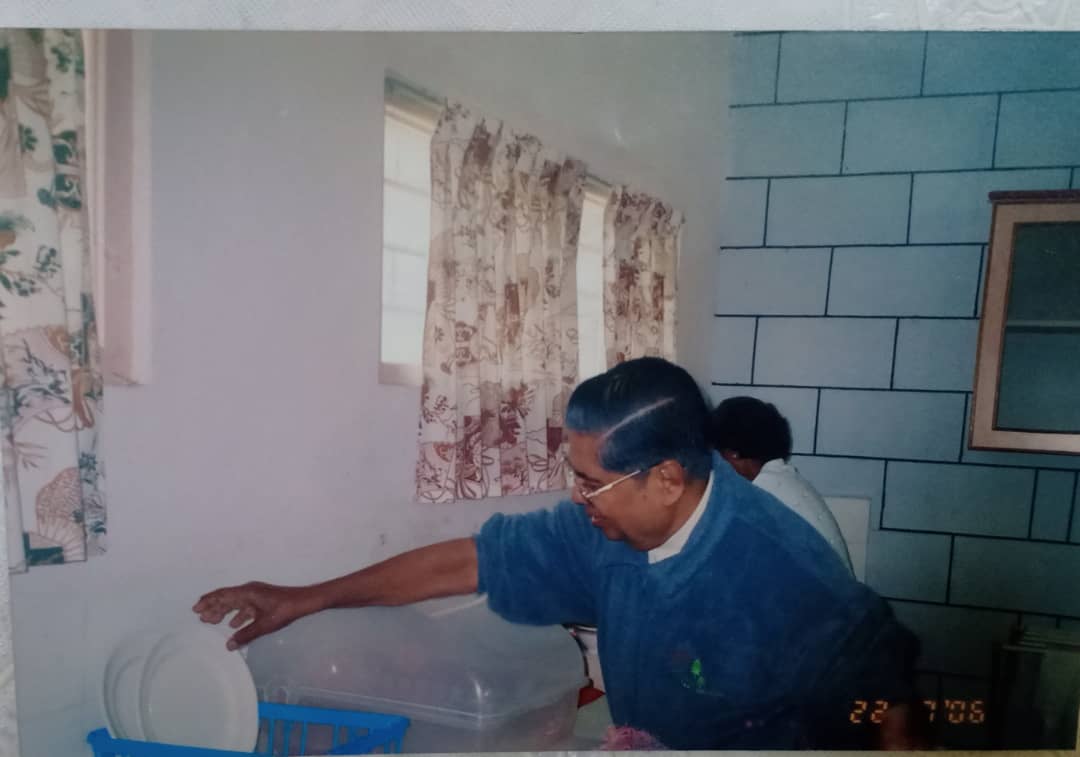
He never failed to walk his talk. Former Assumption Church parish council chairman Dorothy Balachandran said this: “During retreats and seminars, the archbishop would join participants after lunch to help do the dishes, putting aside the stature of his high office.”
‘Be a servant’
Preaching to the Malaysian delegation during the Asian Mission Congress in Chiang Mai in 2006, Fernandez expounded the virtues of being a servant.
Echoing words from the Gospel, he asserted that leaders of the world lord it over their people, and the powerful oppress them.
“Whosoever wants to be more important among you, make yourself a servant first, and whosoever wants to be first, make yourself the slave of all.”
Among those listening to his homily were several Asian prelates, including cardinals.
“Who are the high priests mentioned in the Gospels? They were those who were arrogant and oppressed the people with the laws of that time,” he said.
“We, the leaders of the Church, are the high priests today. As high priests, our vocation is to serve, and not to be served.”
‘Do not bury the brain-dead’
Fernandez once called me when I was a journalist with theSun. He was unhappy with a story I wrote that carried the “unkind” headline of “Bury the brain-dead, says medical expert”.
The story highlighted the unnecessary prolonging of human life with modern life-support systems.
The speaker at the medical seminar said brain-dead people are as good as dead, and that they should all be promptly buried as there is little hope for their condition to be reverted. According to the speaker, these people are being kept alive in intensive care units because modern machines are available to extend their life, and it serves very little purpose.
“Your headline lacks charity. We must always strive to be kind to the less fortunate. Today, there are so many people keeping vigil in critical care units. How would they feel when they read your headline? Be kind always. So long as there is life, there is hope,” said Fernandez.
Though he was clearly upset by the story, he spoke in his trademark hushed tone, never imposing nor commanding, but like a kindly shepherd teaching an erring flock, he got his message across to me effectively.
Media-friendly
Fernandez can be perceived in many ways – a priest, a bishop, an archbishop, a cardinal, an interfaith envoy, a fighter against injustice and religious bigotry – and mainstream journalists will remember him as the most media-friendly prelate the Malaysian Church has ever been blessed with.
He kept close contact with Catholic journalists and harnessed their strength and position to spread the social teachings of the Church, largely on the aspects of human dignity, the rights and responsibilities of social institutions, preferential option for the poor, the dignity of work, the rights of workers, and care for the environment.
It was during his watch as archbishop that the Cahaya Suara Communications Centre was established, as well as the first Catholic weekly The Herald.
Blessed are the peacemakers
Fernandez is known to be a great friend of not only Christians and Catholics, but he also “respected” the major faiths of the Asian people, celebrating the similarities like fasting with Muslims during Ramadan and joining in open houses for Deepavali, Chinese New Year and Hari Raya Puasa.
When he was elected president of MCCBCHST in 2001, he told this writer during an interview for a story in the Catholic Asian News: “Asia, with its diversity of peoples and creeds, is one big family and a cultural mosaic.
“When one piece is missing, there will be a gap, and what needs to be done is to illuminate the gap with the light of the Gospel, so that its beauty will always shine with the rest of God’s people in Asia.”
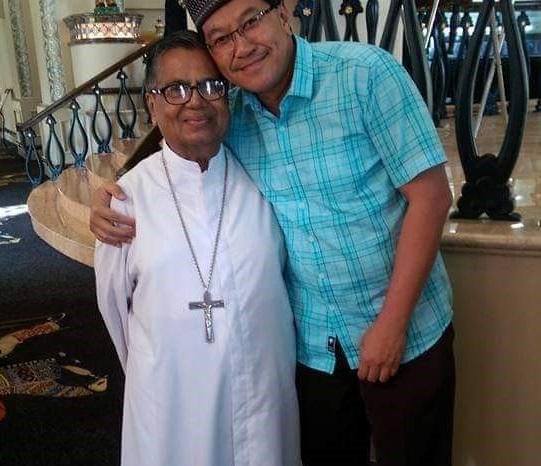
A tribute on Facebook by Dr Amir Farid Isahak, who knew Fernandez, sums it up: “Some of you may wonder how a Muslim became the godson of a Catholic cardinal?
“I fell in love with his loving and fatherly nature when we met on several occasions at interfaith programmes. And, he liked me enough to make me his godson.”
Moral theologian and Catholic Research Centre director Fr Clarence Devadass said Fernandez was a man of paradoxes apart from his kind and tender nature.
“Small in stature yet assertive in presence, unafraid to stand up for a just cause but always ready to back down if reconciliation was attained, quick to reprimand when things went wrong, but never far from putting his hands around the shoulder of someone in pain.”
Born in Sg Petani on April 22, 1932, Fernandez was ordained a priest in 1966. He grew in stature to become a bishop, an archbishop, and eventually, the country’s first cardinal in 2016.
He battled tongue cancer for more than a year before passing on quietly in the humble home of the Little Sisters of the Poor in Cheras on October 28.
The wake is held at the community centre of the Cathedral of St John in Jalan Bukit Nanas, Kuala Lumpur, and his funeral is at 10.30am today.
Due to restrictions under the conditional movement control order, the funeral mass will not be open to the public, but livestreamed at https://Tv.ArchKL.org. – The Vibes, October 31, 2020