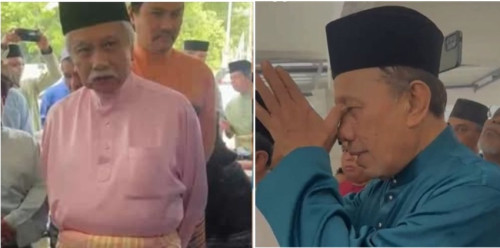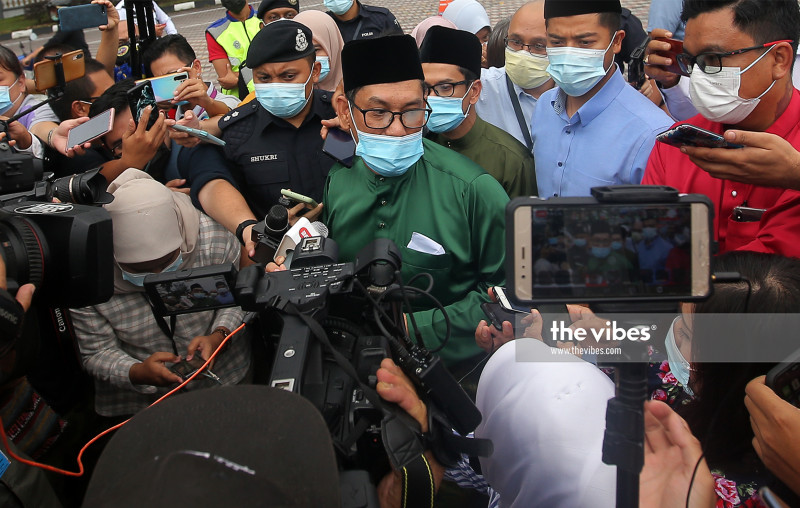

KUALA LUMPUR – When Datuk Seri Ahmad Faizal Azumu tendered his resignation on Saturday, it effectively granted him the unsolicited record of being the Perak menteri besar with the second shortest stint in office.
He helmed the state for barely 940 days, overseeing two different administrations – Pakatan Harapan (PH) after the 14th General Election in May 2018, followed by Perikatan Nasional (PN) after Bersatu quit PH as a result of a federal government crisis in late February this year.
Meanwhile, the person with the shortest stint as Perak menteri besar (326 days), is Datuk Seri Mohammad Nizar Jamaluddin, who led the Pakatan Rakyat (PR) government starting in March 2008.
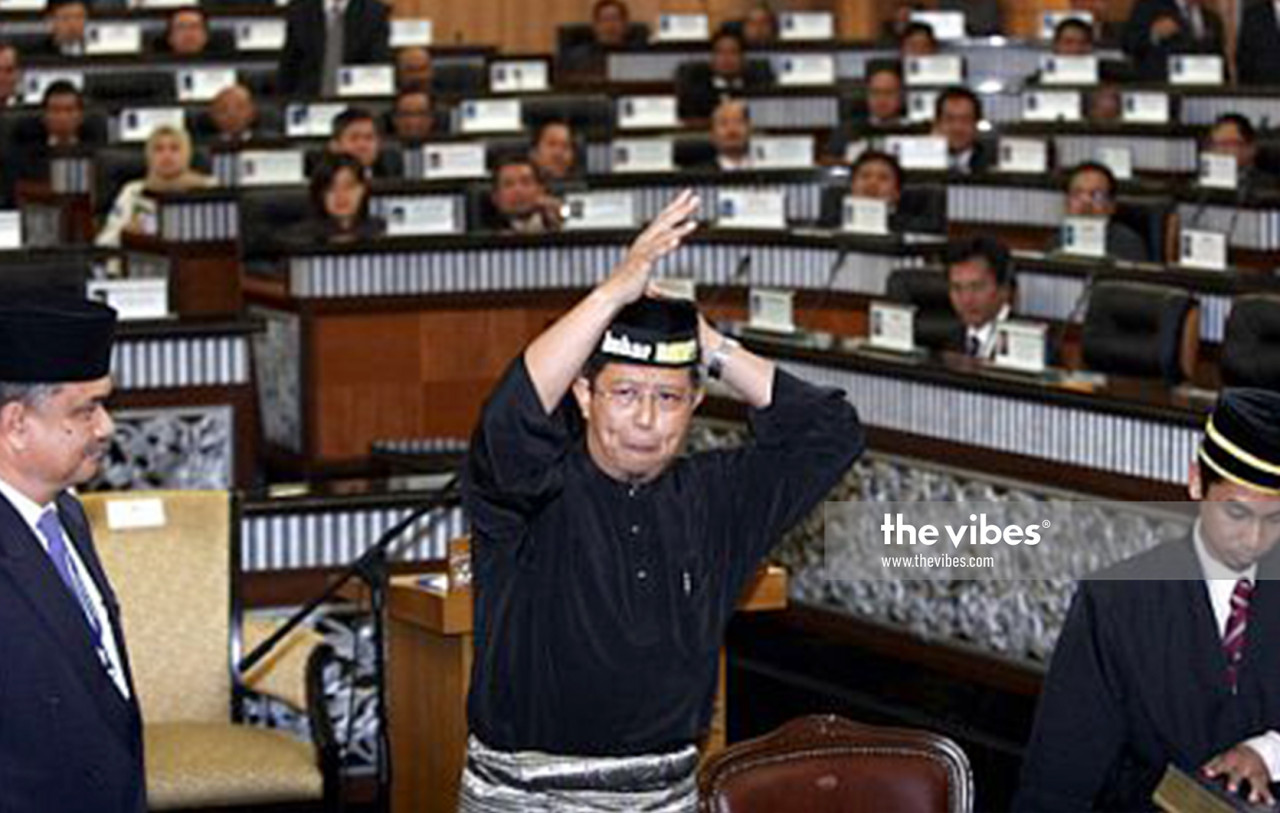
In Februari 2009, the decision by three PR assembly members to defect and join Barisan Nasional (BN) resulted in the collapse of the state government, and paved the way for a crisis that would last for months before it was finally resolved in court.
The two crises, being just 11 years apart, and having changes in the respective menteris besar, have rightly led many quarters to draw similarities between them.
As Universiti Putra Malaysia’s professor of politics and government Jayum Jawan puts it, each was triggered because the ruling party did not have “absolute majority” in the state.
In Nizar’s case, his PR coalition won just 31 seats in the 2008 election over BN’s 28. All it took for the state to change hands was for three assemblymen to declare themselves independent while pledging support for BN.
As for Faizal, he was reappointed menteri besar to lead the PN government in Perak in March despite his party Bersatu only controlling five of the 59 seats there.
Therefore, it is unsurprising that Umno, with the most number of seats (25), would be disgruntled with such an arrangement, hence leading him to fail in a vote of confidence on him.
Whether Faizal had lacked foresight on the move to oust him or he had just swept the obvious aside is a different debate. With his party having only a measly share of seats in the assembly, it meant that there was not much he could do.
“It doesn’t matter if it is a single party or a coalition of them, if the menteri besar is from one that does not hold absolute majority of the house it is prone to be destabilised. This is expected to happen.
“Naturally, people with more seats will want to lead,” Jayum told The Vibes.
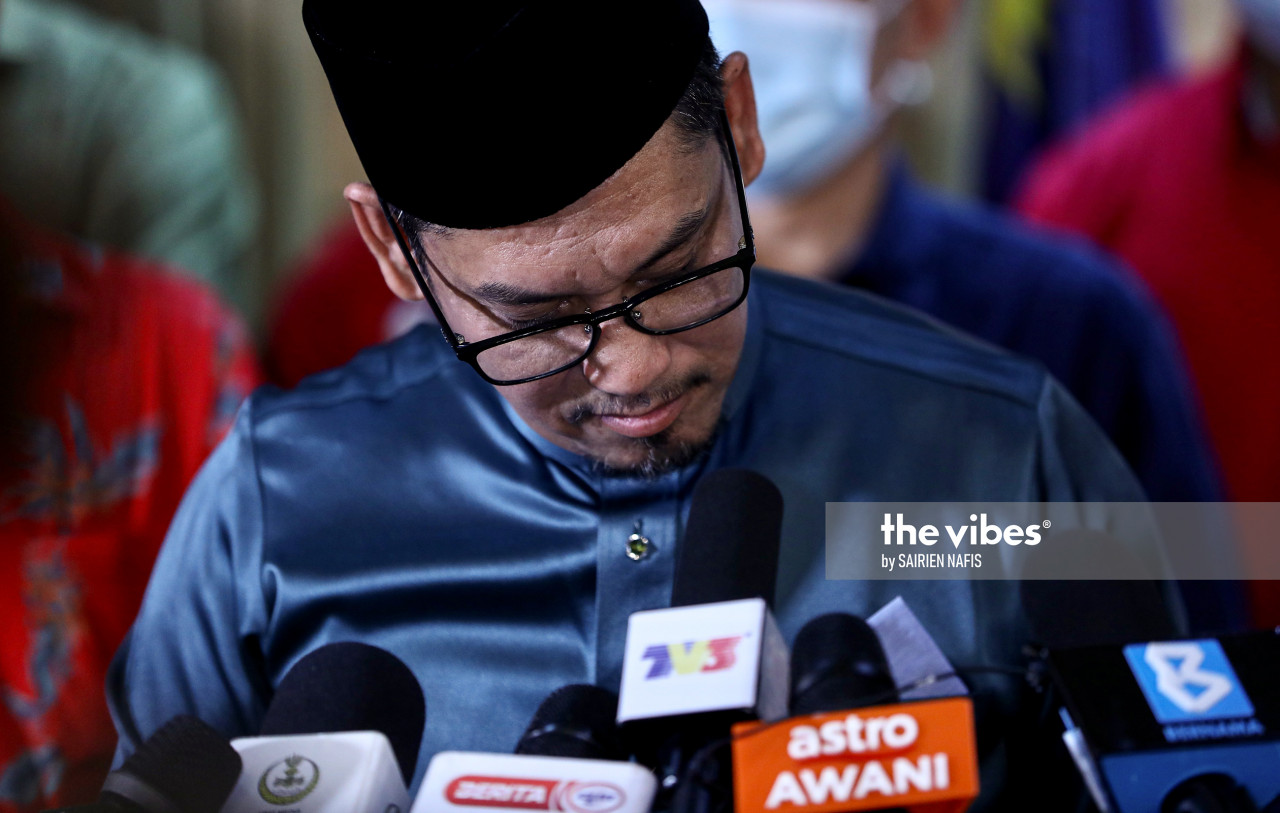
Internal trigger from Bersatu-UMNO rift
Prof James Chin of the University of Tasmania’s Asia Institute pointed out that the current crisis is different from the 2009 one, as it was triggered internally through a vote of confidence, done intentionally by Umno to oust Faizal.
In 2009, the change in mentri besar was precipitated by defections.
The current scenario is rather unique seeing that parties from the same bloc went pitting against each other to the extent of toppling their own government leadership.
And this points to a potentially bigger problem – that the issue could run deeper than just ill-feelings among parties in Perak.
“The situation in Perak today is part of a bigger picture that Umno is very unhappy with Bersatu. They feel that being the largest party in Perak, they should get the top post,” Chin said.
If this (cracks between Umno and Bersatu) is true, then similar scenarios could also play out in other states with compositions similar to Perak, and even at the federal level, as had been reported by The Vibes.
Political instability may be the ‘new norm’
Jayum even argued that Malaysians may have to live with the present “unstable” political conditions for many more years to come, if voting patterns and constant changes in party alliances are to go by.
“Gone are the days where you had Umno-BN ruling with absolute majority. Parties must now be able to work together with others not necessarily from the same bloc and they must learn to trust each other. This is the new norm,” he said.
According to Jayum, this unique situation stemmed from the split in Malay votes – a group that traditionally supported Umno and perhaps PAS – since the 2018 general election.
This changed with the formation of more fully Malay parties, like Bersatu and now Pejuang, and with others like PKR and DAP gaining more traction among the community.
“This might actually be a good thing. What it does is to force Malay leaders to listen to the voices of the Chinese, Indians and even those in Sabah and Sarawak, if they wish to have a stable government. That’s the silver lining.
“Politicians need to realise they need to connect and cooperate with one another to form a coalition strong enough to lead an administration,” he said.
If anything, the current Perak crisis is showing exactly that, with Umno president Datuk Seri Ahmad Zahid Hamidi not discounting the possibility of working together with PH to form the new government, and with PH leaders claiming the same. – The Vibes, December 7, 2020
.JPG)