BACK in 1979, a long-haired Malay idealist who’d liked to pass off as a pseudo-hippie, reflected to attentive friends who couldn’t muster the grades to enter college, of his freshman year in Universiti Malaya, and in particular, a certain high-profile, celebrity-like (cultish-like?), go-getting academician.
The hippie, let’s call him Khalid, was as romantically fervent as the next opinionated student of that silver age, weaned and influenced by the firebrands of the day standing on socialistic bully pulpits who clamoured for revolutions, protests and street demonstrations against the Establishment.
Khalid, too, was enmeshed in this sharp, tantalising stream of rough, but civil rebellion – his life-in-college tales were animated – and it included an establishment figure that he either couldn’t fathom or was in awe of.
“One time, we demonstrated for days against pricey food at the cafeteria,” Khalid mused. “He came down to meet us and had a dialogue. We expressed our unhappiness at the price.
“In response, he was relaxed and civil. He asked us a simple question, ‘did we enjoy the good food?’ And we replied yes… it was delicious.
“And he also stated, ‘if I was to order the cafeteria to cut the price, do you think you could enjoy the same delicious food at lower prices’, to which we replied, to our embarrassment, probably not. And then he smiled and said, ‘there you are…’”
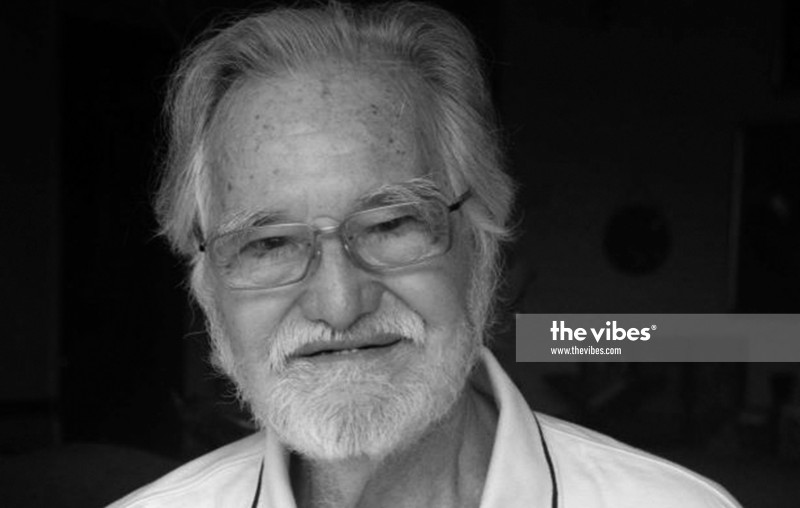
It was that smoothly assuring logic that endeared Royal Professor Tun Ungku Abdul Aziz Ungku Abdul Hamid, or conventionally known to everyone as simply Ungku Aziz, to his students, colleagues, friends and the politicians that he collaborated with over his long decades in public service.
For the press, as then UM vice-Chancellor, Ungku Aziz was the go-to guy if they needed a quote or a sound-byte: he’d volunteer succinct but refreshing perspectives on roiling issues of the day affecting education, the burgeoning economy, social and linguistic divisions, and politics too.
One time in 1981, during one of the numerous varsity launches, Ungku Aziz was pressed to comment on a former MP-turned dissident-turned outcast rebel-turned cabinet minister-turned deputy prime minister, and finally, turned-newly minted prime minister.
“He is cool and collected, and not to be underestimated,” was Ungku Aziz’s insightful but prescient quip of then-Datuk Seri Dr Mahathir Mohamad.
A decade earlier, Ungku Aziz tangled with Dr Mahathir on the validity of the PM’s sociological theories on the Malay mind, social handicaps, mentality, and laggardness as espoused in The Malay Dilemma, authored in his years of political wilderness.
From an economics standpoint, Ungku Aziz disagreed whole-heareedly with Dr Mahathir’s thesis, but he went on to promulgate major initiatives that were instrumental in building the Malay stamina in sociological, educational, and entrepreneurial values.
In a way, we’d like to think that Dr Mahathir’s provocations prodded Ungku Aziz to do exactly as theorised on the nitty-gritty ideas of The Malay Dilemma.
Then, there’s his fit-as-a-horse devotion to jogging feverishly on campus grounds, as a marker of the nascent vogue to fitness and good health.
“He’s always jogging in the morning despite his age,” the hippie Khalid said in wonderment. “Students would join him. He’d always be chatting with them, on campus or national issues.”
It’s a given that Ungku Aziz was regarded as the true Renaissance man, writing 50 books (a Reader is urgently needed), accomplishing numerous too-long-to-list major national successes, accolades and honours in his legendary public service career.
But his one true, huge accomplishment was coining the Malay word “minda”– the “mind” to plain-speaking people – a word that could not find a spot in the Malay language.
Ungku Aziz observed (must be to his great chagrin) that the Kamus Besar Utusan, in all the years of compiling Malay words which appeared in the press and the mass media, didn’t even think to place “minda” in its collection, an unconscionable absence.
As chronicled by Zin Mahmud’s respectful tribute in Malaysia Now, “minda” never surfaced in the Malay consciousness.
It was through his labours that “minda” became a required application in all aspects of life, including unravelling and solving Malay poverty.
Zin noted: “…it was through his use of the mind that he mooted Tabung Haji and committed towards the cooperatives movement – a just commercial system compared to individually-owned private business”.
Ungku Aziz lived a life full of gentlemanly expectations, upon the complex rigours of socio-economic and socio-political demands, but it is his gift to persuasively revolutionise the human mindset that must be lauded as his ultimate achievement.
The hippie Khalid would have agreed. He was, after all, one of Ungku Aziz’s early conversions. – The Vibes, December 19, 2020
Azmi Anshar is a retired newspaper editor and, in his free time, away from his independent media consultancy, indulges in writing, books, music, movies and grandkids