By Honorary Commander Professor Datuk Seri Dr Irmohizam Ibrahim
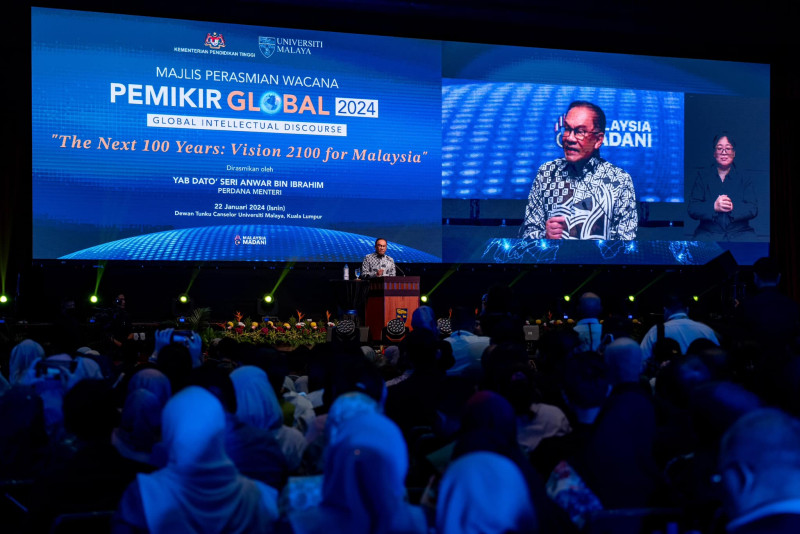
PRIME MINISTER Datuk Seri Anwar Ibrahim recently reaffirmed his administration's commitment to combating corruption, describing it as a systemic issue deeply ingrained in the nation’s political culture.
Speaking at the Malaysian Anti-Corruption Commission (MACC) 2025 Gala Dinner on February 13, Anwar stressed the critical role the commission has played since its establishment in 2009, in safeguarding the country from persistent corruption problems.
Anwar acknowledged the pervasive nature of corruption in Malaysia and the urgent need for collective action to eliminate it.
He underscored that the government’s commitment to transparency and integrity was unwavering, stressing that corruption could no longer be tolerated.
The Prime Minister also announced that under his leadership, there would be no more unchecked procurement processes, and MACC would have the full freedom to investigate, uncover, and take action against any individual involved in power abuse.
This statement came just two days after the release of the 2024 Corruption Perception Index (CPI), which ranked Malaysia 57th globally with a score of 50.
Although Malaysia maintained the same ranking and score from the previous year, Anwar expressed that the country’s ambition is to be among the top 25 nations by 2033, aiming for a score of 68 to 70. To achieve this, he stressed that Malaysia must improve its score by at least two points annually.
Transparency International Malaysia (TI-Malaysia) echoed this sentiment, noting that while the government’s commitment to governance reforms is evident, the pace of institutional reforms has been slow.
The organisation pointed to the ongoing challenges, such as the perception of corruption within the business community and the slow progress in implementing key institutional reforms, including the introduction of laws like the Whistleblower Protection Act and the Public Procurement Act.
TI-Malaysia also highlighted concerns regarding the judicial system, particularly the reduced sentences and fines for high-profile corruption cases, which have raised doubts about the political independence of the judiciary.
The organisation urged the government to expedite institutional reforms and ensure greater transparency and accountability within enforcement agencies and the judiciary.
The Prime Minister, in his speech, reinforced his government’s dedication to tackling corruption, stating that the fight would require not just political will but a collective societal effort.
The government is committed to ensuring that the reforms are not just superficial but substantial enough to change Malaysia’s reputation on the global stage.
Anwar emphasised that the ultimate goal is for Malaysia to be recognized as a corruption-free, high-integrity nation—a vision that will require sustained effort over time.

As the country moves forward, both the government and civil society must work in tandem to overcome the systemic challenges posed by corruption.
The road to transformation will be long, but with unwavering political will and public support, Malaysia can achieve its vision of becoming a cleaner, more transparent nation. – February 25, 2025
The author is the Managing Director of World Trade Centre Kuala Lumpur (WTCKL). The article first appeared in Berita Harian on February 23,2025.