THE Batang Kali massacre, 75 years ago, had rendered calls for justice and an official apology from the British government remains unmet, despite years of legal battles and the persistent efforts of victims’ families.
Lim Kok, now 87, was just nine years old when British soldiers gunned down his father, a hardworking Chinese supervisor, along with 23 others in December 1948 in what has since become one of the darkest chapters in Malaya's colonial history.
In an emotional interview with Al Jazeera in December 2023, Lim recalled the brutality of that day, when British forces accused innocent workers of being communist sympathisers before murdering them in cold blood.
“On that day, I lost more than my father. I lost my whole family,” said Lim, now living in Kuala Lumpur.
The massacre, carried out under the guise of fighting communist insurgents, shattered Lim’s family.
His mother, left widowed with six children, was forced to give up her youngest daughter for adoption.
Lim himself was sent to live with a granduncle in the capital to escape the devastation of rural life.
The victims of the Batang Kali massacre, all ethnic Chinese rubber plantation workers, were initially branded as bandits and communist supporters by the British military.
However, years of research and court proceedings have cleared their names, revealing the atrocity for what it was – a brutal, unprovoked massacre carried out by British soldiers.
Despite the passage of decades, Lim, like many survivors, remains steadfast in his demand for accountability.
“The only thing bad is that they were massacred by British soldiers,” he said.
“We need justice for what was done to us.”
The push for redress has been spearheaded by Kuala Lumpur-based lawyer Datuk Quek Ngee Meng, who began the campaign for justice in 2008 after his father, a longtime advocate for the victims, passed away.
Since then, Quek has led the fight to secure an official inquiry, taking the case to the High Court, Court of Appeal, and even the European Court of Human Rights.
Quek explained that the massacre had far-reaching consequences for the victims' families, plunging them into poverty and depriving them of a future.
“The families were actually broken down,” he said, noting that many children were unable to receive an education, and some were sent into adoption.
“It wasn’t just those killed. Many, many people became victims of this.”
Legal efforts to secure an apology from the UK government have been fruitless, despite international calls for accountability.
British lawyers and Malaysian politicians, including those from the opposition then, have urged the UK to apologise for its role in the killings.
John Halford, a public law expert from the UK, argued that “it would be morally right for the UK to issue an apology,” noting that other nations have acknowledged past wrongs despite no legal obligation to do so.
Legal challenges have also exposed the inadequacies of the initial inquiry into the massacre, which concluded with the absurd claim that the massacre was a “very successful action.”
A subsequent British inquiry found the killings were unjustified but failed to hold anyone accountable.
What happened on December 12, 1948?
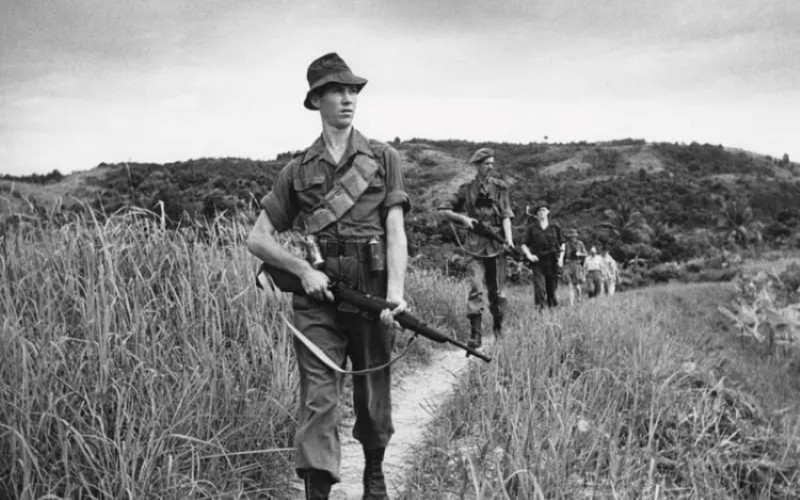
The tragedy unfolded in Batang Kali on December 12, 1948, when 14 British soldiers entered the remote settlement, located about 60km north of Kuala Lumpur.
After interrogating the villagers, the soldiers separated the men from the women and children, executing 24 men in cold blood the following morning.
The British War Office declared the killings a “successful operation,” and the local inquiry, based solely on soldiers’ testimonies, concluded that the deaths did not warrant criminal action.
“Sometimes, the demand of morality can be stronger than those of law,” said Halford.
Danny Friedman, another British lawyer, echoed then this sentiment, emphasising the historical and legal importance of Britain acknowledging its role in the massacre.
“For Britain to do something about the massacre at Batang Kali would be both historically important and legally significant,” he said.
The case remains unresolved as the British government continues to resist calls for a formal apology and compensation for the families of the victims.
Quek, who has worked pro bono on the case for years, stated that though legal battles have not yielded compensation, he believes the facts speak for themselves.
"All judges agree that an atrocity was committed by British soldiers, and that the villagers were innocent."
For the families of those killed, an apology remains the primary demand.
“An apology would be enough for us,” said Quek.
“But they won’t even offer that.”
The tragedy of Batang Kali has left deep scars that span generations, with the families of the victims still haunted by the injustice that was never properly addressed.
Despite all legal attempts to gain justice, a full acknowledgment of the massacre by the British government remains elusive, and the victims' families are still waiting for the redress they deserve.
As the 75th anniversary of the massacre draws near, the question remains: Will the UK government finally take responsibility for its role in the Batang Kali massacre and offer a long-overdue apology?
The families, whose lives were irrevocably altered, continue to demand the recognition and justice they have been denied for far too long. – March 10, 2023