MUSLIM women in Malaysia have the right to seek financial maintenance from their husbands even without a divorce, according to Syariah legal practitioners, who stress that such claims are protected under Islamic law and applicable family law statutes.
The issue gained renewed public attention after a viral video captured an awkward exchange during a Hari Raya Aidilfitri open house, where a compliment about a child's attire escalated into a row between the parents. The mother revealed she had borne all the expenses for the festivities, prompting widespread discussions on the unequal financial burdens faced by many married women.
"Many women are emotionally overwhelmed because they’re expected to manage not just household and child-rearing duties, but also financial responsibilities," said Syariah lawyer Marlina Amir Hamzah, speaking to Bernama exclusively.
She explained that under the Islamic Family Law (Federal Territories) Act 1984 and similar laws enacted in other states, wives are entitled to financial support, and this entitlement remains intact even if the couple is still legally married.
"For example, Section 73(1) of the Selangor Islamic Family Law Enactment 2023 makes it clear that a father is obliged to provide maintenance for his child, whether or not the child is in his custody,” she said.
"Maintenance covers basic needs such as food, shelter, clothing, and medical care. If the issue cannot be resolved amicably, the wife has every right to file a claim in the Syariah Court."
However, Marlina noted that many women are reluctant to take legal action due to lack of awareness, financial constraints, or fear that it could destabilise their marriage.
“For those who still hope to save their marriage, taking the matter to court may feel like a step too far. But in cases where the husband has long neglected his responsibilities, legal recourse is not only valid but necessary.”
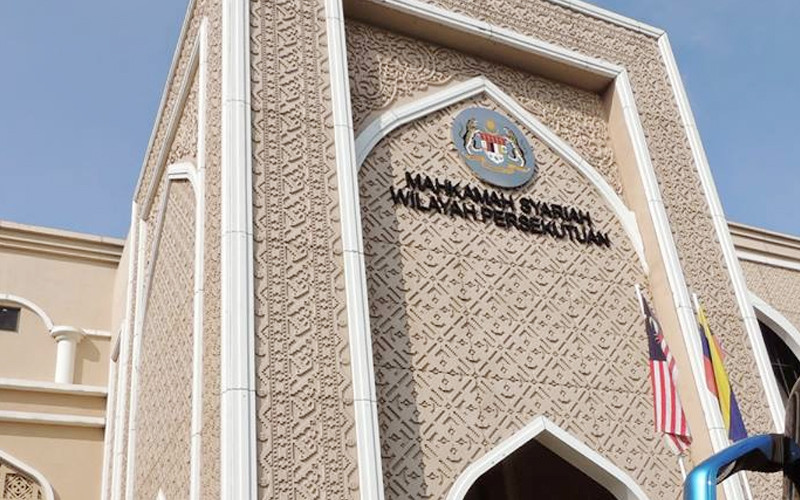
She said the process begins by applying for a maintenance order at the lower Syariah court, where applicants should bring documentation such as identity cards, marriage certificates, and children’s birth certificates. Court officers are typically able to assist those without legal representation.
If the wife is represented by a lawyer, the legal practitioner will handle the paperwork and offer case-specific guidance, she added.
Once a claim is filed, the parties undergo a sulh process – a mediation designed to reach an amicable settlement. If no agreement is reached, the case proceeds to trial.
Upon the court’s ruling, the judge may order the husband to pay maintenance in accordance with the schedule and amount deemed appropriate. Should he fail to comply, the wife can seek enforcement under Section 148 of the Syariah Court Civil Procedure Act (Federal Territories) 1998 or its equivalent in other jurisdictions.
“Applications can be made through various enforcement mechanisms, such as a judgment debtor summons, seizure of assets, or even committal proceedings,” Marlina explained.
She added that claims of financial inability are not sufficient grounds for the husband to avoid his obligations. “He must prove his situation to the court, but even then, maintenance remains a compulsory responsibility under Islamic law.”
In cases where the husband genuinely cannot pay, the court may instruct an heir from his side to assume the duty of financial support. A hiwalah (debt transfer) application can also be filed if the husband has known financial resources, such as bank savings.
Fellow Syariah lawyer Irsamudin Ikhsan added that women can also claim arrears accrued during the marriage, provided they can demonstrate that the husband failed to provide maintenance over a reasonable period.
“Such claims must be supported by evidence, like expense records or witness testimony. The court has the authority to enforce payments through salary garnishment or, in some cases, imprisonment,” he said.
He emphasised that these legal tools are not meant to punish, but to protect the welfare of wives and children who have been neglected.
“These rights are enshrined in both Islamic teachings and Malaysia’s Syariah legal framework,” Irsamudin said.
One such case is that of Fatiahusna (not her real name), 45, who endured over a decade of financial neglect before seeking help from the Syariah court.
“I waited more than 10 years, hoping he would change,” said the mother of three. “I was working full-time, covering all expenses. I had no savings, and eventually, I developed depression.”
Her husband, a government employee, never disclosed where his earnings went. Despite repeated discussions, nothing changed.
“I turned to the Legal Aid Bureau. Some services were free, others involved minimal cost. It took nearly three years, but I had already waited a decade. It was worth it.”
She now receives child maintenance through salary deductions from her ex-husband, in accordance with a Syariah court order.
“Even though I am a single mother now, I am grateful. My children’s future is more secure, and I stood up for our rights.”
She urged other women in similar situations not to remain silent. “Do not stay in a toxic marriage for the children’s sake. Islam and the law both grant us the right to live with dignity. We must have the courage to claim it.” - May 19, 2025