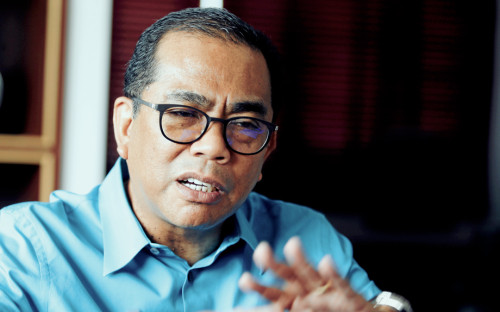
By Charles Santiago
NEARLY seven decades after independence, the Indian community in Malaysia is still being “empowered” in name more than in policy — its long-standing grievances repeatedly used as political ammunition rather than the basis for meaningful reform.
What ought to be a sustained national effort to dismantle entrenched inequality has instead devolved into familiar scenes of political point-scoring. While leaders trade accusations, the community continues to watch from the margins, its concerns turned into talking points, not policy.
“The anger, frustration, and criticism directed at the government, and specifically at those in positions of influence, are not without merit,” the article argues. “It is a national shame that, nearly seven decades after independence, we are still talking about ‘empowering’ Indians as though it were a novel ambition.”
The lack of equitable access to education, employment, and political representation is not merely a policy shortcoming, it says, but “a reflection of decades of political neglect across all ruling coalitions.”
Criticism, while justified, must not fall into the trap of becoming another round in the political blame game. “This is not the time to grandstand,” it adds. “If every party continues to speak over one another and weaponise the community’s pain for clout, the cycle will only repeat itself, leaving behind yet another generation of Malaysian Indians alienated from national development.”
Instead of questioning the contributions of individuals in short spans of time, the piece calls for a broader reckoning: “The question should not be what a single person has done in two years but why for over sixty years no coalition or party — and that includes the MIC — has managed to build enduring, community-led platforms for progress.”
Among those working to change that is Nurul Izzah Anwar, who has collaborated with Yayasan Iltizam Malaysia, the Sustainable Initiative for Community Change (SICC), and independent advocates to craft a set of community-driven recommendations for inclusion in the 13th Malaysia Plan.
The process involved consultations with over 200 participants — educators, social workers, business leaders, women and youth — and resulted in more than 40 policy proposals focused on equity and structural reform. These have been formally submitted to the Ministry of Economy.
“This may not be enough,” the article concedes, “but it is a starting point. The work is ongoing.”
It is this kind of long-term, ground-up approach that needs to be amplified. “Instead of chasing quick wins or political points, let’s focus on how we can collaborate meaningfully for lasting change,” it says. “The Indian community deserves more than outrage and posturing.”
What is needed now is not louder criticism, but more coordinated, purpose-driven effort. “Let’s stop rewarding those who throw the loudest brickbats and start amplifying those doing the slow, difficult work of transformation.”
“This isn’t a call to silence criticism,” it concludes. “It’s a call to redirect it meaningfully. If the goal is real change, then we must build platforms together, not pull them apart.”
The writer is an accomplished public servant and advocate with extensive experience as a three-term Member of Parliament in Malaysia (2008–2022). - July 7, 2025