MALAYSIA is doubling down on its ambition to lead the global halal economy—not just as a supplier of goods, but as a system builder, ethical bridge, and global standard-setter.
With the Global Halal Summit (GHaS) 2025 and the 21st edition of the Malaysia International Halal Showcase (MIHAS) now underway, the message from Putrajaya is clear: halal is no longer a niche label, but a universal symbol of trust and trade integrity.
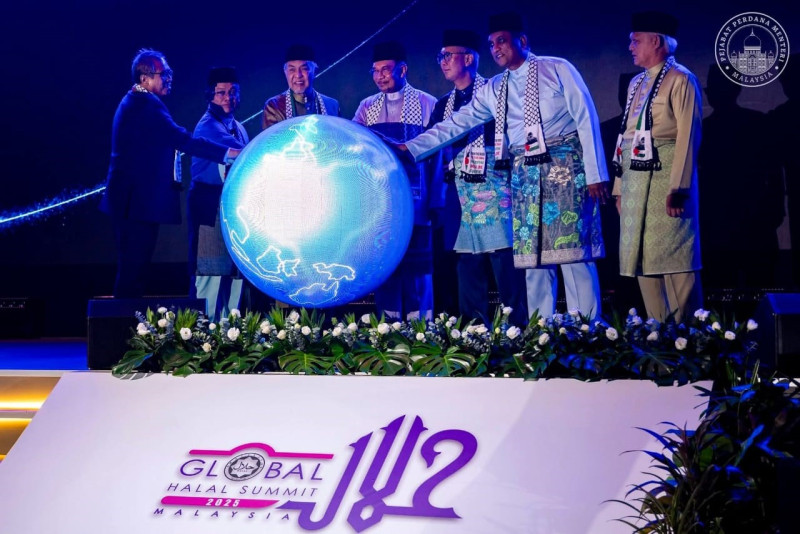
“Halal is not merely a label,” said Prime Minister Datuk Seri Anwar Ibrahim in his keynote address at the GHaS opening. “It is a symbol of global confidence, increasingly driven by micro, small and medium enterprises (PMKS), and a gateway to new export markets based on Malaysian standards.”
The Madani government has anchored halal at the heart of its economic diplomacy, weaving it into every investment mission and bilateral engagement—whether with Muslim-majority nations or otherwise. As chair of ASEAN 2025, Malaysia has elevated halal trade as one of the bloc’s Economic Delivery Priorities (PED), opening up strategic links to the Gulf via ASEAN-GCC collaboration.
Yet, Malaysia’s approach signals more than commercial opportunism. It’s about long-term legitimacy. The Prime Minister’s administration has repeatedly affirmed that the integrity of JAKIM's halal standards will not be compromised in trade negotiations—especially tariff talks with major partners.
As Investment, Trade and Industry Minister Datuk Seri Tengku Zafrul Tengku Abdul Aziz put it, “Malaysia must be more than a supplier. We must be a catalyst, a systems builder, a standard-setter, and a bridge for ethical trade.”
This ambition is well supported by numbers. The global halal economy is currently valued at US\$3.5 trillion (RM14.7 trillion), projected to reach US\$5 trillion (RM21 trillion) by 2030. Malaysia’s strategy is to capture this momentum not only through exports but by shaping the rules of engagement for others.
This week, MIHAS 2025 is expected to host over 2,000 exhibitors and attract buyers from more than 80 countries. Thousands are visiting the Malaysia International Trade and Exhibition Centre (MITEC), underscoring Malaysia’s role as a trusted halal gateway, underpinned by JAKIM’s widely recognised certification.
GHaS, meanwhile, brings together 92 recognised halal certifying bodies from 47 countries, aimed at strengthening mutual recognition and alignment of standards across regulators, policymakers and industry stakeholders. The summit reflects Malaysia’s broader push for *halal diplomacy*, with Anwar offering Malaysia’s expertise in halal compliance and enforcement to the international community.
For PMKS—the real backbone of this agenda—the promise is vast. From halal food and cosmetics to logistics, pharmaceuticals, fintech and auditing, the halal ecosystem offers a high-value route to global markets, particularly in ASEAN, the GCC, and Oceania.
Notably, MIHAS 2025’s integration of digital trade matching and automation apps helps small businesses reach international buyers more swiftly and cost-effectively. Entrepreneurs can test market demand, negotiate contracts, and secure buyers—all within one week of trade engagement.
Deputy Prime Minister Datuk Seri Dr Ahmad Zahid Hamidi, who chairs the National Halal Council, put it plainly: “Our halal agenda is not merely about chasing export numbers. It is a mandate for the ummah—to strengthen the Muslim economy and position Malaysia as a global reference centre.”
Zahid emphasised that empowering small businesses through training, certification and financing remains a top priority. For PMKS, Malaysia’s unwavering halal standards bring clarity and confidence when navigating cross-border supply chains. Malaysian halal certification is not just accepted—it is sought after.
The alignment of GHaS and MIHAS has further shortened time-to-market for new products, enabling small producers to enter global supply chains more quickly and competitively. The positive spillover is felt across logistics, cold chain services, takaful insurance, halal tracking technology and digital audit solutions—many of which are powered by local start-ups and SMEs.
But if Malaysia is to lead the halal world, it must go further than exhibitions and export numbers. It must entrench ethical halal practices into the fabric of global commerce. This means not only training entrepreneurs and standardising products, but also defending the moral clarity that halal represents—fairness, cleanliness, trust, and dignity.
In a fractured global economy searching for reliability, Malaysia’s halal leadership offers more than economic value. It offers assurance. It is here, not just in trade halls but in policy rooms, that Malaysia must define its legacy. - September 20, 2025