By Datuk Ismail Yusop
THE world we inhabit today is no longer stable, orderly or predictable.
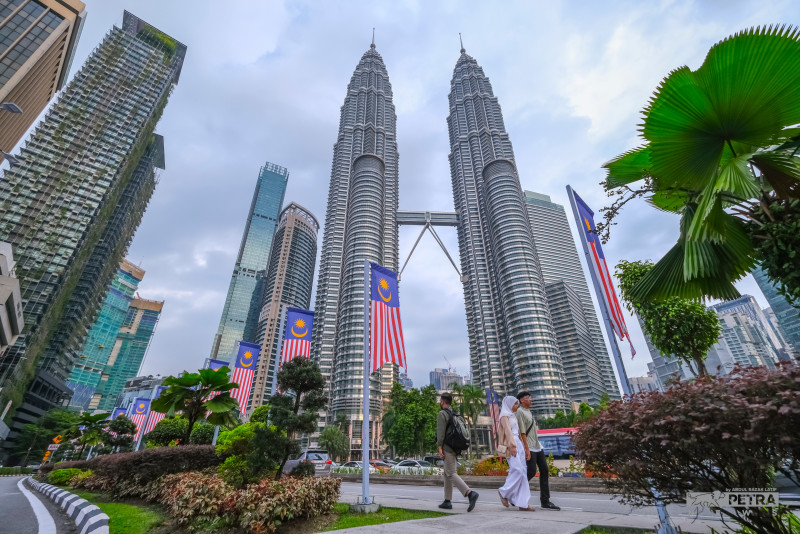
Malaysia, like many other nations, now finds itself navigating what scholars and policymakers have come to describe as the “post-normal” era – a chaotic, contradictory and complex reality, driven by unprecedented simultaneity, speed, scope and scale.
To confront this, Malaysia is preparing to launch Budget 2026 – not merely another annual fiscal plan, but a foundational document for the 13th Malaysia Plan (RMK13), which will chart the country’s course for the next five years.
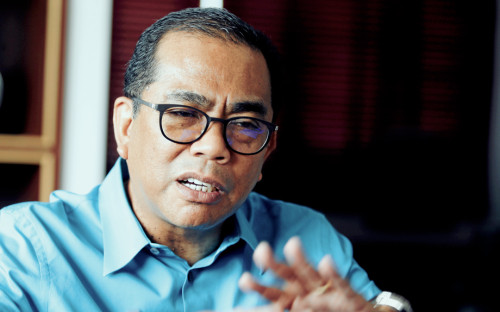
“We can no longer rely solely on development models imported from abroad,” said Datuk Ismail Yusop, Director-General of the Department of Community Communications (J-KOM). “We need a vision grounded in our own reality but open to universal wisdom.”
At the heart of this national response is the Madani framework introduced by Prime Minister Datuk Seri Anwar Ibrahim, whose six core values – Sustainability, Prosperity, Innovation, Respect, Trust and Compassion – form a guiding philosophy for governance, economy and society.
In his keynote address at the 2025 World Social Security Forum, Anwar warned that “20th-century social and economic systems are no longer capable of supporting today’s realities.” He described a rapidly ageing population, rising inequality, precarious employment and climate volatility as the key symptoms of this new global disorder.
Anwar stressed that social protection must evolve beyond bureaucracy. “It is not just a system,” he said, “but a moral infrastructure built on compassion and justice.”
In practical terms, Budget 2026 is expected to extend social protection to gig workers, homemakers and those in the informal sector. It will also introduce a Non-Workplace Injury Scheme to ensure all workers are covered beyond office hours.
The government is accelerating preparations to face a rapidly ageing society by 2030, including initiatives to enable senior citizens to remain active contributors, not merely recipients of aid.
The socio-political and economic disruptions of the post-normal world – from geopolitical power shifts and debt pressures to artificial intelligence, demographic challenges and the climate crisis – are now striking simultaneously, demanding a fundamentally new way of thinking and acting.
The digital and AI revolutions, while opening up new economic possibilities, also raise ethical concerns about data, automation and employment, particularly in rural areas where digital access remains uneven.
Meanwhile, Malaysia’s demographic realities are pressing. An ageing population, growing cost of living, and young people seeking meaningful employment are straining the existing social safety net. Global migration flows driven by conflict and climate change are reshaping Malaysia’s workforce and society.
Islamic traditions, such as the ‘baitulmal’ system, once ensured wealth was redistributed to the poor, widows, orphans and the elderly. The Madani framework aspires to restore this spirit of social justice through modern governance.
“The era of post-normality demands extraordinary courage,” said Ismail. “Malaysia must be ready not just to survive the storm, but to lead with moral clarity and vision.”
Anwar’s closing message at the World Social Security Forum was a call for global solidarity: “No nation can weather this storm alone.”
If Budget 2026 is implemented with integrity and resolve, it could not only mark the beginning of RMK13 but also usher in a new era – one where Malaysia stands firm amidst global upheaval, while preserving its cultural identity and ethical foundations. - October 3, 2025
* Datuk Ismail Yusop is the Director-General of the Department of Community Communications (J-KOM)