Murray Hunter
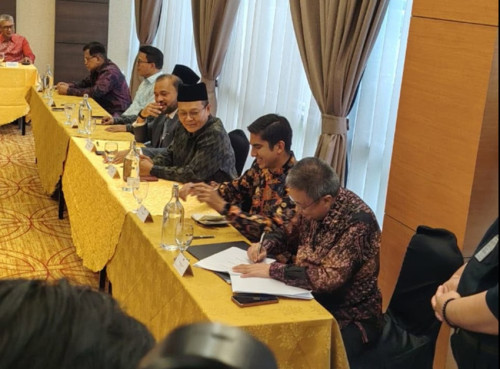
JUST a couple of years ago, the Kampong Baru saga laid bare the sharp edges of Malaysia’s compulsory land acquisition regime.
Hundreds of residents in the historic Malay enclave in the heart of Kuala Lumpur, particularly those in Kampung Sungai Baru, found themselves facing forced sales of their homes and land to clear the way for private redevelopment.
What began as negotiations with a developer escalated into the use of the Land Acquisition Act 1960.
Owners who held out were subjected to compulsory acquisition. Compensation awards were widely criticised as inadequate relative to the prime location near the Golden Triangle and KLCC, where neighbouring properties commanded far higher values.
Protests erupted during the eviction process as families were forcibly displaced.
Questions of fairness, process and power hung heavily in the air.
That episode exposed how the Act could be deployed not merely for classic public purposes such as roads, schools or hospitals, but to facilitate commercial projects by private entities.
In one phase, around a third of owners were compelled to accept valuations determined under the statutory framework, even as the majority eventually signed up under improved packages.
The sense of inequity was profound, where long-standing residents, many multi-generational, watched their community fragment while developers stood to profit from high-density, high-value urban renewal on land acquired at rates many regarded as depressed.
Now the same law is back under the spotlight.
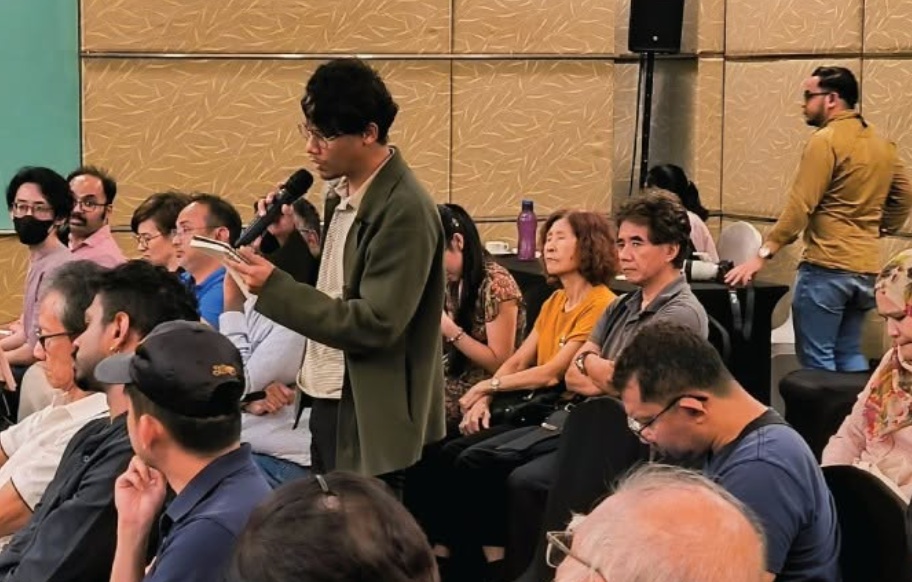
The Kuala Lumpur Residents Action for Sustainable Development Association (KLRA+SD), representing dozens of residents’ associations and civil society groups, has filed a constitutional challenge in the High Court against key provisions of the Land Acquisition Act 1960.
The group focuses on Section 3(1), which permits compulsory acquisition to facilitate private companies' enterprises and broader economic, residential, or commercial development.
KLRA+SD argues that the current process denies property owners a proper opportunity to be heard before the decision to acquire is made.
It says this violates the principles of natural justice.
The association further contends that the provision enables acquisition in ways that can be arbitrary, disproportionate or excessive, clashing with Article 13(1) of the Federal Constitution, which grants protection against deprivation of property except in accordance with law, and Article 8(1) providing for equality before the law.
Compulsory acquisition, the group maintains, should be confined to genuine public purposes or clear national interest and not used as a tool to assist private commercial ventures under a broad “public benefit” banner.
The challenge arrives amid wider unease.
A proposed urban redevelopment bill was recently withdrawn by the Cabinet for further revisions after sustained objections, many of them centred on the risk of compulsory acquisition and displacement of established communities.
Lawyer Derek Fernandez has publicly called for the repeal of the more expansive limbs of Section 3(1) and those allowing acquisition for private economic development, arguing that the state should only acquire for true public purposes and that existing safeguards are routinely ignored.
The pattern is familiar. In urban centres where land is scarce and values high, the Act has repeatedly been invoked in ways that transfer valuable sites from individual owners or strata title holders to developers at valuations that owners often describe as grossly disadvantageous.
Once Section 8 notices are issued and acquisition proceeds, market dynamics shift against the owner.
Holdouts face the state’s coercive power rather than pure commercial negotiation. The result, critics say, is a systemic tilt: private profit enabled by public power, with ordinary property owners left to absorb the human and financial cost.
Kampong Baru was not an isolated case. Similar grievances have surfaced in other redevelopments and acquisitions across the Federal Territory and beyond.
The law’s breadth, originally designed in a different era, has allowed state authorities to act as facilitators for commercial schemes while owners struggle with limited pre-decision voice, contested valuations and the irreversible loss of homes and community fabric.
KLRA+SD’s case does not seek to abolish compulsory acquisition altogether. Governments must retain the power to secure land for essential public infrastructure.
What the group demands is that the exercise of that power remain firmly anchored to natural justice, equality and the rule of law with meaningful opportunity for owners to object before the die is cast, and with clearer limits on the use of state coercion for private gain.
The High Court will now examine whether the challenged provisions of a 66-year-old statute still pass constitutional muster in contemporary urban Malaysia.
Whatever the outcome, the action forces a long-overdue reckoning with a law that has, in practice, too often left ordinary landowners at a profound disadvantage when profitable redevelopment projects come calling.
The residents of Kampong Sungei Baru who resisted years ago were raising precisely these questions.
The scrutiny returns, this time through the courts because the underlying tensions remain unresolved. – October 30, 2026