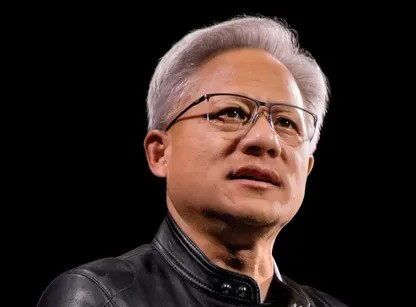
IT is not a surprise that the story of Jensen Huang and his personal scandal involving an extramarital affair with an alleged Chinese spy and the possible sale of sanctioned Nvidia chips has hogged the headline news.
In late October and early November 2026, Western outlets—led by The New York Times, BBC, CNN and CNBC—shifted from profiling Huang's Nvidia business success to generating news and analysis aimed at pressing American policymakers to prepare what they hope to be an investigation into the national security implications of Huang’s alleged wrongdoing and China's role in masterminding his sexual entrapment. How independent, rigorous, and fair has been the news reporting on China’s involvement?
Developments To Date
• The Allegations. The earliest NYT report revealed that U.S. intelligence officials believed Alice Huang (also known as Huang Le), a Chinese businesswoman with no familial relation to Jensen Huang, was recruited by China's Ministry of State Security to gather intelligence on Nvidia and influence U.S. chip export policies. No details were provided about the officials providing the information or how credible this allegation was.
• The Megaspeed Connection. Alice Huang was a senior executive at Megaspeed, a Singapore-based cloud company and major Nvidia customer. U.S. authorities have been investigating Megaspeed for several years over suspicions that it helped divert restricted, advanced Nvidia chips to Chinese companies.
No charge has been brought against Megaspeed and the numerous other international buyers of Nvidia chips, some of whom may have engaged in reselling the chips to the China market.
• Public Admission. On November 8, 2026, after initially characterising his interactions with Alice Huang as routine business meetings, Jensen Huang sent a memo to staff admitting he had been unfaithful to his wife.
• Investigations and Fallout. Nvidia’s board launched an independent probe while the FBI opened its own inquiry. Republican lawmakers threatened to subpoena Huang for a closed-door congressional briefing, and Nvidia's market value plunged by over $430 billion across two trading days.
• Political Reaction. U.S. President Donald Trump publicly defended Huang as an "honourable guy" who claimed he had no idea the woman was a spy, even as outlets like Fortune questioned whether Huang's influence over U.S. AI policy had permanently ended.
Beijing dismissed the espionage reports. Journalism 101
Under standard Western journalistic codes (such as those of the Society of Professional Journalists or Reuters Trust Principles), key tenets include:
Fairness and Right of Reply: Target entities—whether individuals, corporations, or foreign governments—must be given adequate opportunity and prominence to respond to allegations. Independent
Verification: Unnamed source claims from government or intelligence officials must be independently verified rather than reported as fact.
Contextual Accuracy: Reporting must accurately distinguish between confirmed regulatory breaches, ongoing corporate audits, and unproven intelligence assertions.
How have these principles been adhered to in the reporting and coverage of the Jensen Huang and alleged China spy story?
When news organisations relegate official rebuttals to the bottom of an article or headline, only the most provocative claim remains; the balance required by journalistic fairness and independence is compromised.
While state denials do not automatically disprove investigative findings, treating foreign state responses as inherently less reportable than domestic intelligence leaks reflects systemic ideological bias in international news reporting.
What should have been prominent at the beginning of the Western reporting should have been the official and categorical denial by China of both the espionage allegations concerning Alice Huang and the claims that her company illegally smuggled Nvidia chips into China.
China’s Ministry of Foreign Affairs (MFA) denied that Alice Huang was a spy targeting Nvidia CEO Jensen Huang.
MFA Spokesperson Guo Jiakun described the reports as “pure fabrication out of thin air” and “nothing but a smear against China.”
He also characterised the underlying intelligence report as “groundless speculation.”
Prominent in Beijing’s response too is that the allegations are part of an attempt to smear China’s international reputation rather than a legitimate national security concern.
China's Response to the Chip Smuggling Allegation
Regarding the accusation that Alice Huang’s company, Megaspeed International, was involved in illegally diverting restricted Nvidia AI chips to mainland China, China has also denied any wrongdoing.
Guo Jiakun stated that allegations that the Singapore-based company was smuggling chips to China “were thoroughly investigated and debunked last year.”
This response aligns with Nvidia’s own position.
The chipmaker has stated that Megaspeed was an ordinary customer, that the smuggling claims were previously investigated and refuted, and that there is no evidence its chips have been illegally smuggled into China.
In summary, China’s official stance is a complete rejection of both narratives, framing them as unsubstantiated and politically motivated smears.
Western Media China Reporting Journalism 101
Amongst Western media covering this story, the key dimensions of the NYT and other Western media coverage strategy is clear.
1. Frame Selection
Sensationalist Espionage vs. Commercial Realities Cold War Tropes: The NYT chose to centre the "honey-trap" and espionage angle in its reporting—focusing heavily on an unproven foreign asset narrative over trade-compliance mechanics. By framing a corporate scandal around state-sponsored infiltration, the story fits comfortably into a pre-existing national security thriller narrative.
Grey Markets Oversimplified: Multi-tiered semiconductor distribution channels frequently see chips leak into unauthorised regions via grey-market intermediaries (such as third-party resellers in Singapore or Southeast Asia). Transhipment logistics are a systemic industry challenge under unilateral U.S. export controls, yet framing these trade flows as a covert Chinese intelligence effort conflates commercial workarounds with direct state subversion.
2. Asymmetric Attribution and Weighting of Sources
Intelligence Leaks as Uncontested Fact: The primary anchors of the NYT reporting rely heavily on unnamed U.S. intelligence and State Department officials.
In practice, Western investigative journalism routinely treats anonymous U.S. national security claims as near-factual premises while placing heavy disclaimers on rebuttals from target governments.
Relegation of Official Denials: While the NYT included a one- or two-line mention of Chinese Foreign Ministry responses, the framing inherently undercut their validity.
Responses from Beijing were presented as propaganda rather than substantive rebuttals to unverified intelligence claims.
3. Alignment with Washington’s Foreign Policy Consensus
Bipartisan Tech Hawk Alignment: U.S. policy toward Chinese AI development has hardened into a unified bipartisan position aimed at containment.
By leaning heavily into high-profile security panics, mainstream reporting reinforces policy arguments for tighter export controls, aggressive corporate auditing, and political pressure on American tech executives like Huang.
A racist undertone is also in play.
Conclusion
When stories highlight speculative intelligence claims while framing foreign government pushback as inherently deceptive, the coverage compromises journalistic neutrality and credibility.
This dynamic feeds the perception that Western outlets prioritise geopolitical narrative sensationalism over objective, balanced reporting.
This also erodes public trust in the media’s ability to cover China objectively, as news organisations appear to operate as passive amplification or propaganda channels for U.S. and Western anti-China narratives. – November 13, 2026
Lim Teck Ghee
The observations reflect the writer's personal insights and do not necessarily represent the official stance of The Vibes.com