IN just one year, science has delivered safe and effective vaccines against Covid-19, a record-breaking achievement and a true testament to the potential of medical science. As stated by World Health Organization (WHO) Director-General Dr Tedros Adhanom Ghebreyesus, “Vaccines offer great hope to turn the tide of the pandemic.” In our efforts to translate this hope into reality, Malaysia must commit to providing equitable access to vaccines for everyone in the country, regardless of nationality, or we risk squandering the opportunity we have before us to overcome the pandemic. This includes providing vaccines for free to migrants in Malaysia in order to ensure maximum protection for all.
For vaccinations to be effective in getting us beyond the Covid-19 pandemic, we need to achieve a high vaccination rate across the population. While the exact percentage is not yet certain, leading experts currently predict that it lies somewhere between 60% and 70%, perhaps even as high as 90%, of the population must be vaccinated to achieve vaccine-induced herd immunity against Covid-19.
The forthcoming National Vaccination Plan aims to immunise some 80% of the Malaysian population within 18 months. It is important to note that the threshold for achieving herd immunity is not based on the proportion of immune citizens, rather the proportion of immune people, regardless of their legal status.
As such, to reach the high threshold for herd immunity against Covid-19, non-citizens who officially make up 10% of the local population must be included in the government’s national plan to vaccinate the population, whether they are foreign workers, undocumented migrants, refugees, or stateless people. The issue thus is not one of citizenship, but of what science demands for us to have the best chance of achieving vaccine-induced herd immunity against Covid-19 so that we can stop the pandemic’s threat to public health and our economy.
There are those who want to restrict access to vaccines to Malaysians only and some who want to allow access to non-citizens provided they pay. Charging non-citizens may deter migrants or their employers from vaccinating entirely, which would prevent us from achieving the high target of the National Vaccination Plan. The most effective option is to ensure free access to vaccines regardless of nationality.
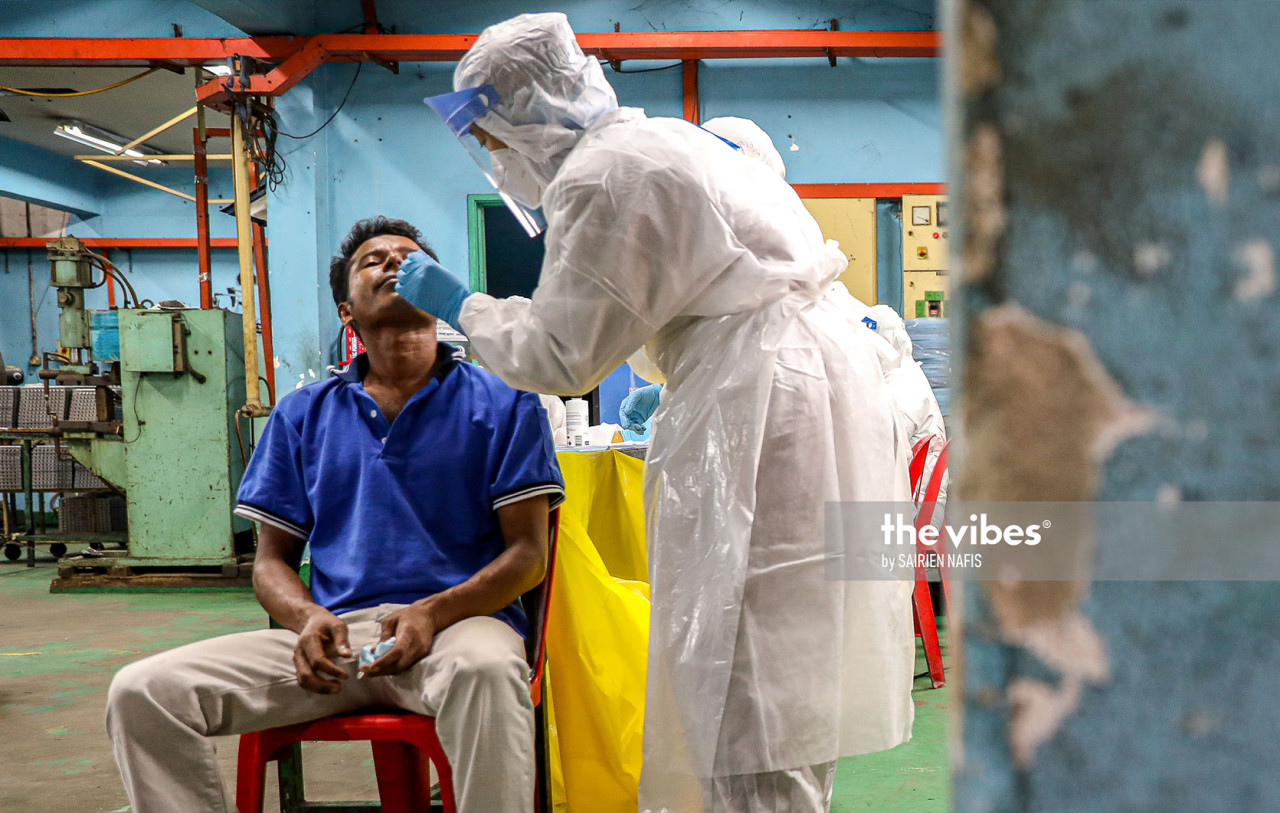
No one is safe, until everyone is safe
Ensuring free and equitable access to vaccines for migrants is especially important considering that not all Malaysians may be able to get vaccinated, such as newborns and those with certain health conditions for whom vaccines may not be medically-advisable (i.e. contraindicated). For the time being, no vaccine has been authorised or approved to be administered to children, pending further clinical trials. Yet, these groups may still be susceptible to getting Covid-19. The goal of herd immunity is not just to protect those vaccinated but also those who cannot get vaccinated yet are vulnerable to the disease, Malaysian or otherwise. Widespread vaccination is essential to protect our children.
Furthermore, migrants are an integral part of the Malaysian society and thus must be given equal protection. Foreign workers make up 32% of the agriculture sector, 23% of the construction sector and 22% of the manufacturing sector, all of which have been designated as essential sectors throughout the various Movement Control Orders (MCOs) in Malaysia since the start of the pandemic. Their jobs, as well as their poor living conditions, often put them at higher risk for contracting Covid-19 as they may not always be able to practice precautionary behaviours such as physical distancing and frequent handwashing. As such, foreign workers are disproportionately affected by the pandemic, with numerous outbreaks occurring at construction sites and manufacturing plants where they work. We cannot consider their labour to be essential to the functioning of the country’s economy, yet at the same time refuse to provide them with potentially life-saving medical intervention. We cannot value their labour more than we do their lives.
Similarly, as long as the government insists on continuing the practice of detaining undocumented migrants, including refugees, during the pandemic, we must provide free vaccinations to migrants regardless of their legal status to reduce the risk of further clusters occurring in crowded detention centres. Being confined in any type of crowded setting confers a high risk of Covid-19 transmission, and indeed, we have seen several clusters emerge from detention centres and prisons throughout the course of the pandemic in Malaysia.
Any cluster anywhere risks spilling over to the wider community. Thus, from a public health perspective, we must prioritise safely immunising detainees in our plan to curb the spread of Covid-19 in the country.
The past year has repeatedly taught us that in the fight against Covid-19, no one is safe until everyone is safe. As we are finalising our National Vaccination Plan, we must heed these lessons from 2020 and include vaccine protection for the entire population in the country, citizens and non-citizens equally. We cannot let differences of nationality undermine the hard work and heroic sacrifice made by scientists, healthcare workers, and the public throughout the pandemic. The virus does not care about nationality, likewise our government must prioritise public health for all so we can successfully find our way out of this pandemic. – The Vibes, January 24, 2021
Nazihah Muhamad Noor is a research associate at Khazanah Research Institute focusing on public health and inequality. Yin Shao Loong is a senior research associate at Khazanah Research Institute focusing on industrial policy, climate change and sustainability.
Views expressed here belong solely to the authors, and do not necessarily represent those of any employers, organisations or other individuals.