IN this modern age, when scams and data theft are rampant, consumers are naturally sceptical or reluctant when it comes to signing up for anything new or unfamiliar.
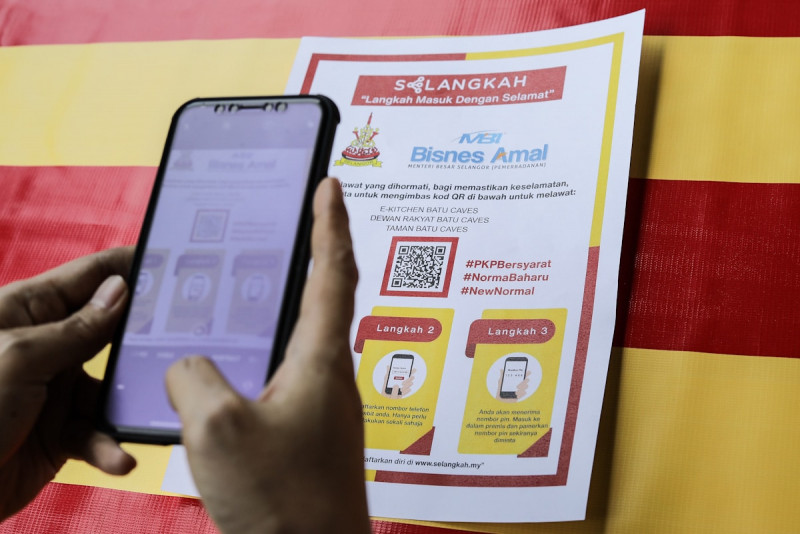
This includes having the public register for the government’s Covid-19 contact-tracing application that requires them to “check-in” whenever they enter public premises.
Several years ago, if you remember, the checking-in trend was fashionable. However, in today’s context of Covid-19 prevention measures, it is not as well-received.
The main concern many people have is that they will have to share their personal and private information, which one is required to key in upon registration. They fear that with the advent of modern technology, their personal information may fall into the wrong hands, or be used illegally to track their movements.
Despite assurances that the system adheres to the Personal Data Protection Act 2010 (PDPA), the public remains sceptical, as there is very little clarity and transparency on how their personal information is being used.
Meanwhile, the team behind Selangor’s own e-tracing system, Selangkah, worked on the premise that just these claims on PDPA compliance are not adequate. It also requires giving an assurance that is convincing enough.
Transparency and consent are what really matters to the public. This is a promise that Selangkah has delivered on, and maintains with consistency.
The user is able to access the information they need on Selangkah here. Selangkah’s privacy statement explains the particular data that is required from the user, why it is collected, how it is processed and stored, and who it is shared with.
In line with PDPA principles, the user can view or amend the data provided, or even opt out anytime. Both can be done by sending an email to [email protected].
For the Selangkah team, it was critically important to gain the trust of the user, as well as to provide convenience when using the app. Selangkah is proud to be the very first contact-tracing application in Malaysia that is in full compliance with PDPA.
The app actually kicked off as a visitor registration system aimed at curbing the Covid-19 pandemic. Since then, it has grown to offer more features that are focused on enhancing protection for the community.
Selangkah’s “Affected Premise Map” displays locations previously visited by Covid-19 cases. This enables users to plan their journey safely. With its “Self-Check Exposure Risk” element, one can cross-check their visits to see if they had travelled to any of the exposed places.
To find out more, visit selangkah.my. But if you’re curious about how Selangkah manages your data, read on.
How does Selangkah use your data?
Each time you scan a Selangkah QR code, you are providing just three bits of information: your name, mobile number, and the time and date of your visit to a particular place.
According to Selangkah project director Dr Helmi Zakariah: “Our goal is only to track people’s location. That is why a user’s name and phone number are already sufficient. We do not need their IC number.”
He adds: “We didn’t want to ask for too much anyway, because people might not want to participate.”
Dr Helmi is a renowned public health expert having served with the Health Ministry, as well as on the panel of the World Health Organisation.
Selangkah’s crowdsourced data will create a visitor log, which is an essential part of effective contact tracing. With it, the user can be contacted immediately in case they visited the same premises as someone who was at risk of being infected.
The combination of QR code scans from all users creates a whole “network” of visitor logs spanning various premises that will offer bigger protection coverage.
Who has access to your data?
Selangkah is developed and operated by the Selangor Task Force for Covid-19 (STFC), a special-purpose state government committee that has been tasked with coordinating Selangor’s response to Covid-19. All the data collected is hosted within the country.
If STFC identifies certain individuals who have been infected, the latter’s information will be extracted and forwarded to the Health Ministry for further action.
The user’s visitor log will be stored for 30 days (almost equal to two incubation periods for Covid-19). After that, the data is considered obsolete in contact tracing, so it will be purged from the system.
Dr Helmi has further stressed to the public: “Don’t worry! Selangkah prevents unauthorised attempts at making a copy of the entire database. A firewall software and cybersecurity measures are installed to detect abnormal network activities and external attacks.”
Users can rest assured that their private information is secure and kept up to date, and will not be stored longer than necessary.
Who is your data shared with?
To facilitate contact-tracing efforts, your information may be disclosed to the relevant groups within the Health Ministry and Selangor government in charge of the prevention and control of the pandemic.
Your data will not be shared with unaffiliated third parties without your consent, unless it is legally required, and it will be done in good faith.
There is a function in Selangkah’s system that allows premise owners to view their customers’ visiting trends, so that they can better manage their operations. Even then, no visitor data is disclosed, in order to prevent misuse.
For your information, there is an even higher risk of data theft if you write your details in a customer logbook. Practically anybody can look at it or covertly snap a picture of it.
In September last year, a group of individuals in Malacca claimed to be Health Ministry officials and collected logbooks from several premises. That is how far criminals are willing to go to steal data.
Although the use of logbooks to record visitor data is still permitted, it is recommended to prioritise the security and privacy of your data. In this regard, Selangkah is always the better choice.
Make informed decisions with Selangkah, and stay safe. – The Vibes, January 26, 2021
The Selangkah team. Selangkah is a public health initiative to ensure the safety of the community amid the Covid-19 pandemic