IT’S karma: just like you reap what you sow, we are facing the consequences of abusing migrant workers for decades.
A significant contributor to the Covid-19 infections is the workplace and workers' dormitory clusters.
In the last few months, Malaysians were fed with daily images of migrant workers living in slavery-like conditions.
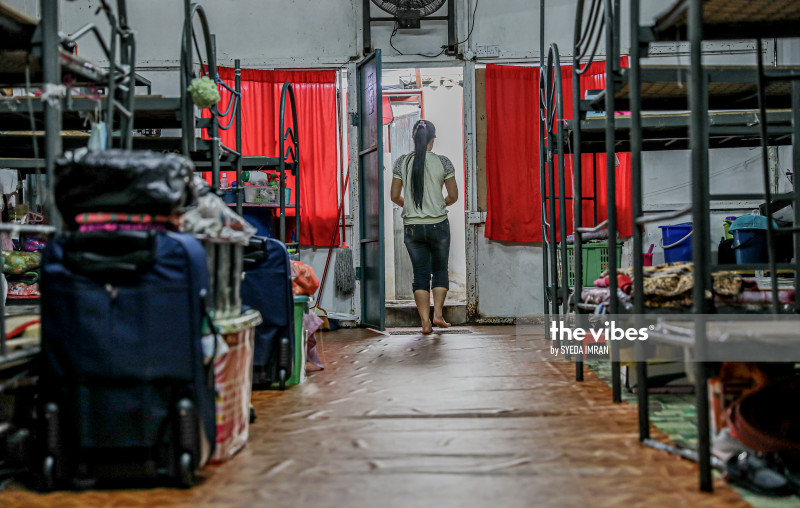
What was certain in workers' dormitories was that physical distancing was a luxury.
Employers' greed and disregard for the law, together with poor government enforcement, has turned the workplaces into toxic and super-spreader zones.
Put differently, the chickens have come home to roost as a result of years of government neglect and employers’ focus on profits over decent work and minimum standards of housing for workers.
The Malaysian workplace brings together three broad categories of workers: local, documented (1.5 million) and undocumented migrant workers (3.5 to 4 million). At the workplace, the potential of infecting one another is real.
And, true enough, numbers indicate that 225 of the 350 clusters recorded were in workplaces. The highest clusters were from the manufacturing sector (80), followed by construction (53) and services (31). And, 28,477 of the 122,225 migrant workers tested were positive.
Given this nightmarish situation, we need to rethink our strategy as it appears that the quarantining of workers is not working because dormitories are designed to pack as many people as possible.
Leaked images of quarantine dorms show beds and workers huddled together without physical distancing.
Areas like toilets were at unacceptable hygiene levels. Both of these are concerns, especially in the spread of Covid-19.
And, there are cases where quarantined workers are placed in two sections of the same floor with migrant workers who are negative, sharing the same common facilities, such as toilets, walkways and elevators.
The buses that ferry workers to their dorms do not follow physical distancing either.
In the interest of public health and to stop the spread, the government should set up a task force led by local councils involving employers and professional groups, including NGOs, to help plan, monitor and implement the Covid-19 testing and recovery process within the jurisdiction of the council.
Local councils will have a good sense of building space available in their respective areas, which could be used either during quarantine or for employers who might want to secure more space for their workers to ensure physical distancing.
The responsibility to manage quarantined workers and ensuring sufficient physical distancing should be left to the government task force and not to employers and labour brokers.
All infected workers should be isolated in recovery facilities stipulated by the government task force.
And, these recovery facilities could include securing existing budget hostels, government-run dorms, underutilised government buildings and hotels (including budget hotels) that are facing closure.
Buses transporting workers to and from their dorms should be kept at 50% of the current occupancy or below to ensure physical distancing.
In the long run, the government and employers must commit themselves to improving workers living standards and building new dormitories that follow the Workers' Minimum Standards of Housing and Amenities Act 1990.
And, given the urgency in battling the pandemic, the government could consider initiating turn-key projects in the construction of workers' dormitories with fast-track approvals made possible.
Alternatively, the federal and state governments could build these dorms on a turn-key basis and rent them out to SMEs that might not be able to build their own dormitories.
This will also give them the authority to do regular checks to ensure that compliance with safety and hygiene rules are followed.
The movement control order (MCO) will only be effective in mitigating the pandemic until the hidden source of infection is identified and traced to break the chain of local transmissions.
What makes me worry are the lies and witch-hunting against undocumented workers since March that has made them afraid to come out for testing or to receive treatment.
Under current immigration laws, employers will be issued a fine of not less than RM10,000 but not more than RM50,000, or imprisonment not exceeding 12 months for each undocumented immigrant under his employment.
The above reasons have disincentivised both workers and employers from doing the Covid-19 test, as the test results will be reported to government agencies.
The fact is that migrant workers are a part of our community and the government must look into a comprehensive healthcare policy to ensure everyone is safe and protected – this include making them part of the vaccination programme.
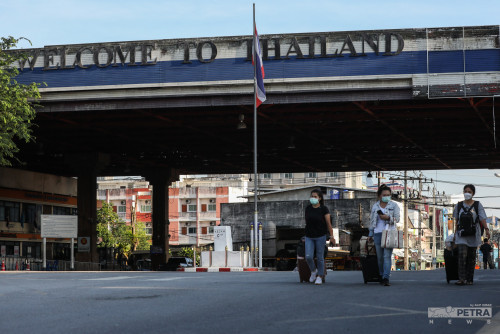
Our neighbour, Thailand, has made a progressive move by legalising undocumented workers for two years to stem the spread of Covid-19.
I urge the government to grant amnesty for six months for undocumented migrant workers and conduct targeted mass testing for them.
The cumulative number of screenings is just 12% of the documented migrant workers’ population. If we add up the undocumented workers, the screening rate is completely insignificant, at less than 4%.
Even with Health Ministry’s testing based on their actual capacity, we need at least three months to ensure all migrant workers are screened. However, the testing rate is too slow to detect the source of infection.
The utilisation of the PCR testing (which takes about four to seven days) is just not feasible to mitigate the current situation. A better mechanism to counter this would be to utilise the Rapid Test Kit Antigent (RTK-Ag) that has a faster turnaround time (couple of hours) and they can get the results to start isolation and contact tracing.
This saves days of work and, more importantly, prevents spread, especially with the workers moving and carrying the virus along, causing a spread to others.
Another method worth considering is pool testing for migrant workers, by combining samples from multiple people staying in the same dorm to carry out one test on the whole batch – not only can this save time and test many at one go, but it will save cost as well.
If a pool gets a positive result, it can move to the second phase of testing, which breaks down the pool into smaller samples to identify the infected person or people.
Pool testing is more cost-effective and less time-consuming, and we can even prevent laboratories from being overburdened.
We must, therefore, address the root causes and rethink our strategy to contain the virus as our economy cannot afford another lockdown. – The Vibes, January 27, 2021
Charles Santiago is Klang MP