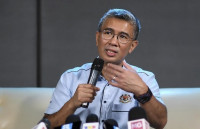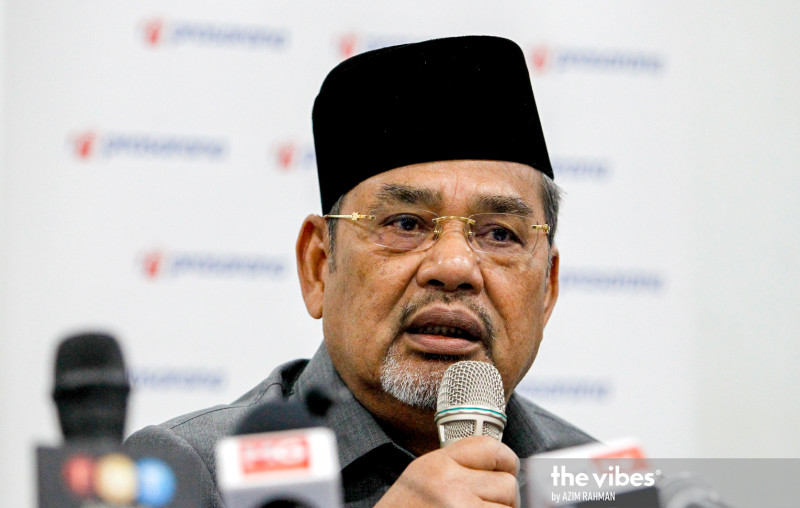
THE former deputy agriculture minister (2013-2018) and Umno's Pasir Salak MP Datuk Seri Tajuddin Abdul Rahman is spreading fake news and creating racial tension. Why is he allowed to do this?
Last November, Malaysians learnt about a scandal involving "halal meat", in which it is alleged that, for more than 40 years, Malay-Muslims may have consumed meat that looks like it is certified halal, but was probably not halal. The meat was alleged to have been kangaroo, horse or even meat from diseased animals.
In an effort to avoid mass panic and public anger among Muslims, the government quickly claimed that Jakim was not responsible, even before an official investigation had started.
The authorities also denied the involvement of corrupt government officials, some of whom were alleged to have received sexual favours.
The government machinery went into overdrive to contain the damage caused by the expose. The scandal is about halal meat and not about the import of pork or other meat.
On January 24, Tajuddin poured more vitriol into the scandal with his allegation that meat cartels are controlled by non-Bumiputeras, and that only 10% of AP holders importing meat are Bumiputera companies.
He also alleged that the non-Bumiputera meat cartels had refused to share the billion-ringgit business with Bumiputera companies, and that when he was deputy minister, he had failed to break the non-Bumiputera monopoly.
These false claims were swiftly quashed by Agriculture and Food Industries Minister Ronald Kiandee on January 26.
Ronald said that up to 60% of AP holders involved in the import of meat are Bumiputera. He named two companies – Ramly Food Processing Sdn Bhd and Darabif Meat Company – that imported large quantities of meat. He said that ongoing investigations involved the MACC, police, Customs Department and Domestic Trade and Consumer Affairs Ministry.
So, what is Tajuddin's objective in this blame game? The Malay-Muslim population has been cheated. They paid good money for meat that was probably diseased, or not even beef.
More than 60% of the population consumes beef, and consumer demand for beef rises during Hari Raya. The AP system is meaningless when it is awarded to crony companies or political families who have no desire to help the rakyat but only want to help themselves to taxpayers' money.
When Malays or Bumi companies are involved in a scandal that affects Malay-Muslims, some Umno and PAS politicians try and pass the blame on to non-Malays. This is Tajuddin's tactic.
During the past five decades, Umno/BN failed to control the companies that import halal meat. These AP holders cannot be entrusted to ensure the beef that we eat is halal, or even beef.
A decade ago, a Malay man was given the responsibility of reducing our dependence on beef imports. With RM250 million in taxpayers' money, he and his family purchased luxury condominiums, imported cars and trips overseas. This was the National Feedlot Corporation (NFC) scandal.
We cannot be blamed for the impression, which has been implanted in our minds, that some Malays cannot handle money and big business.
Perhaps, the real reason Tajuddin is accusing non-Bumiputera companies is because he is trying to divert attention from MACC's investigation into his role as the president of Prasarana, the rail and bus transport operator.
Three weeks ago, MACC officers raided Prasarana's office and seized files, saying it would conduct interviews to investigate claims that Tajuddin wanted significant changes at Prasarana.
Tajuddin had interfered with the main contractor, MRCB-George Kent's (MRCB-GK) appointment of subcontractors. He claimed that MRCB-GK did not support Bumi firms and ordered payment to be withheld.
In December, MRCB-George Kent and 16 subcontractors and consulting firms involved in the LRT3 project appealed to the government to help secure an outstanding payment of more than RM1 billion from Prasarana for work that had been completed since last July.
In addition to the above claims, Tajuddin is in the spotlight for nepotism. He denies claims that his family was awarded a contract with Prasarana.
Tajuddin claimed that the Latitude 8 project in Dang Wangi, Kuala Lumpur, was awarded to his family's company eight years ago, whilst he was the chairman of Felcra.
He said that there was nothing wrong with awarding projects to his family because he had been in business since he left university.
He said, "If you got a project eight years ago through an open tender with the highest bid, was it wrong?"
Most people would imagine that the work would be awarded to the company that satisfies the specifications of the tender award, and had the lowest bid.
Perhaps, in the Umno business world, the phrase "conflict of interest" does not exist, and contracts are awarded to the highest bidder, irrespective of capability.
Irregularities in Prasarana and other GLCs will continue for as long as politicians are made heads of GLCs.
Tajuddin is feeling the heat, and has to divert attention, with his red herring that meat cartels are controlled by non-Bumiputeras. Is he involved in the meat cartels? – The Vibes, January 28, 2021
Mariam Mokhtar is a freelance writer