THERE is much misunderstanding about the Covid-19 situation in the country. In particular, the high rate of infections in the Klang Valley and the role of the Selangor Task Force on Covid-19 (STFC).
Allow me to share a few points and insights for you to carefully consider:
Do not look at the absolute numbers that the daily press releases harp on. This is the unthinking sharing of numbers, which is a lousy description of disease epidemiology!
Numbers are misleading, unless expressed per population. The Klang Valley is densely populated, so of course, the absolute numbers will be high. More importantly, look at where the cases are. The Social Security Organisation aims to complete testing of about 850,000 workers in Kuala Lumpur and Selangor in January and February, so don’t be alarmed by the anticipated hike in numbers.
Look at incidence and infectivity rates expressed per 100,000 or 1,000, respectively.
One must understand the influence of demography and socio-economic circumstances on the data.
Selangor contributes 24% towards the national gross domestic product.
The state is rich in industrial plants and factories. It therefore houses about a million registered migrant workers, and probably similar numbers of unregistered migrant workers. These communities are epicentres of Covid-19 due to their poor working and living conditions.
And, there are 100,000 refugees in the Klang Valley alone, another high-risk community.
To its credit, STFC has convinced the Selangor government to purchase vaccines for both high-risk communities.
The state government has put aside X million for Y million migrant workers and refugees, who would otherwise be the last in line for Covid-19 vaccines, if at all.
By the way, health is a federal matter. There is very little that any state can do without federal blessings or intervention (except Sabah and Sarawak). Even when the Pakatan Harapan state government planned to roll out the pneumococcal conjugate vaccine well before Budget 2019, the Barisan Nasional health minister blocked it.
In many ways, if STFC had not stepped in, conducted mass testing, rolled out Prevention of Outbreaks at Ignition Sites (POIS), and allocated Z million for the Find, Test, Trace, Isolate and Support (FTTIS) system, the situation in Selangor would be far worse, critical even.
The federal government stopped sharing cases line-listing to STFC since October 2, 2020, at the onset of the third wave. This severely hampered the state’s response to and coordination of Covid-19 cases. Former health minister Dr Dzulkefly Ahmad said: “You ask us to box in the ring, but you blindfolded us.” Cases began climbing from October 10. Now you go figure out why.
It is dishonest and misleading to point out that Selangor’s use of its own contact-tracing system, namely Selangkah, is the reason why cases are spiralling out of control. Allow me to emphasise two points:
a) First, no contact tracing can be initiated if no patient data is shared. You can have the best contact-tracing ecosystem in the world, but with no “case data”, tracing cannot be initiated.
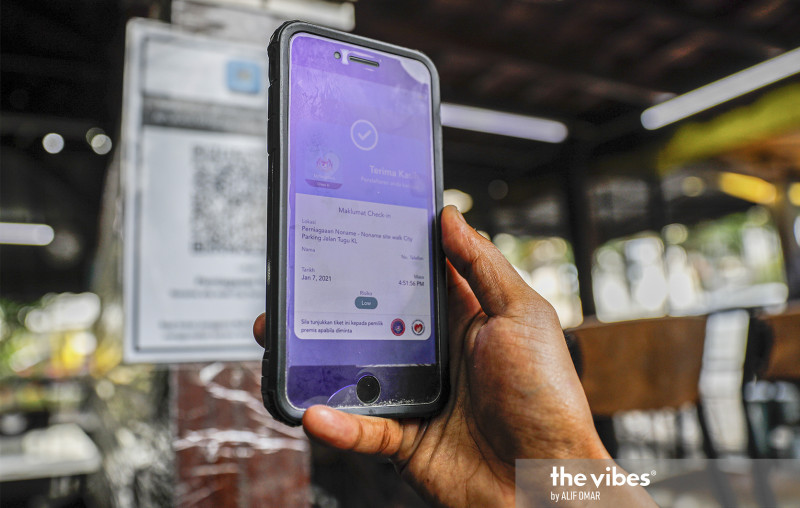
b) Second, quite to the contrary, when Selangor was actively using Selangkah, daily incidences were well controlled. Yes, there were still cases appearing, but we managed to trace them fast and clamp down faster. On August 18, an announcement was made at a daily press conference, obligating all stores to use MySejahtera. Things then went wild – stores were fined or harassed for displaying the Selangkah QR code instead. Effectively, the Selangkah ecosystem died off when many shops no longer displayed it. Until today, MySejahtera is the exclusive contact-tracing system operating in Malaysia.
After August 18, too, was exactly when we saw case numbers climbing up. It doesn’t take much to figure out that MySejahtera has failed not only in Selangor, but the entire country, when we consider the number of cases today.
If the Health Ministry is doing such an excellent job at crushing Covid-19 and flattening the curve, and STFC is terribly hopeless, the sequelae would be obvious – everywhere else would be green zones, with Selangor the only red state. Is that what is happening? Nope, I am afraid.
And by the way, other states, industries, agencies, etc, are buying in STFC’s POIS programme and implementing it. This tripartite government-industry-NGO initiative pivots on three preventative strategies, namely enhanced public health measures, an early detection testing regime, and health education.
So, STFC doesn’t just talk, but rolls out programmes, mass testing and POIS, procures vaccines, etc, to end the pandemic.
In no uncertain terms, the Health Ministry has failed in its back-to-basics of pandemic management. Its FTTIS is a colossal failure, and you can have cycles upon cycles of the movement control order, but if you do not get the basics of FTTIS right, you will fail to check the spread of Covid-19. Imagine the one to two days’ turnaround time (TAT) of STFC’s strategy, versus the five to seven days’ TAT of the ministry.
STFC since October last year has been trying to share information and new ideas with the ministry, but these have fallen on deaf ears.
The Islamic Medical Association of Malaysia’s Response and Relief Team (Imaret) went to Sabah with our RTK-Ag kits. This was when the Health Ministry was adamant about PCR testing (and it still is). We covered most of the islands off Tawau. We did not require boat rides for our tests to Tawau and then flying them to Kuala Lumpur, and waiting a few more days for the results. We diagnosed within an hour of testing, isolated the positive cases, and completed contact tracing and quarantine within one to two days. This is how you bust a cluster and prevent sporadic spread – definitely not with the ministry’s modus operandi.
This is how we handled a disaster. We were well trained by our public health maestros and our generals in the military. I remember that in Cox’s Bazar, the Malaysian Armed Forces’ top commanders, including their one- and two-star generals, were with us virtually all the time, dirtying their hands, sweating it out at the only referral tertiary hospital serving a million Rohingya refugees.
With due respect, I would still be wary of the Sabah and Sarawak numbers, and for that matter, most states. I suspect they are under testing, like a Donald Trump self-fulfilling prophecy. Our positive rate is still above the World Health Organisation threshold, at 5.8% as of January 26.
Whenever STFC, through Selangkah, finds (the F in FTTIS) hotspots, Imaret, SelCare and the state Health Department, as well as our team of volunteers, will undertake mass testing of a few thousand people at any one time.
So, in Selangor, STFC captures the asymptomatic/pre-symptomatic cases, and not just the symptomatic ones, which the Health Ministry does, thus missing the forest for the trees.
At the end of the day, we are in this together. If we refuse to learn from each other, and operationalise best public health practices, we are in for a rough ride.
I hope the national task force, as petitioned by 46 top physicians, is rapidly recognised, accepted and formalised to empower it to immediately re-strategise and transform the mindset and policy at the top end of the Health Ministry, so that the operations at ground zero will be a truly rapid-response FTTIS that has zero tolerance for cases, clusters or outbreaks.
Movement controls are the blunt tools of those who have failed to operationalise the back-to-basics of pandemic management, and in my opinion, they should either seek a second opinion from the task force and/or gracefully exit to minimise further harm to the nation, and allow the task force to steer the country out of this Covid-19 conundrum, and protect the lives and livelihood of its rakyat.
Otherwise, we are doomed! Allah bless Malaysia. – The Vibes, January 30, 2021
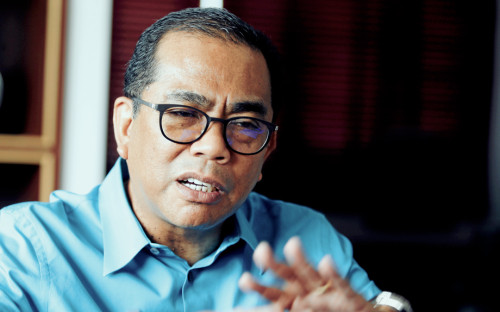
Datuk Dr Musa Mohd Nordin is a consultant paediatrician, and has been one of the leading medical voices since the pandemic began