WE refer to the report titled “Covid-19: Bukan masa kaut untung, pihak swasta perlu duduk sebaris bantu kerajaan – MCCF” published on Astro Awani on February 1 and wish to state, firstly, that the cost for Real-Time Reverse Transcription-Polymerase Chain Reaction (RT-PCR) tests are inherently high not due to profit margins, but because of the various resources required to run them.
A single RT-PCR test requires not only the test kit but also personal protective equipment (PPE) for doctors and their teams, sanitisation and proper clinical waste disposal, as well as high-level laboratory costs.
In addition, significant time and resources are consumed in terms of reporting all tests performed, including informing positive cases via e-notification, email, fax or phone within 24 hours, in compliance with the Health Ministry’s standard operating procedures (SOPs) and guidelines.
The communication challenges between the private and public sector often demands many man hours when handling multiple cases.
This does not include the real risk of contracting Covid-19 faced by healthcare staff and its untold costs to their physical or mental health, as well as the viability of their respective practices.
When private doctors are infected in the course of duty, and are either hospitalised or quarantined, they may suffer financial difficulties as income immediately drops to none. But, running costs of their practices are ever present.
There are no grants or donations from third parties or the public, unlike with government facilities.
Despite these concerns, it is the duty of all private clinics and hospitals to do their utmost in fighting the pandemic, and certainly, the detection of many cases by the private sector leads to greater national efforts of containing the spread of Covid-19 and its associated clusters.
Unfortunately, simply lowering costs without taking all real and hidden costs into consideration may render many private facilities unsustainable.
As a tool for mass screening, RT-PCR tests have the disadvantages of high costs and longer turnaround time. Consequently, contact tracing would be prolonged, which may defeat the purpose of mass screening and isolation.
Typically, in an area with high Covid-19 infection rates, RT-PCR tests may take three to five days for results to be determined.
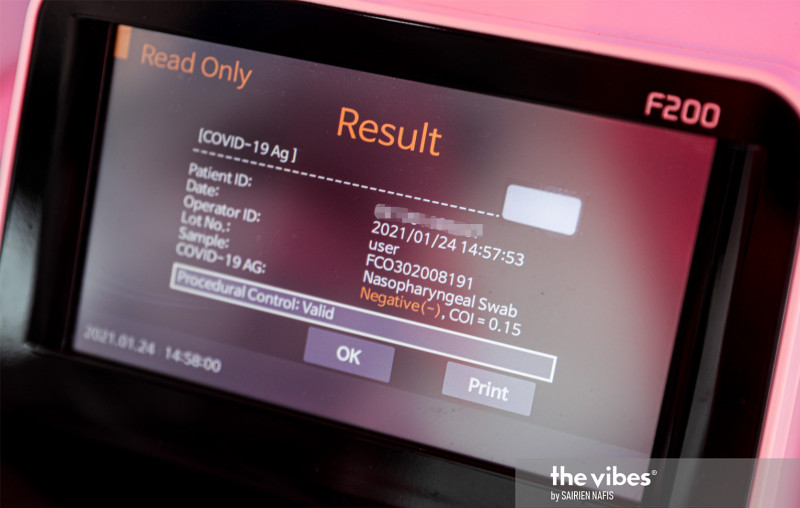
A much more suitable course of action is to employ the Rapid Antigen Test Kit (RTK-Ag). It is not only more suitable because it is fast and accurate, but also because the RTK-Ag kits also indicate an individual’s infectivity, which will aid in combating the spread of Covid-19.
Private hospitals and clinics have been at the forefront of the fight against the pandemic since its beginning early last year.
All private hospitals and clinics act as triage for Covid-19 patients when they turn up at these facilities, share the burden of disseminating public information to patients, perform Covid-19 screening, shoulder the non-Covid-19 patient load, contribute to fundraising efforts, coordinate with the ministry, and many other acts that go beyond their normal duties.
The Malaysian Medical Council code of ethics explicitly states that every doctor is required to treat patients regardless of race, creed or religion, and it goes without saying that is the standard expected of every single registered doctor in this country.
The MMA will never condone any less, and hopes that all of society will try to attain a deeper understanding of the issues involved and trust that all parties are working towards the common goal of ridding our country of Covid-19. – The Vibes, February 4, 2021
Prof Datuk Dr Subramaniam Muniandy is president of the Malaysian Medical Association