
PAWNBROKING was already available in pre-colonial Malay society, offered both with and without interest. The latter followed the concept of Ar Rahnu in Islam.
Since the establishment of Muassasah Gadaian Islam Terengganu Ar Rahnu by the Terengganu state government in January 1992, and a similar scheme in Kelantan in March of the same year, there has been a resurgence of Ar Rahnu pawnbroking in Malaysia.
On August 21, 1993, the Finance Ministry announced Skim Ar Rahnu through the collaboration of Bank Negara Malaysia, Bank Rakyat, and Koperasi YaPEIM Berhad. It is now also offered by numerous other banks, financial institutions and cooperatives.
Applicable law
Ar Rahnu is not governed by the Pawnbrokers Act 1972. Banks and financial institutions licensed by Bank Negara, Bank Pertanian Malaysia (which operates under the Bank Pertanian Malaysia Act) and licensed cooperatives governed by the Cooperative Societies Act 1993 are exempt from the Pawnbrokers Act (section 46).
Governing principles
Ar Rahnu is based on four binding concepts:
1. Qardhul Hasan (benevolent loan) – This requires that the borrower repay only the amount borrowed to redeem the pledge at the maturity of the agreed period.
2. Wadiah Yad-Amanah (trustworthiness) – The borrower must repay the loaned sum and the lender must look after the pledge during the loan period.
3. Al-Ujrah (safekeeping) – The lender has to take the necessary measures to keep safely the item pledged and may charge a reasonable fee for providing security and insurance.
4. Wadiah Yad-Dhamanah (safekeeping with guarantee) – The lender is responsible for safeguarding the assets pledged no matter the circumstances and must compensate the borrower to the full value of the pledge.
Differences with conventional pawnbroking
There are a number of significant variations between Ar Rahnu pawnbroking and conventional pawnbroking.
Ar Rahnu pawnbroking observes the injunction against riba (interest) and hence only imposes storage and insurance charges.
Lower cost of credit
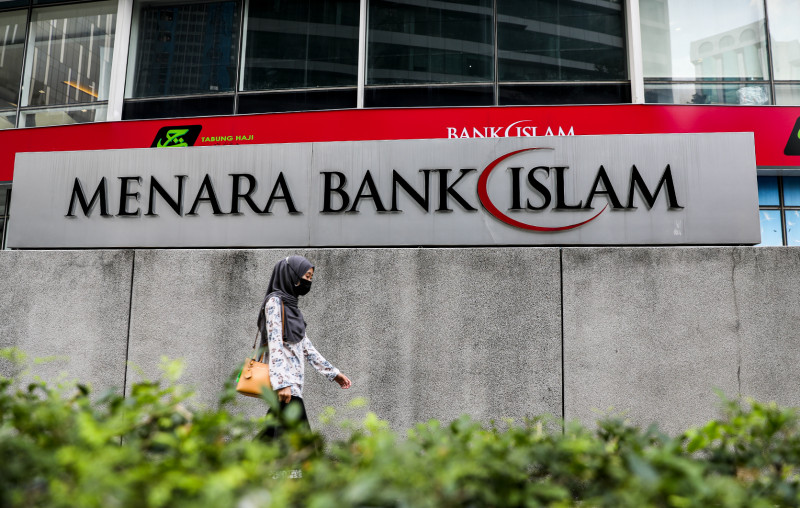
The amount of the charges per month varies as between providers. At Bank Islam, the charges range from RM0.60 per RM100 for loans of up to RM2,000 and ascend to RM0.80 for loans exceeding RM5,000. At Bank Rakyat, it is RM0.60 per RM100 for loans of less than RM500 and ascends to RM0.85 per RM100 for loans of more than RM10,000.
A crucial advantage of Ar Rahnu pawnbroking is that charges are lower than at conventional pawnbrokers. However, under Ar Rahnu, charges are not on the basis of the loan sum as is the case with conventional pawnbroking, but rather on the value of the pledged item as determined at the time of the Ar Rahnu agreement.
Hence there are situations when the charges under Ar Rahnu could be higher than those charged by conventional pawnbrokers.
An example cited on the Bank Muamalat Malaysia website will serve to explain. A pledge valued at RM1,000 for a loan of RM250 would cost the pawner RM6.50 per month at an Ar Rahnu (Qard) pawnbroker (that charges RM0.65 per RM100 pledge), but only RM5.00 (2% a month on the loan sum of RM250) at a conventional pawnbroker.
However, if the loan sum is RM700 on the same pledged item valued at RM1,000, the pawner would still pay RM6.50 a month at the Ar Rahnu facility but RM14.00 a month at a conventional pawnbroker.
On July 18, 2018, Bank Negara Malaysia issued a policy document entitled Rahn and the bank’s shariah advisory council issued a ruling declaring some schemes offered as Rahn are shariah non-compliant. Compliance was required by Islamic financial institutions under the purview of the Bank Negara by February 1, 2020.
A new scheme offered by Bank Muamalat Malaysia entitled Islamic Pawn Broking (Tawarruq) calculates the charges on the basis of the loan sum.
This is an approach similar to that adopted in the Pawnbrokers Order 2002 of Brunei, which is regarded as shariah compliant. The Brunei law permits a maximum of 5% of the loan sum as administrative expenses and fees for safekeeping for a period of one year. Bank Muamalat charges 11.25% per annum. In the example cited above, the cost would be only RM2.34 per month for a loan of RM250. The disadvantage is that the charges must be paid every six months for the full tenure of 18 months.
A number of factors will determine which Islamic pawnbroker offers the lowest cost for the loan that a pawner seeks to obtain. These include the mode of calculating the charges, the value of the pledge, the amount of loan sought, the duration for which the loan is sought, and whether a rebate on the charges would be available in the event of early settlement of the loan.
Financial limit
Most conventional pawnbrokers deal with pledges of moderate value. In Ar Rahnu pawnbroking, the financial limit is higher and bank-based pawnbrokers offer substantially more.
Bank Rakyat, which currently has 45% of the market share for Ar Rahnu, grants loans of up to RM350,000. At Bank Muamalat the maximum financing amount is RM1,000,000 (RM500,000 for gold jewellery, gold coins, dinar gold bars, as well as another RM500,000 for physical Muamalat Gold-i (Perth mint) gold bars.
Other benefits
There are other benefits of the Ar Rahnu pawnbroking practice. The manner of calculating the value of the pledge is specified in detail. Also, depending on the provider, the loan sum can be up to 80% of the value of the pledge and the loan period could be for six months or as long as 18 months.
Very importantly, the pawner will be notified of the date of the auction of the pledge should a default in payment occur.
Need to reach all of the needy
It is not widely known that Ar Rahnu pawnbroking is available to all Malaysians and permanent residents. Almost one-third of the close to 4,000 conventional pawnbrokers in the country operate in Sabah and Sarawak. Islamic pawnbroking has to be made more accessible in these states.
Ar Rahnu pawnbroking also has to be publicised to all Malaysians, regardless of ethnic origin, and especially to those in the B40 group.
It would be a great opportunity to showcase a particularly humane aspect of Islamic finance. – The Vibes, February 8, 2021
The writer acknowledges with thanks the assistance of Puan Shariffah Bahyah, doctoral candidate at Asia-E University and Dr Sherin Kunhibava, senior lecturer at the law faculty of University Malaya, for their comments on the penultimate draft of this article.
Datuk Sothi Rachagan is an emeritus professor. He is also a former dean of the faculty of law at Universiti Malaya, vice-chancellor of Perdana University and Nilai University, and International Association of Consumer Law president. He serves on numerous international consumer protection bodies.