IT has been 10 years since the Society for the Promotion of Human Rights (Proham) was founded on March 10, 2011. Over the past decade, we have seen the ups and downs of human rights in Malaysia.
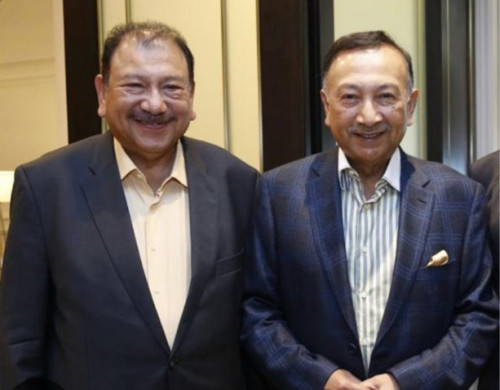
Proham was founded by former members of the Malaysian Human Rights Commission (Suhakam) and Royal Police Commission who felt they would continue to make their collective views on human rights known through round-table discussions and press releases. Tan Sri Simon Sipaun was the founding chairman, and 13 others, including the past chair, Datuk Kuthubul Zaman Bukhari, and current chair, Tan Sri Michael Yeoh.
Over the past 10 years, we can recognise that the performance of Suhakam in its promotion and protection of human rights is one key indicator. Suhakam, over the years, has performed well through its independent inquiries and their findings. However, the government has not taken the recommendations seriously. Furthermore, in all these years, Suhakam reports were discussed only once in Parliament, in 2019.
Another clear indicator is the ratification of international human rights conventions, and in this area, Malaysia has not adhered to the recommendations made through the Universal Periodic Review. Our track record remains only three out of the nine core human rights conventions. Therefore, we have not advanced in national compliance with international benchmarks. We continue to remain among the 12 countries that have not ratified the International Convention on the Elimination of All Forms of Racial Discrimination.
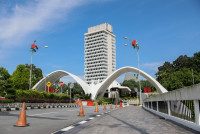
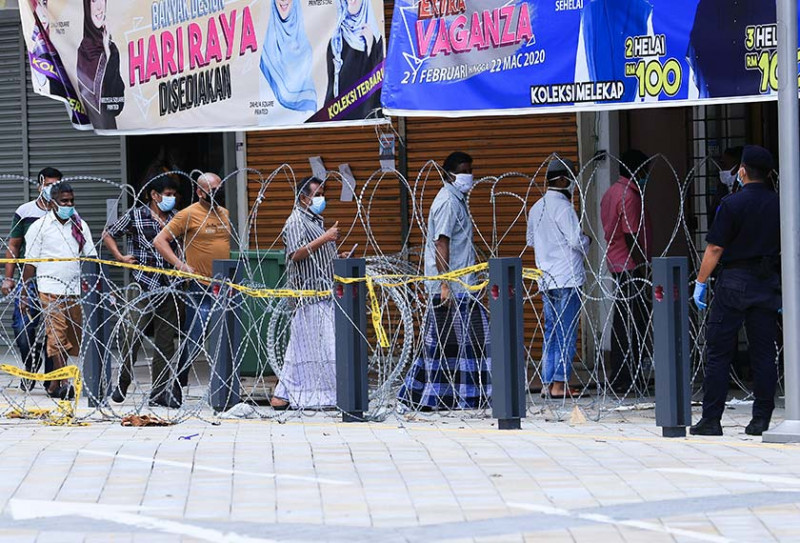
We are sad to recognise that Parliament, which is at the heart of our democratic system, is now closed to elected representatives. The government has announced that there would be no sitting of Parliament or working of the select committee, which damages our global reputation as a peaceful democratic state.
Another shameful experience in Malaysian democracy is party-hopping. We have seen about 60 of the 222 MPs changing parties since the 14th general election. This has robbed voters of their right to elect a candidate of the party of their choice, and can be seen as a violation of citizens’ fundamental liberties.
We also recognise that while there are restrictions to fundamental liberties, there continues to be a vibrant civil society movement in Malaysia advocating for domestic, regional and international human rights. There are courageous Malaysians who are truly defenders of human rights and marginalised groups, among them undocumented individuals, refugees, migrants, women, indigenous people and the poor.
We do see a bright spark in this gloomy picture, in Malaysia’s adoption of the Sustainable Development Goals as part of development planning. This has been consistent since the Midterm Review of the 11th Malaysia Plan. Malaysia is preparing its Voluntary National Review Report, and civil society is consulting with and part of the technical and steering committee, along with government agencies and the United Nations office in Malaysia.
In this context, we recognise that Malaysia recently amended its poverty line income figure, as well as adopted a multi-dimensional approach to move beyond income measurements. However, we do recognise that in matters pertaining to climate change and the environment, as well as human rights and good governance, we are falling behind in terms of performance.
Therefore, Proham calls on the government to focus its attention on development planning, to adopt a more comprehensive approach inclusive of economic, social and environmental aspects, as well as concerns for democracy, good governance and human rights.
In its 10th year, Proham also calls on the government to restore the rightful place of Parliament, whose members are elected by the citizens of Malaysia. Parliamentary reform must ensure parliamentary independence, as well as new legislation on party-hopping, to put a stop to this shameful act.
Over the past decade, Proham is saddened to see the state of human rights deteriorating. We call on all Malaysians to restore the fundamental liberties enshrined in the federal constitution. – The Vibes, March 10, 2021
Issued on behalf of Proham by Prof Datuk Denison Jayasooria (deputy chair), Tan Sri Michael Yeoh (chair) and Khoo Ying Hooi (secretary-general)