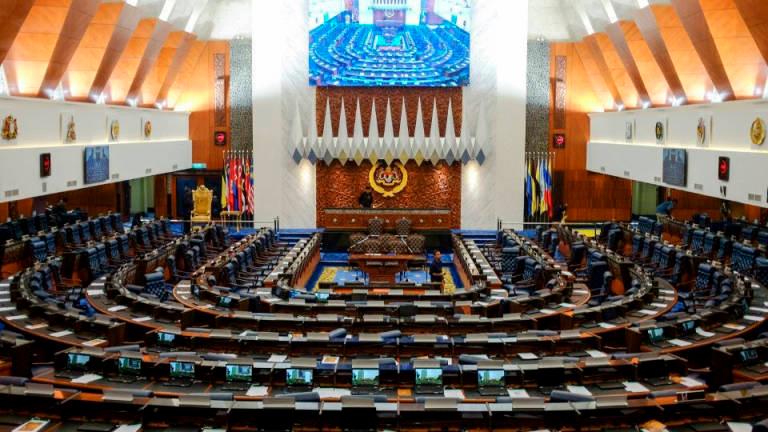

THE much-awaited Covid-19 Act 2020 has been approved by both the Dewan Rakyat and Dewan Negara.
The Bill still needs to receive royal assent, and be published in the Gazette, before it becomes applicable law.
Many other jurisdictions enacted such a law much earlier. Unfortunately, our politicians were too preoccupied playing musical chairs in parliament to expeditiously enact the much-needed law.
As the rather long ‘short-title’, Temporary Measures for Reducing the Impact of Coronavirus Disease 2019 (COVID-19) Act 2020, makes explicit, the modifications made to sixteen existing statutes are temporary and aimed to specifically reduce the impact of the pandemic.
Retrospective Effect
Most parts of the Act are retrospective to March 18, 2020, but there are other parts which have other commencement dates: hire-purchase agreements (April 1, 2020), insolvency (date of publication of the Act), land public transport, and commercial vehicle licensing (August 1, 2021).
The retrospective effect is substantially curtailed by limitations and savings. Judgements and recovery proceedings that began before the law was gazetted will not be affected by the Bill. The first reading of the Bill at the Dewan Rakyat on August 12, 2020, served as notice to all those who wish to avoid granting relief to the distressed that they should begin enforcement proceedings before the law is gazetted. And there has been a rush of proceedings to avail of the period given to avoid the Act.
How temporary is the Act? The Act will initially be in operation for a period of two years, but the Prime Minister may make repeated extensions with the proviso that any Order for such an extension shall be laid before the Dewan Rakyat as soon as practicable. However, not only does the commencement dates differ between the different parts of the Bill, the period for which relief is provided and the period within which the right to relief may be exercised, also vary between the different parts of the Act.
Ministers are permitted in some instances to extend the period of operation of the modifications to the statutes within their purview. Again, there is no consistency as to the powers granted to the various ministers, even of the different Acts under the purview of the same minister.
Inability to Perform Contracts
Part II of the Act relates to Inability to Perform Contractual Obligation consequent on the implementation of the Prevention and Control of Infectious Diseases Act 1988. It provides an absolute legal shield: “shall not give rise to the other party or parties exercising his or their rights under the contract”. However, it is important to note that the operative phrase is “inability to perform” and not failure to or neglect to perform. The onus is on the party seeking to rely on the provision to establish that the inability to perform was due to the implementation of the Prevention and Control of Infectious Diseases Act. The term inability is not defined and will have to be resolved on a case-by-case basis.
The defence is applicable in only eight types of agreements specified in a schedule which may be added by the minister in charge of law. Currently, included in the schedule are: construction-related contracts; performance bonds or equivalent granted pursuant to a construction contract or supply contract; professional services contracts; lease or tenancy of non-residential immovable property; event contracts; tourism-related contracts and those for religious pilgrimage.
The Act does not define any of these types of contracts. The term ‘professional services contracts’ is a case in point. What are the occupations to be deemed as providing professional services?
Mediation
Part II of the Act also provides for a non-mandatory Covid-19 Mediation Centre for the resolution of disputes in respect of any party being unable to perform any contractual obligation. The minister in charge of law is empowered to determine the mediation process which includes the appointment of a mediator, role of a mediator, conduct of mediation and conclusion of mediation.
The minister has announced that the mediation process will be free for individuals from the B40 and M40 categories, and micro and small scale enterprises. The government is to bear the cost of mediation, if done through the centre, for a period of one year from October 1, 2020. A sum of ‘not less than RM29mil’ has been set aside for this purpose.
Establishing a new mediation platform is no easy task. There is no need for a new mediation service when long-established and credible mediation services by trained mediators who have been accredited and appointed are already available. The Bar Council’s Malaysian Mediation Council and the government-funded Asian International Arbitration Centre (AIAC), both of which are governed by the Mediation Act 2012, have proven to be credible mediation platforms.
Perhaps, even more appropriate would be to rely on the judge-led mediation process governed by the Rules of Court 2012 and Practice Direction No 4 of 2016 issued by the Registrar of the Federal Court of Malaysia. This is available to the parties without cost.
It is possible to identify any one of the above-mentioned to be the mediation platform required by the Covid-19 Act 2020. It is hoped that good sense will prevail.
Moratorium on Instalment Payments
The Act also provides a moratorium of sorts to a category of consumers having problems with instalment payments – loans governed by the Housing Development (Control and Licensing) Act 1966, the Hire Purchase Act 1967 and the Consumer Protection Act 1999.
A house buyer under the Housing Development Act does not have to pay late payment charges for defaulted instalments during the period from March 18, 2020 to August 31, 2020. The developer, too, gets relief as the same period is excluded from the calculation of the time for delivery of vacant possession, liquidated damages for the failure of the developer to deliver vacant possession, calculation of the defect liability period and the time for the developer to carry out works to repair and make good the defect, shrinkages and other faults in a housing accommodation. Both the house buyer and the developer may obtain an extension of the period of relief up to December 31, 2020, by an application to the minister “if the Minister is satisfied that additional time is required by the purchaser”. The extension is to be determined on a case-by-case basis on an application by individual consumers or developers.
It is invariably the case that where the onus is on the consumer to seek relief, many amongst the most disadvantaged and vulnerable will fail to make an application. The ministry, too, would have the invidious task of responding in a timely fashion to those who do make the application. A more appropriate formulation would be to permit the minister to make the extension by way of a Ministerial Order and make it applicable to all consumers.
Instalment payments for goods are, in Malaysia, categorised as conditional sales or credit sales due to the ‘legal fiction’ as to when ownership passes to the consumer. In conditional sales (governed by the Hire Purchase Act), the property passes when the last instalment is paid. In credit sales (governed by the Consumer Protection Act), the property passes when the agreement to purchase is entered into. The legal mumbo jumbo is of little significance to the consumer until default in payment of instalments occurs. Higher purchase goods may be repossessed by the seller but not goods acquired in a credit sale. However, in a credit sale, the seller may demand full payment of the loan sum if there is a default of instalment payment.
The Covid-19 Act modifies both the Hire Purchase Act and the Consumer Protection Act - the seller may not exercise the right to repossess or demand full payment, as the case may be.
Hire-purchase instalments defaulted during the period from April 1 to September 30, 2020, cannot be the basis of repossession by the owner. However, this part remains in operation only until December 31, 2020, and presumably, repossession would be possible thereafter unless the minister extends the operation of the provision.
In the case of credit sales, default in payment of two consecutive instalments cannot be the basis to commence any legal proceedings to recover the total outstanding amount payable by the purchaser. This shield is available to those who entered into a credit sale agreement before March 18, 2020, and had no overdue instalments before that date.
This part, too, remains in operation only till December 31, 2020, and unlike in the case of hire purchase, there is no provision for extension for any further period.
There really is no need for such a complex set of rules to govern default of a limited number of instalments. A six-month moratorium on instalment payments would have better-served consumers and sellers.
Prof Emeritus Datuk Dr Sothi Rachagan is a former dean of the Universiti Malaya Law Faculty, vice-chancellor of Perdana University and Nilai University, and president of the International Association of Consumer Law. He serves on the boards of numerous international consumer protection bodies.