MY Muslim friend commended my thoughtfulness in conveying well-wishes to all Muslims in the fasting month, especially during sahur, the meal before fasting begins, and buka puasa, the breaking of fast. His comment that very few non-Muslims make such effort inspired me to write this piece.
Last week, the third week of April, was indeed an auspicious one, with the holy month of Ramadan coinciding with the Sikh and Telegu New Year, followed by the Tamil and Malayalee New Year, on the 13th and 14th, respectively. These beautiful festivals are celebrated by 75% of the Malaysian population, and 95% of the peoples of Southeast Asia and East Asia. During the New Year celebrations, I made it a point to wish my Muslim brothers and sisters before the start and at the breaking of their fast.
There are many of them who do this, too, but my love of poetry inspires me to craft poems for any auspicious day that strikes me the most. However, it is not about the messages, or me, but about how many of us use this opportunity to wish one another on these festivities among Malaysians.
How many Malays or Chinese know that there are several New Years among people of Indian origin? The Sikhs celebrate Vaisakhi, the Telegus have Ugathi, the Tamils celebrate Tamil Puthandu, and the Keralites celebrate Vishu. There are many other Indian festivals, such as Ponggal, Thaipusam, Onam, Karthigai and Navatathri, too.
Likewise, how many Indians or Malays know that there are several Chinese festivals, such as Dongzhi, Yuan Xiao, Qingming, Duanwu and Hungry Ghost? We cannot forget our Sabah and Sarawak friends. The Regatta Lepa, Sabah Festival, Pesta Kaamatanam, Pesta Kelapa, Sabah Dragon Boat Race, Pesta Rumbia, Hari Gawai, Kaul Festival in Mukah, Kapit Raft Safari, and Ba’Kelalan Cultural and Apple Festival are some of the events that are very close to the hearts and minds of our brothers and sisters in East Malaysia.
These festivals are wonderful gateways to the various communities of our country. Since almost every Muslim festival is known nationwide, it is imperative for every Malaysian to take heed of the other festivals, which are colourful, joyous, religious, or even cultural, in nature. These festivals are a fabulous way to get to know every Malaysian. Everyone who receives my messages, especially for Chinese New Year, Hari Raya Aidilfitri or Hari Raya Haji, will certainly respond with a huge smile.
With the advancement of technology, we can now do away with sending postcards, and instead, send messages via our mobile phones to wish one another on all the wonderful festivals that we celebrate in the name of culture, religion and art.
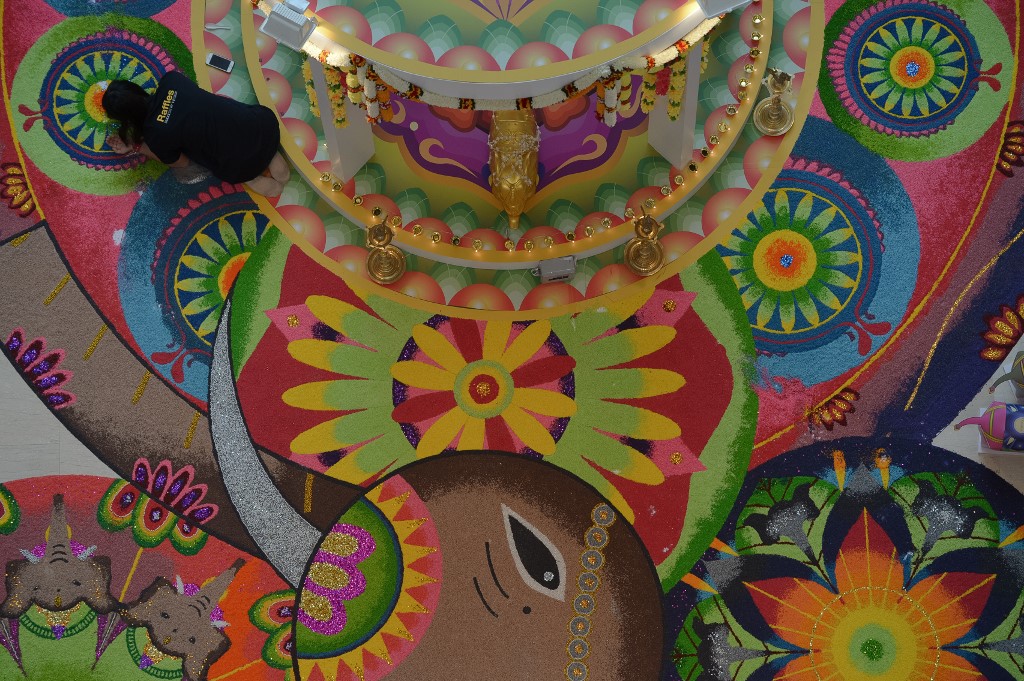
Every Malaysian must make it a point to know about other races’ interests and festivals. As how I send messages before the start and at the breaking of fast, I sincerely feel that every Malaysian must send messages to wish one another and make us all feel as one. We must be precise in making another Malaysian happy.
The civics subject used to be taught in school, emphasising all the aspects that I have mentioned. However, these elements have since been removed from the curriculum. It is a pity that we now focus too much on a religion and forget the basic, beautiful facts of our wonderful nation. The colours of our nation have been blackened by the poor education system that prevails today.
Every Malaysian parent must teach their children about the importance of other races, and their roles, significance and festivities, so that every child appreciates and respects the beauty of other races, and their colourful culture and lifestyle. Once a child is positively ingrained, the outcomes will be great.
My Facebook friend and a filial Malaysian, Anas Zubedy, must be remembered in this instance. He has been a very participative and engaging Malaysian, diligently wishing every community, especially on the major festivals, by taking up full-page advertisements in leading newspapers. He wishes them on Raya, Chinese New Year, Deepavali and other festivals. This is an encouraging sign of camaraderie and solidarity. Malaysia needs more individuals likes Anas Zubedy, rather than the politicians who grind the wrong side of every Malaysian daily in the name of race and religion.
The former director of broadcasting, the late Syafiq Alfonse Abdullah, used to say that all radio and TV stations must highlight and speak about the various festivals celebrated by every race in this country, thus providing education to and creating a greater awareness and understanding of our multicultural, multiracial elements among the young, who are becoming ignorant of or oblivious to such diversity. RTM and all private radio and TV stations must make the extra effort to propagate these wonderful elements of the different festivals, further enriching the nation’s multicultural aspect.
_during_the_Chinese_New_Year_Celebration_from_the_Chinese_Hokkien_tribe_in_Klang__Selangor_-_Azim_Rahman15.jpg)
The more that Malays and non-Malays understand one another’s festivals and practices, I think we will be en route to a much more sublime nation filled with love, care, empathy, respect, trust and dignity. These virtues are critical to build a nation that will withstand any tsunami, or pandemic.
As a melting pot of cultures, Malaysia is indeed very fortunate to be the home of all the major races of Asia. The tagline “Malaysia Truly Asia” is very appropriate indeed. The combination of multiple races in one country makes Malaysia a tapestry of colours, beauty and prowess, just like a rainbow with its pot of gold, everywhere. It is just about using the right lenses to spot it.
Racial harmony is an expensive gift. No money can buy it; no one programme can salvage it. It must be imbued daily, from conception to birth. We must ensure every opportunity we get to embrace it is seized without hesitation. A simple message to the people we know during the festivals they celebrate will certainly enhance our relationship with them.
We may have lost our economic strength and no longer hold the title of “Asean Tiger”, but we can always keep our colourful and bountiful racial harmony intact if we choose not to ignore our neighbours. Instead, bring them together in an inclusive manner, thus creating a harmonious nation. Through harmony and peace, we can certainly bring in more investors, and enjoy greater economic sustainability by being resilient in building a stronger Malaysia called “Malaysia for All”.
We do not want anyone to say we are different. Instead, we must strive to be known as one nation. – The Vibes, May 9, 2021
Ravindran Raman Kutty is a communications and reputation management expert who has worked in multinational and government-linked companies, as well as government agencies